


December live cattle (LEZ26) futures were trading near steady in early price action Monday but did fall to a fresh nearly four-week low. November feeders (GFX26) were modestly up in early trading Monday after hitting a three-week low on Friday. Both markets suffered a trainwreck late last week, with December live cattle on the week down $10.175 and November feeders losing $10.35.
The cattle futures markets were rocked to end the trading week – and month – by a major selloff in the U.S. stock market that saw the major indexes hit multi-week lows and likely saw consumer confidence at least temporarily take a hit. Increasing cattle imports from Mexico have also somewhat eased tight U.S. cattle supplies.
Weaker cash cattle trade last week also put downside price pressure on the cattle futures markets. The USDA at midday on Friday reported active cash cattle trading, with steers averaging $223.95 and heifers $224.18. The agency reported average cash cattle trading the week prior at $227.06.
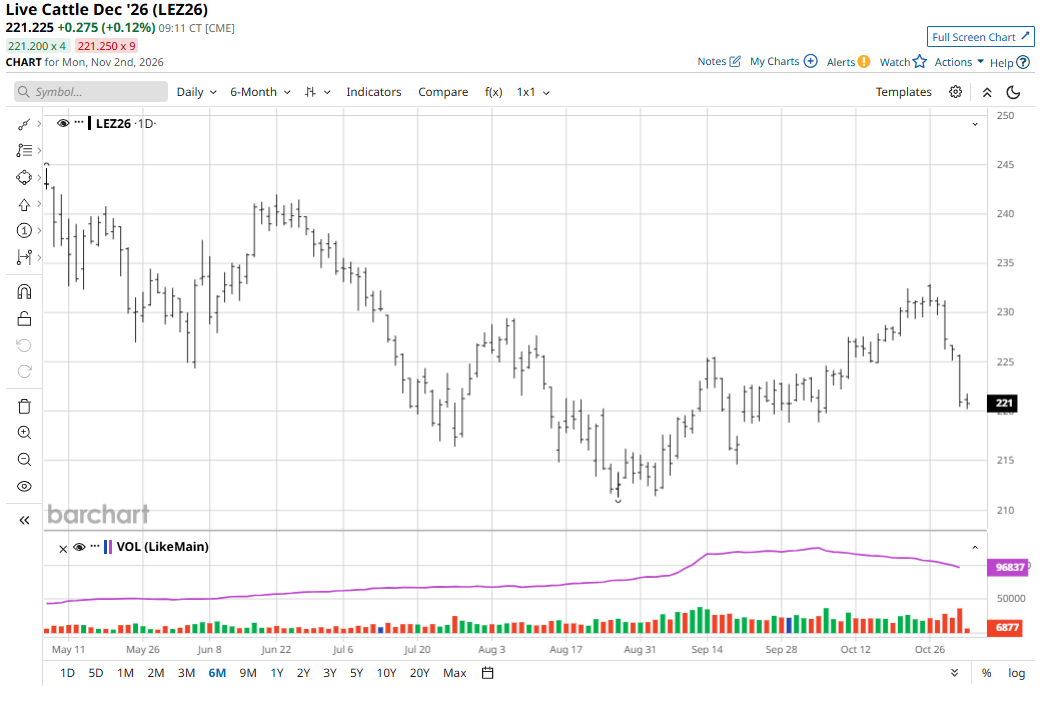
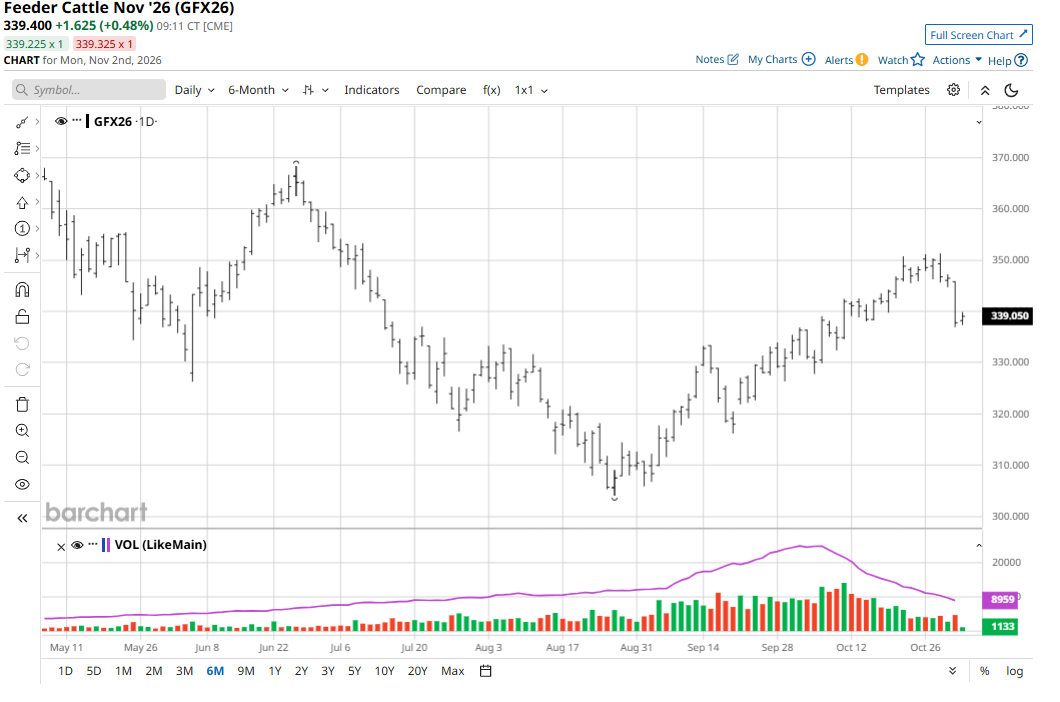
The cattle futures markets are likely to find stronger technical headwinds in the next few weeks, as serious near-term technical damage has been inflicted in both live and feeder futures recently, including Friday’s bearish weekly low closes.
Beef packer margins still in the red are also likely to keep packers from aggressively bidding up for cattle supplies. However, steady, solid demand for beef at the meat counter in recent months has kept cattle futures markets afloat. But a sustained selloff in the stock market could significantly dent consumer demand for beef —especially with heightened inflation concerns, including higher energy prices. Still, overall, the U.S. economy has been showing enough strength to keep consumers mostly upbeat despite higher gasoline prices at the pump.
The Worst May Be Over for Lean Hog Futures Market
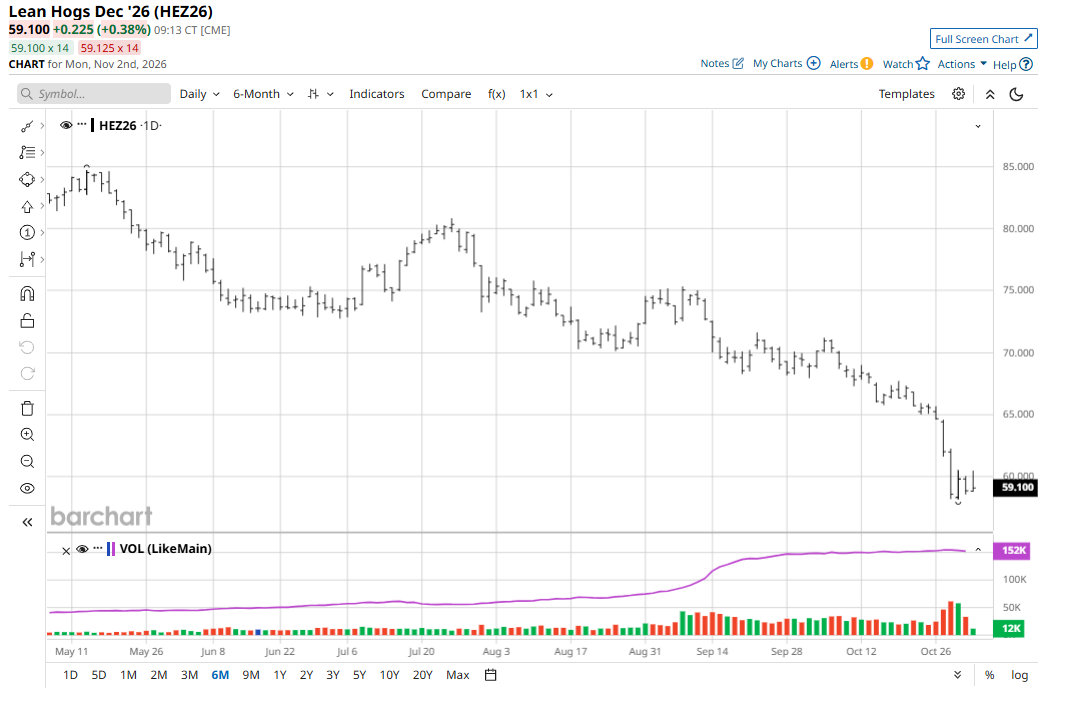
December lean hog (HEZ26) futures were showing short-covering gains in early trading Monday morning, after prices hit a contract low last week. December hogs last week lost $6.70 on the week.
Nearby lean hog futures have seen prices plunge to a six-year low as weak cash hog and wholesale pork fundamentals invited speculative sellers. Smithfield Foods cited reduced travel as a demand headwind, with elevated fuel prices curbing road-trip activity historically linked to bacon and related products. The USDA noted that bacon demand often slows when inflation and gasoline prices rise, as it complements restaurant meals and travel.
Adequate frozen U.S. pork stocks and cheaper alternative proteins continue to dampen consumer pork at the meat counter. Heavier hog weights have offset much of the year-over-year decline in hog inventories. Demand for U.S. pork abroad has been lackluster and will likely need to improve in the coming months, to help revive the presently depressed lean hog futures bulls.
Importantly, December lean hogs last week saw a big downside “washout” to extend the price downtrend but to also suggest a price bottom is close at hand. The late-week big slide in futures prices also suggests a final, climax-type move in a very mature bear market. The lean hog futures market is also well oversold, to suggest a corrective rebound in prices could occur this week.
The CME cash hog index and cash hog prices also continue to trend down. Big losses in the cattle futures markets have also spilled over into better selling pressure in hog futures. The latest CME lean hog index is down another 73 cents at $66.57.
Let me know what you think! I enjoy hearing from my valued Barchart readers worldwide. And I answer all your emails. Email me at jim@jimwyckoff.com.
On the date of publication, Jim Wyckoff did not directly have a position in any of the securities mentioned in this article. All information and data in this article is solely for informational purposes. For more information please view the Barchart Disclosure Policy here.