


Wall Street is quietly rewiring how the U.S. government borrows, and that shift in Treasury issuance could ripple through everything from bank trading desks to clearing houses. When the world's deepest bond market starts to tilt toward shorter maturities and heavier bill supply, the businesses closest to that plumbing often feel it first. This article walks through 3 stocks from the Treasury-market infrastructure universe that sit squarely in the path of those changes and explains why their exposure to this news may matter for your portfolio today.
The stocks that follow are just a sample set, and the full screen surfaced 21 more companies with equally interesting Treasury-market stories that are not covered here. To identify your own highest conviction angles on this theme, head straight into the U.S. Primary Dealer and Treasury-Market Infrastructure Stocks screener.
Third Coast Bancshares (TCBX)
Overview: Third Coast Bancshares is a Texas based commercial bank that provides lending, deposit, and treasury services to small and mid sized businesses, while holding U.S. Treasuries as part of its liquidity portfolio.
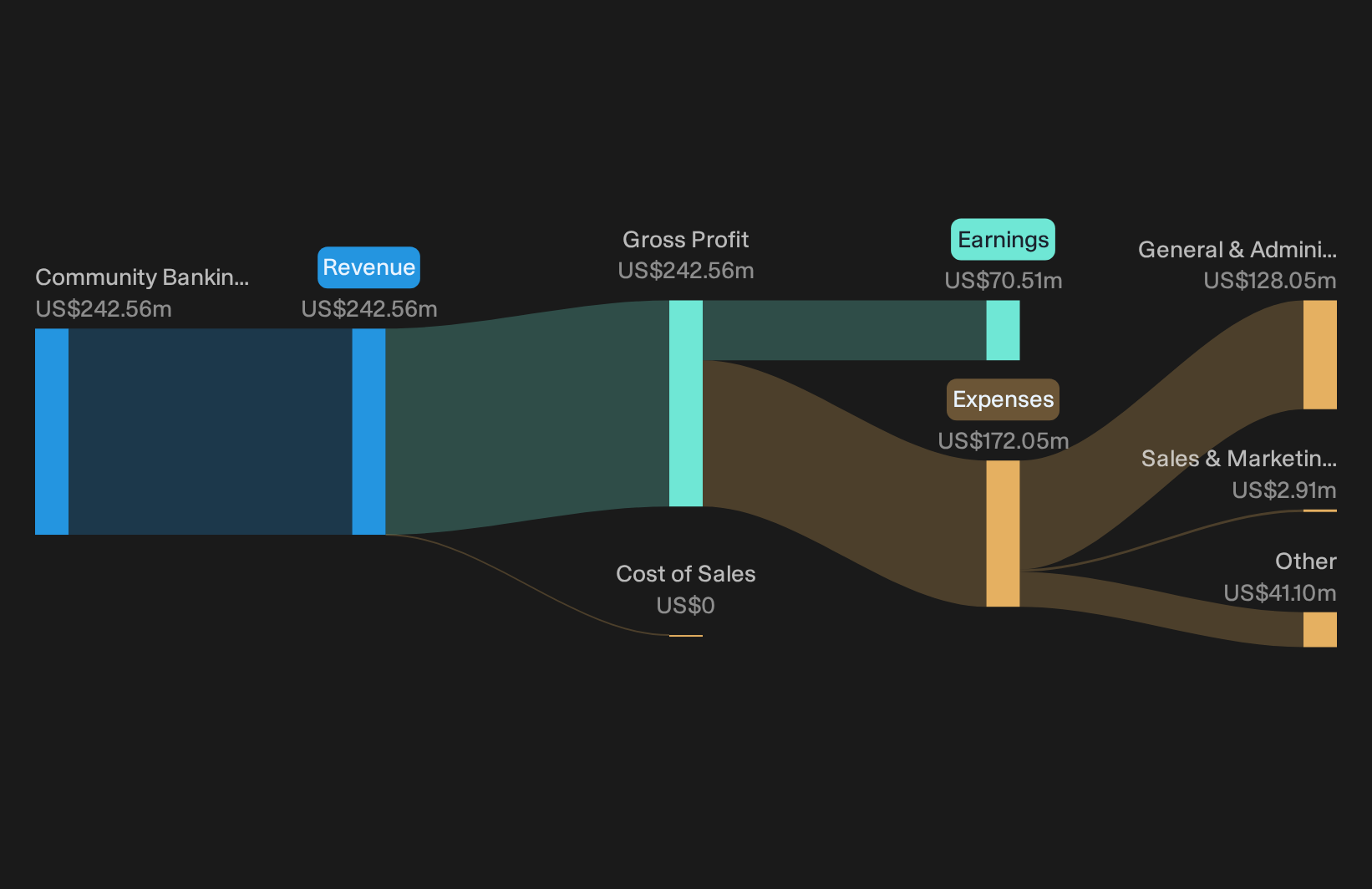
Operations: Third Coast Bancshares generates all of its US$242.6 million in revenue from community banking activities in the United States, focused on Texas clients.
Market Cap: US$665 million
Third Coast Bancshares plugs into the Treasury-market theme at the balance sheet level, using government securities as day to day liquidity tools, while leaning heavily on relationship banking across Texas for funding.
Relationship-based funding momentum, including a nearly 50% rise in noninterest-bearing deposits over the past year and sustained rural market deposit outperformance, continues to shift the funding mix toward lower cost deposits and supports net interest margin durability.
What happens to that margin profile if a single key assumption about future funding mix stability and pricing power breaks?
If that funding mix does start to shift, read the full narrative for Third Coast Bancshares to see whether deposit momentum is masking deeper balance sheet and earnings power swings.
Peapack-Gladstone Financial (PGC)
Overview: Peapack-Gladstone Financial runs Peapack Private Bank & Trust, providing private banking, lending, and wealth management services across New Jersey and Metro New York, where client cash and fixed-income portfolios naturally intersect with U.S. Treasury markets.
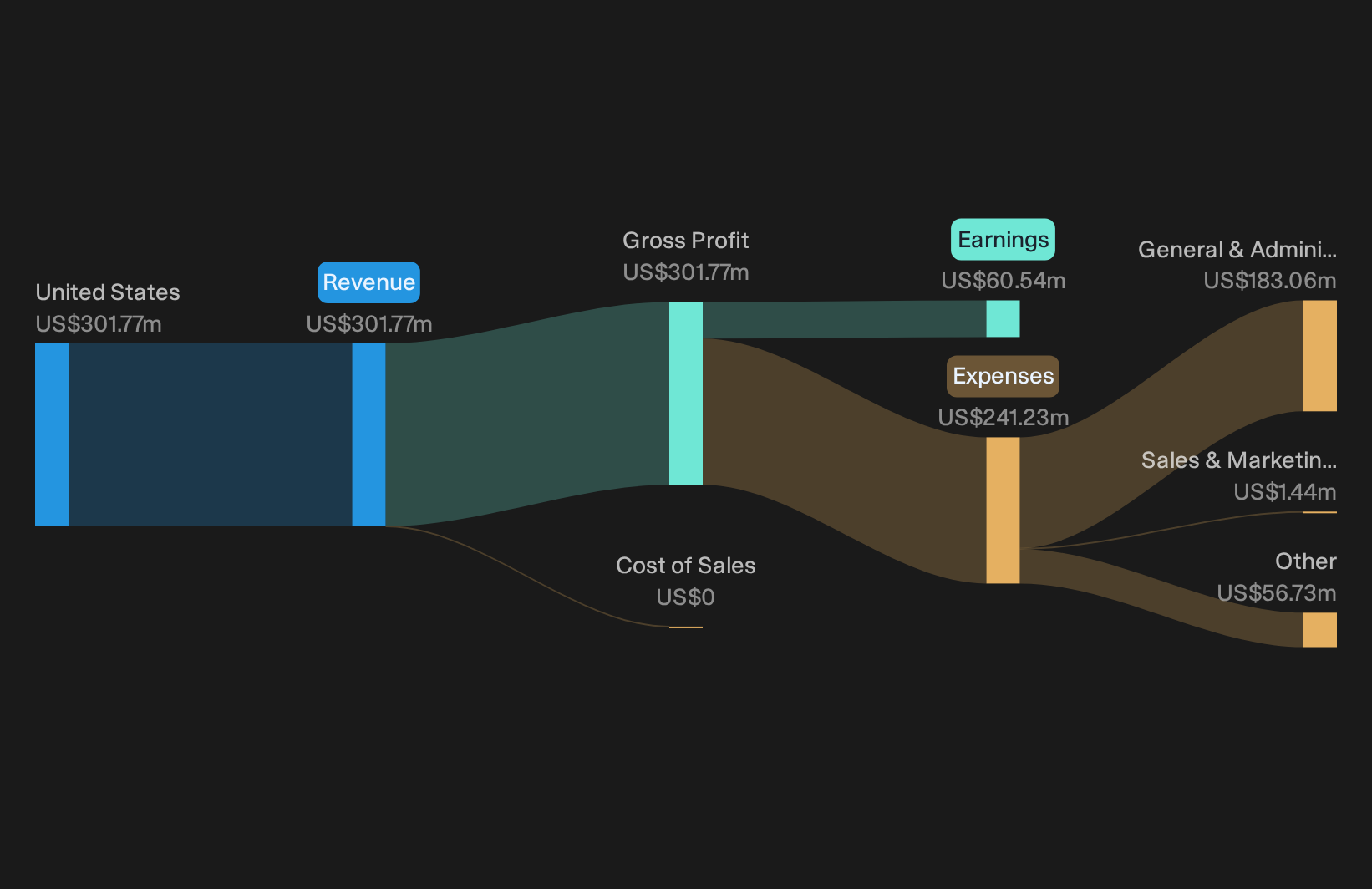
Operations: Peapack-Gladstone Financial generates US$301.8 million of revenue entirely in the United States through its banking and wealth management activities.
Market Cap: US$795 million
Peapack-Gladstone Financial matters in this Treasury-market screen because private banking clients rely on it to manage liquidity, fixed-income allocations, and time sensitive payments that often hinge on smooth access to government securities and cash-like instruments.
The Remote Official Check Printing solution is designed to maintain bank-level controls, security standards and audit requirements.
What that kind of payment plumbing means for returns depends on how one unseen pressure around client funding costs and fee income ultimately resolves.
That quiet funding pressure is exactly why reading the full narrative for Peapack-Gladstone Financial can help you see where Peapack-Gladstone Financial’s fee engine may be accelerating or stalling in the future.
First Horizon (FHN)
Overview: First Horizon is a Memphis based bank holding company that combines traditional regional banking with capital markets and treasury services for U.S. clients.
Operations: First Horizon generates about US$3.1b of revenue mainly from Commercial, Consumer and Wealth activities, with additional Wholesale Business income and Corporate level adjustments, almost entirely in the United States.
Market Cap: US$11.0b
First Horizon matters in this Treasury plumbing screen because its mix of commercial lending, treasury management and fixed income services gives it closer contact with U.S. government bond flows than many regional peers, especially when investors and corporate clients reposition cash along a changing yield curve.
First Horizon is still targeting a multi year, $100m plus pre tax pre provision revenue uplift from deeper commercial relationships, with management now indicating progress of roughly 30% to 50% toward that goal, which can continue to support revenue and PPNR.
The real swing factor is how one still unfinished shift in funding costs and balance sheet mix ultimately feeds through to those future earnings.
That funding shift is exactly what the full narrative for First Horizon unpacks, revealing where First Horizon’s earnings power could be quietly accelerating or stalling in the future.

Seeking Fresh Alternatives Before They Fly
Fresh ideas often move first. By the time momentum headlines hit, early entries may already be moving and late arrivals can be left chasing. Scan these under the radar lists while it matters and consider acting early.
- Explore steadier compounding potential with companies built on strong cash and balance sheet foundations using the curated list of solid balance sheet and fundamentals (24 results).
- Look for income opportunities with businesses offering higher yields and a focus on resilience by scanning the curated 5 dividend fortresses.
- Identify possible breakout trends where AI meets real products and paying customers through the hand picked 41 profitable AI stocks that aren't just burning cash.
Have feedback on this article? Concerned about the content? Get in touch with us directly. Alternatively, email editorial-team@simplywallst.com