


Crypto crime keeps getting bigger, and the recent allegation that a state backed hacking group stole $6.3b from Binance is a reminder that digital theft is now operating at government scale. Every time a headline like this appears, demand for stronger digital locks comes back into focus. This article walks through three established cybersecurity stocks generated by a quality screener that filters for financial resilience and size.
The three cybersecurity stocks below are just a sample, and the full screen surfaced 30 more listed security firms with equally compelling stories that are not covered here. To identify your own higher conviction ideas, head straight into the Cybersecurity screener to filter, analyze, and focus on the cybersecurity profiles that best match your risk tolerance and time horizon.
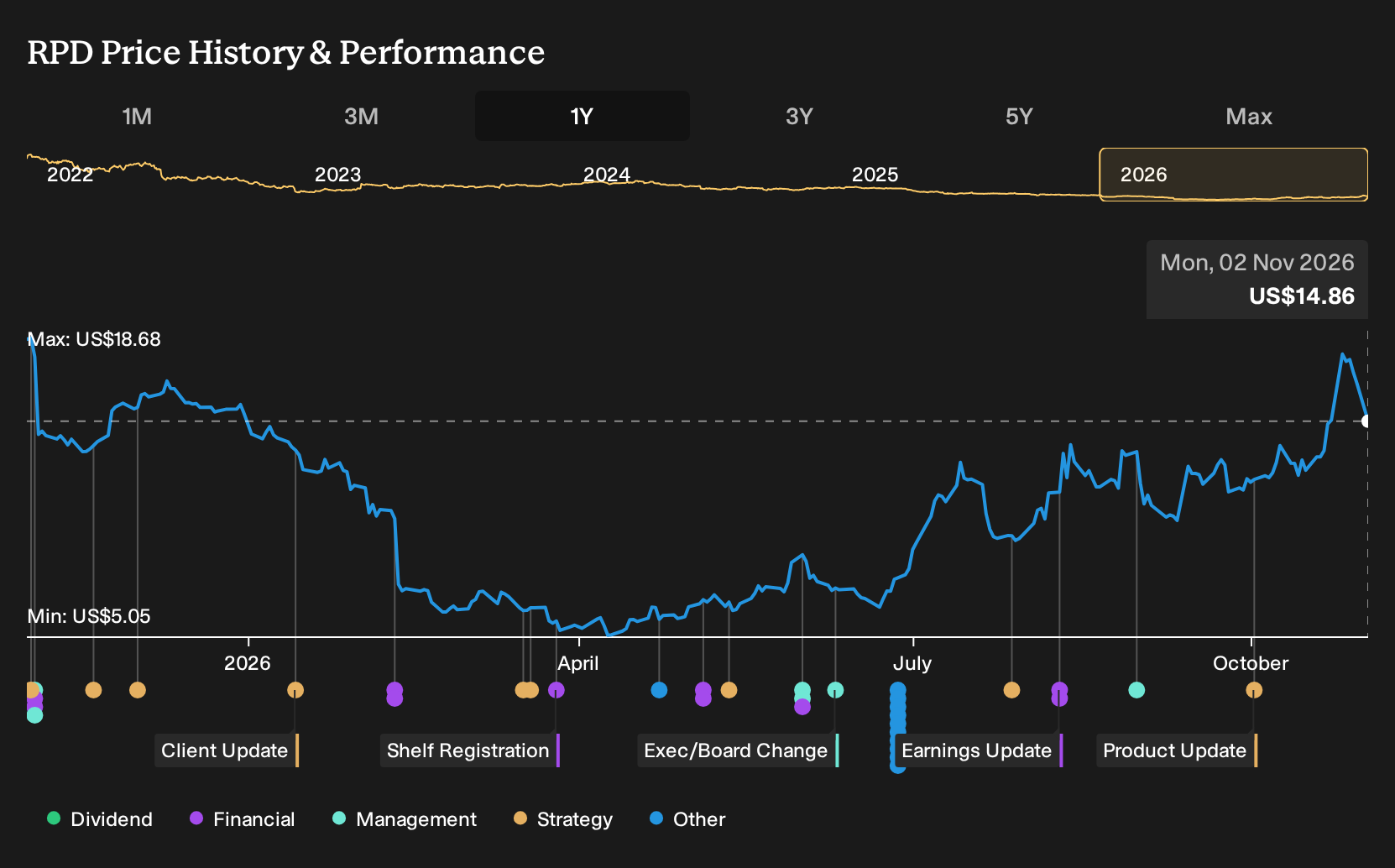
Rapid7 (RPD)
Rapid7 is tightly wired into the cybersecurity theme through its managed detection and response and extended detection and response tools, giving customers always on monitoring across endpoints, networks, and cloud systems while anchoring a broader suite of security software and services.
Rapid7 generates about US$856 million from Security Software & Services, reflecting its focus on subscriptions and support for its threat detection and exposure management platforms, and the business currently carries a market value of roughly US$1.1b.
That concentration on core security offerings comes with a catch.
"Concentration of over 80% of Rapid7's ARR in Detection & Response and Exposure Management, while non core products contribute less than 20% and are allowed to decline, could limit overall ARR and revenue growth if the core platform does not accelerate enough to offset the shrinking tail."
What happens next for Rapid7 will likely hinge on whether one quiet shift in its security operations model reshapes both demand and future margin potential.
If that shift is what really matters, the full narrative for Rapid7 lays out how Rapid7's model could either compress, or gradually expand, its opportunity set.
Fortinet (FTNT)
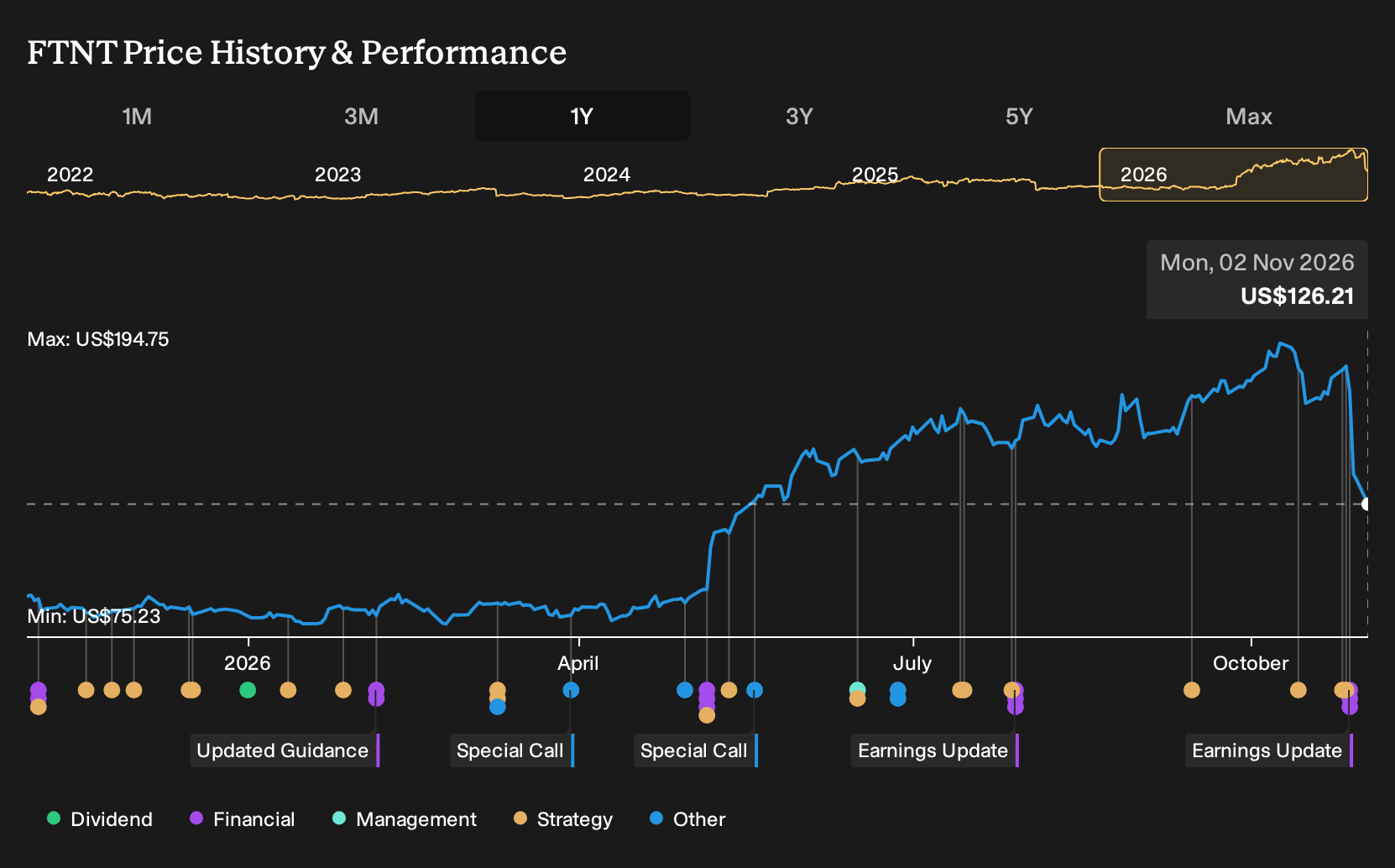
Fortinet is a heavyweight in the cybersecurity space, with its FortiGate firewalls and FortiGuard services helping organisations keep data and networks locked down across on premises and cloud environments.
Fortinet generates about US$7.9b from Network Security Solutions, reflecting a business built squarely around cybersecurity hardware and software, and the stock carries a market value near US$100b.
For investors focused on how cybersecurity ties into the AI build out, Fortinet offers pure play exposure to securing the traffic that runs through those data centers and enterprise networks.
"Fortinet recently launched its new FortiGate G series appliances specifically designed for AI-centric enterprise workloads, as well as new AI-powered endpoint security tools."
What happens if one quiet shift in how customers buy and renew these security platforms changes both pricing power and the durability of that demand?
That shift in buyer behavior is exactly what the full narrative for Fortinet unpacks, showing where Fortinet's renewal engine could accelerate, stall, or quietly decouple from headline demand.
Tyler Technologies (TYL)
Tyler Technologies builds software for U.S. state and local governments, with cybersecurity services woven into its Platform Technologies work for public-sector IT. It generates about US$1.9b from Enterprise Software and US$621 million from Platform Technologies, and has a market value near US$15.7b.
Tyler Technologies links cybersecurity directly to the day to day running of U.S. state and local government IT, from cloud-hosted systems to training front line staff. This connection is why it earns a place in this screen and why its broader story carries extra weight for security focused investors.
"The investment thesis is built on three compounding forces: (1) a largely complete SaaS cloud transition that is converting a high-gross-margin subscription base from flat to accelerating, with ARR already at $2.06B and growing 11% annually; (2) a payments platform (NIC) that turns Tyler’s 40,000+ client relationships into a recurring transaction revenue stream now generating $808M per year and growing at double digits."
One potential risk is an unseen shift in how public agencies budget for this software, which could quietly tilt the balance between expanding margins and future demand.
That budgeting shift is where things often get misread, and the full narrative for Tyler Technologies shows whether Tyler Technologies’ government foothold is quietly accelerating or masking future risk.

Seeking Fresh Alternatives Before They Fly
New ideas move first and slow money chases later. Scan fresh breakouts and under the radar stories before momentum gets fully caught and pricing power drops; act now.
- Spot dependable cash generators early by running the list of solid balance sheet and fundamentals (24 results) and focus on companies where robust finances give you more room to sit through volatility.
- Target income workhorses by scanning the 4 dividend fortresses and zero in on high-yield payers that keep distributions front and center while prices are still catching up.
- Ride structural demand shifts by checking the 43 power grid technology and infrastructure stocks and focus on businesses wired into long-term infrastructure upgrades before the crowd notices the momentum.
Have feedback on this article? Concerned about the content? Get in touch with us directly. Alternatively, email editorial-team@simplywallst.com