


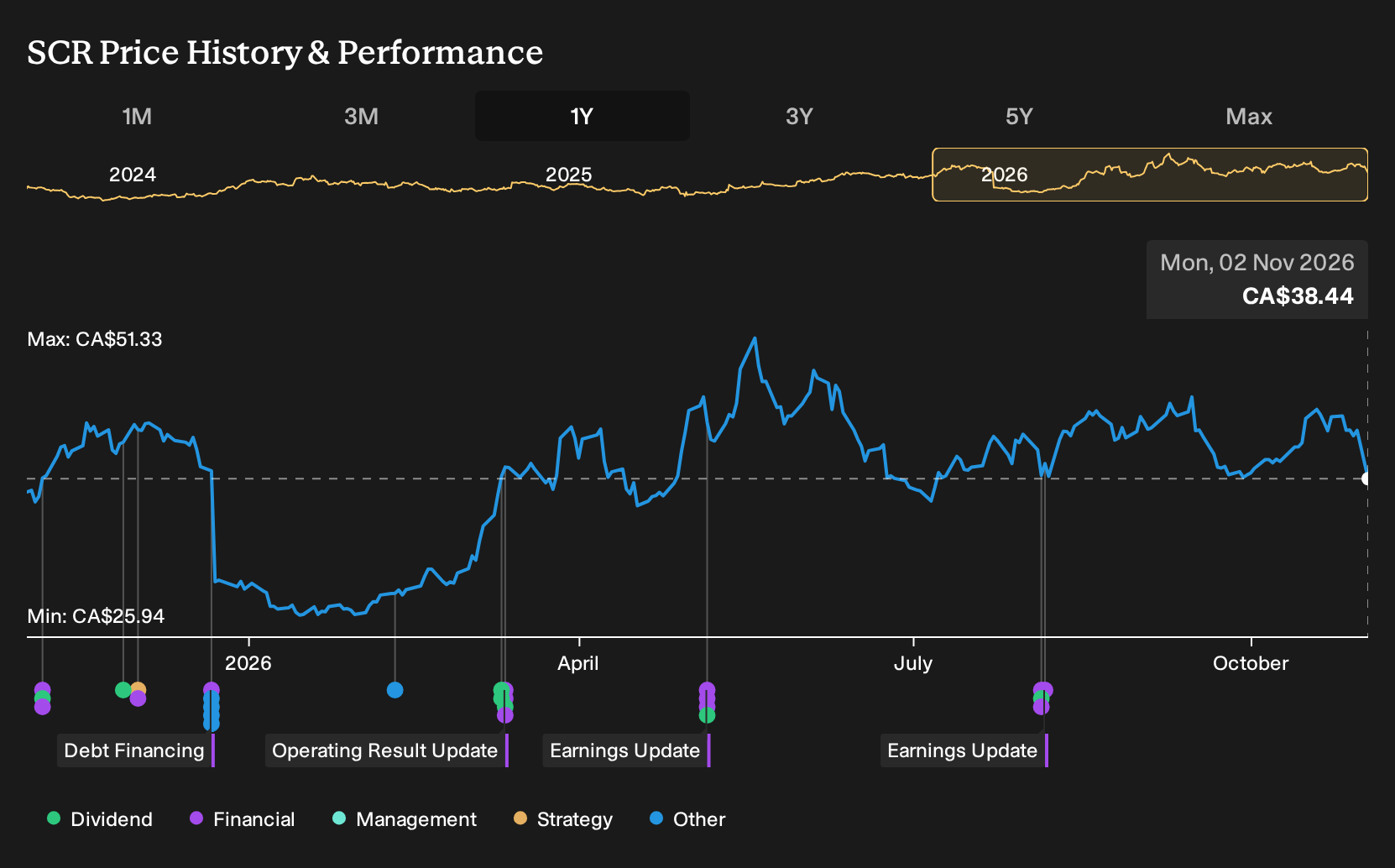
If you only skimmed headlines about carbon risk and heavy oil, Strathcona Resources might have looked like a problem waiting to happen rather than a place to park fresh capital. For Strathcona Resources shareholders, the return over the past year was 42.0%, including dividends. If you had committed money back on 2025-11-02, knowing analysts were already warning about decarbonization pressure and leverage, what exactly did you think you were being paid to risk?
The easy part of this move is behind Strathcona Resources. Zero in on 5 high quality undervalued stocks for companies trading below our estimates.
The Argument You Would Have Been Weighing On Strathcona Resources
The shares cost CA$37 at the start of the period, so anyone buying Strathcona Resources had to decide which story sounded more realistic.
The bullish view argued that a Fair Value of CA$41, the price implied by its assumptions, made sense if the MEG merger really did create an industry leading cost structure. That camp leaned on the idea that a combined oil sands producer with long life assets could command a premium.
The bearish camp held to a Fair Value of CA$34 based on much weaker assumptions. This side focused on long term decarbonization pressure on heavy oil, with annual revenue expected to decline 14.2% over the following three years.
What The Results Changed For Strathcona Resources
First steam at Meota Central, plus record Q2 2026 cash flow supported by higher crude prices and thermal progress, leaned toward the bullish Strathcona Resources story that focused on scale and margin power. Revenue moved from CA$904 million in Q2 2025 to CA$1.345b in Q2 2026 and net margin rose to 24.8%, yet dividend and cash flow sustainability remained under scrutiny. The evidence cut both ways.
The useful takeaway is simple. When a thesis hangs on cost structure and free cash flow, check whether revenue, net income and margin all move in the direction that story implied, then test if payouts still clear that cash hurdle.
What Strathcona Resources' Price Asks You To Believe Now
Today Strathcona Resources trades at CA$38.44. The selected Narrative places its Fair Value above that level and connects the difference to execution on export routes, cash generation and carbon projects rather than simple oil price exposure.
Anyone paying today’s price is effectively testing one key belief: that Strathcona can keep translating oil sands and rail infrastructure into steady free cash flow even if policy costs and ESG pressure rise.
"Strong organic growth, operational efficiencies, and carbon capture investments position Strathcona for enhanced resilience, ESG appeal, and improved margins, even amid acquisition uncertainty."
Not everyone reads the same price the same way. → See the higher figure this Narrative lands on, and how it gets there
Where Strathcona’s Story Connects
You have focused on Strathcona. One step out, a related question appears.
Heavy oil producers still need buyers who can process complex barrels efficiently. Large integrated refiners and traders help move those molecules and sell finished products globally.
That kind of business leans on liquefied natural gas, deepwater fields and marketing to keep fuel flowing. It also keeps trimming weaker assets and costs to support returns from stronger pieces.
If oil sands supply stays relevant while carbon rules tighten, that model could matter more. The unresolved piece is which integrated giant best fits that role for your watchlist.
One Narrative has already put a figure on it. → Uncover the company trading 18% below one Narrative's Fair Value
Have feedback on this article? Concerned about the content? Get in touch with us directly. Alternatively, email editorial-team@simplywallst.com