


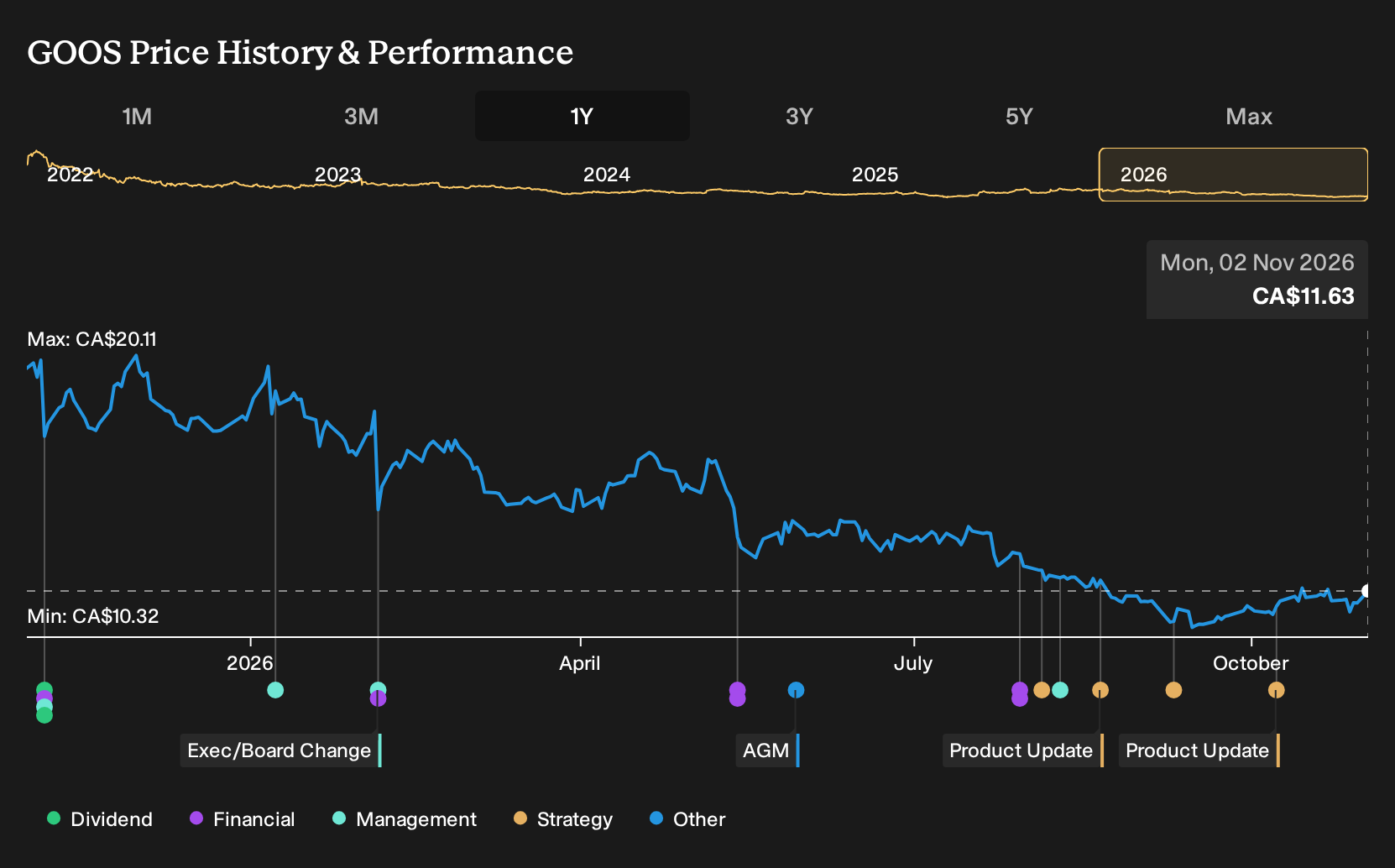
Canada Goose has been back in the headlines after warnings about weaker luxury demand and the risk of a 50% US tariff on Canadian apparel. For Canada Goose shareholders, the loss over the past year was 41.4%, including dividends. That drop reflects everything that played out over the period, not just one warning note. If you had been weighing a purchase a year ago, how much of this pressure was already on the table?
On Simply Wall St, a Narrative is an investor's thesis written down: the reasoning, plus the numbers it rests on. Run those numbers and you get an estimated Fair Value.
If the move has made Canada Goose harder to judge, start where the gap is still open and scan 5 high quality undervalued stocks.
The Two Stories Investors Were Really Arguing About
The shares cost CA$19.53 at the start of the period, and anyone looking at Canada Goose then had to choose which story felt more convincing.
The bullish narrative pointed to a Fair Value of CA$21.03, based on expectations that revenue could grow 4.8% a year with profit margins at 5.5%. That view leaned on North America and Mainland China demand as well as direct-to-consumer momentum.
The bearish view argued for a Fair Value of CA$10, assuming revenue would decline 2.5% a year while milder winters and fast fashion chipped away at outerwear demand.
What The Results Changed For The Canada Goose Debate
Canada Goose reported Q1 2027 revenue of CA$118.9m and a loss of CA$90.8m, compared with Q1 2026 revenue of CA$107.8m and a loss of CA$125.2m. The net margin stayed negative, although it moved from -116.1% to -76.4%. That combination supported the optimistic case on activity while keeping the profitability part of that thesis unproven.
The lesson here is simple. When a story leans on future margin strength, track both absolute profit and the net margin line, not just sales, to see whether that promise is actually turning into earnings.
What Canada Goose's Drop Leaves You Paying For Today
Canada Goose now trades at CA$11.63, with the selected Narrative arguing that its Fair Value sits above that level. The focus has shifted from heavyweight parkas to a broader mix of year round apparel, as well as a tighter balance between direct to consumer and wholesale.
The key assumption a buyer has to test is whether direct to consumer productivity and rebuilt wholesale relationships can support higher margins over time.
"Expansion of Canada Goose Holdings into year round categories such as apparel, knitwear, fleece, rainwear and windwear, which now contribute a large share of revenue and roughly half of units, can deepen wardrobe penetration and support more diversified revenue beyond heavyweight down."
One Narrative has put a figure on that disagreement. → See the Narrative with its higher Fair Value, assumptions and all
Looking Beyond Canada Goose
Canada Goose leans on brand, product design and direct relationships with shoppers. You could also look one step sideways.
Cold weather gear is still a lifestyle signal. So is what people wear for training, weekend sport and everyday movement.
Another global apparel group tries to connect those moments, using athlete ties, events and digital tools to keep people inside its ecosystem.
That peer also pushes hard into selling directly, building its own stores and apps rather than relying only on third parties.
If both approaches to year round apparel work, the open question is which model proves more resilient as tastes keep shifting.
One Narrative has already put a figure on it. → Uncover the company trading 19% below one Narrative's Fair Value
Have feedback on this article? Concerned about the content? Get in touch with us directly. Alternatively, email editorial-team@simplywallst.com