


Tariffs on everyday Canadian imports have quietly rewritten the math for a wide range of U.S. businesses, from consumer brands to industrial suppliers, and that ripple can reshape where profits land. Investors who ignore this shift risk missing where volume and pricing power might slowly migrate. This article walks through three U.S. stocks exposed to the new tariff rules and explains how this policy shock could either support or strain their future prospects.
The examples in this piece are only a starter set, since the full tariff-focused screen surfaced 14 more U.S. listed manufacturers and distributors with equally compelling stories that are not covered below. To see the broader opportunity set and identify which tickers best fit your thesis, head straight into the U.S. Domestic Substitutes for Tariffed Canadian Imports screener.
Ashland (ASH)
Overview: Ashland supplies specialty additives and ingredients used in coatings, personal care, cleaning, life sciences, and other industrial applications worldwide.
Operations: Ashland generates about $1.8b in revenue, led by Life Sciences at $664 million, Personal Care at $579 million, and Specialty Additives at $503 million.
Market Cap: US$3.4b
Ashland matters for this tariff screen because it sells the ingredients that go into many of the coated surfaces, soaps, and cleaners now facing shifting cross border costs, and that positioning intersects neatly with a bigger story playing out inside the business.
"The global shift toward sustainable and bio based materials driven by regulatory requirements and consumer preference continues to gain momentum, benefiting Ashland's specialty chemicals portfolio that is now more focused on high value, sustainable and compliant solutions, which is expected to support top line revenue growth and margin resilience over the long term. Ongoing cost reductions and manufacturing network optimization, including consolidation of plants and the targeted annual savings of about US$50 to 55 million from manufacturing optimization initiatives, are intended to structurally lower Ashland's cost base and support higher EBITDA margins and free cash flow conversion as operational issues are resolved."
What happens to Ashland’s margins if one quietly building cost pressure in its supply chain turns out very different from current expectations?
That pressure point is exactly what the full narrative for Ashland unpacks, showing where tariffs, mix shifts and cost savings could be quietly reshaping Ashland’s risk and reward profile.

Helen of Troy (HELE)
Overview: Helen of Troy sells branded home, outdoor, beauty and wellness products that can substitute tariffed Canadian consumer goods through U.S.-centric sourcing.
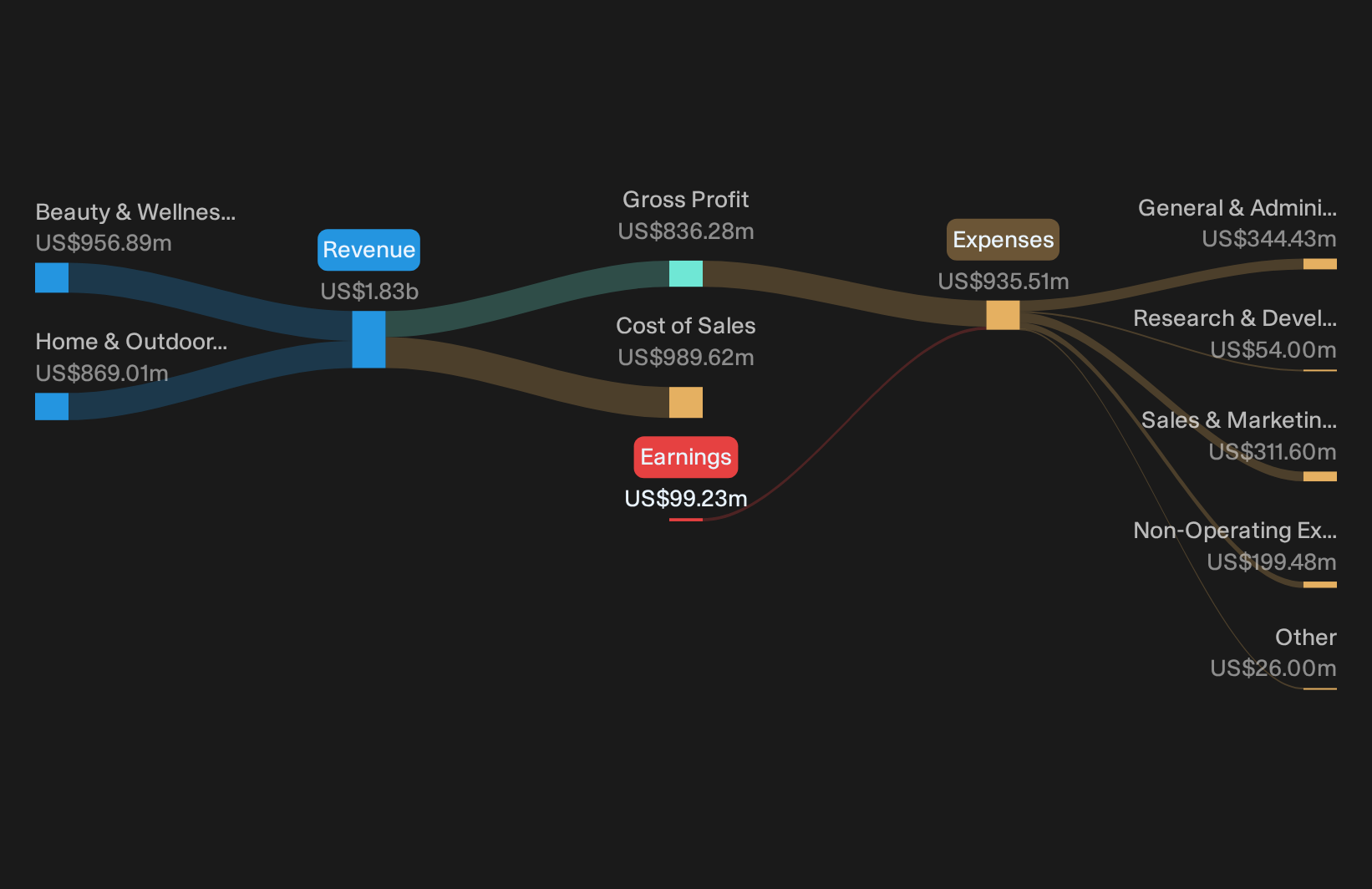
Operations: Helen of Troy generates about US$869 million from Home & Outdoor and US$957 million from Beauty & Wellness, primarily serving U.S. shoppers.
Market Cap: US$676 million
Helen of Troy matters for this tariff screen because its everyday household and wellness brands already sit in the same aisles where Canadian-made appliances and home goods are now facing higher cross border costs.
"Helen of Troy is shifting from a cost-cut focus to a growth-first model, with plans to reinvest tariff refunds and any performance upside into brands, product development, and people. This approach is aimed at supporting revenue and earnings over time. Ongoing supply chain diversification and tariff mitigation, including lowering tariff-exposed cost of goods toward under 20% and reducing the expected net operating income impact of tariffs to under US$10 million in fiscal 2027, directly targets improvement in gross margin and net margins."
What that means for Helen of Troy’s future margins and pricing power will hinge on how one still unresolved cost pressure evolves.
That unresolved input cost is exactly what the full narrative for Helen of Troy tackles. It maps where tariff refunds, sourcing shifts and brand spend could be masking Helen of Troy’s next earnings gear change.
Sensient Technologies (SXT)
Overview: Sensient Technologies produces colors, flavors, and specialty ingredients that food, beverage, personal care, and pharma companies use in branded products.
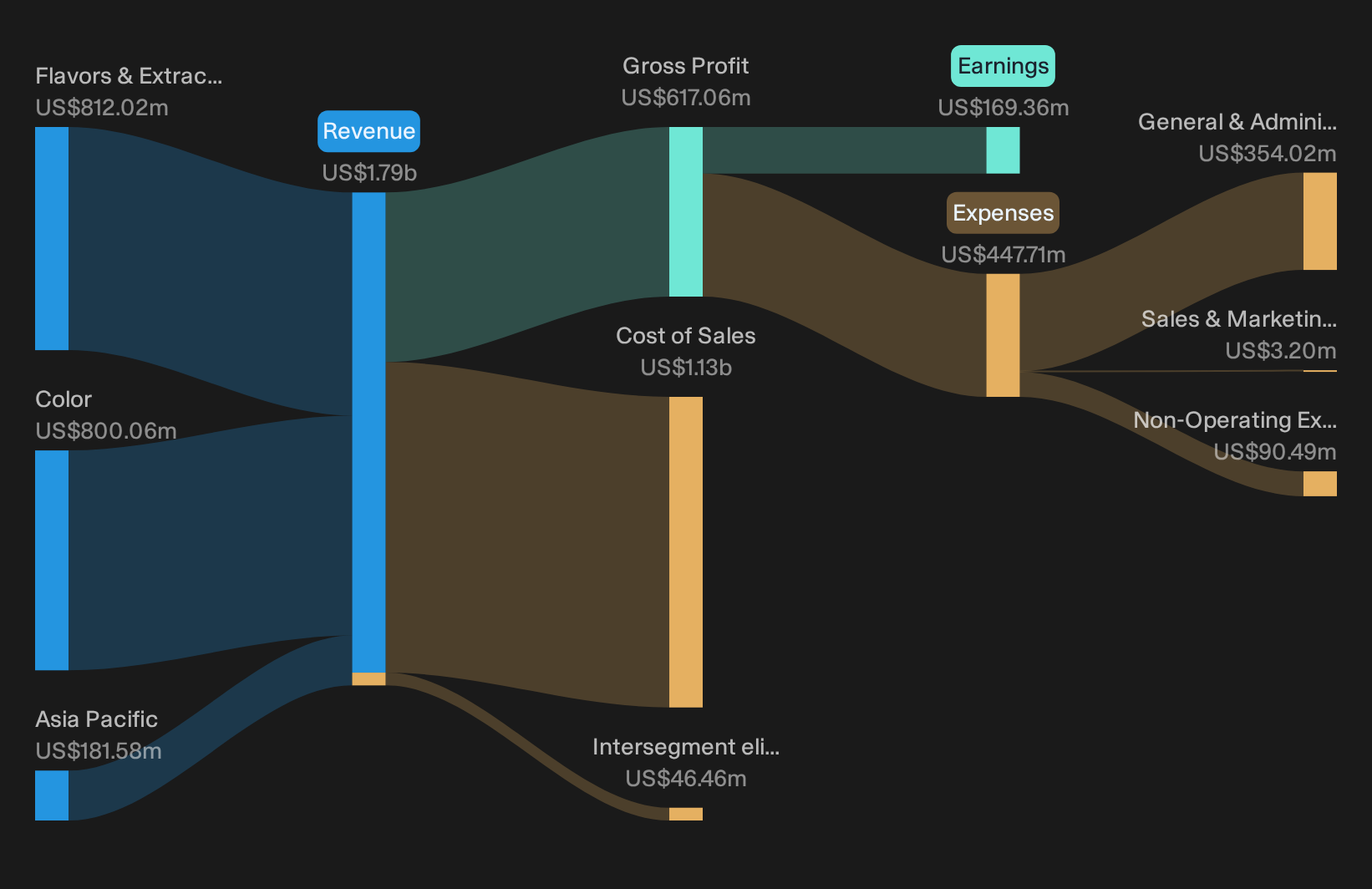
Operations: Sensient generates about $812 million from Flavors & Extracts and $800 million from Color, with $182 million from Asia Pacific and intersegment eliminations.
Market Cap: US$5.0b
Sensient Technologies fits this tariff screen because its U.S. made colors and cocoa linked ingredients can replace tariffed Canadian inputs in food and consumer products.
"The imminent large-scale regulatory-driven transition from synthetic to natural colors in the U.S., with retail deadlines around 2027 and 2028, remains in early innings."
What happens to Sensient Technologies’ pricing power and returns if a single capacity and supply chain assumption in that transition does not hold?
If that assumption proves wrong, reading the full narrative for Sensient Technologies shows how Sensient Technologies’ tariff exposure, capacity build out and mix shifts could quietly accelerate returns.
Curious About What You Might Be Missing?
Fresh ideas move first. By the time momentum is flying, early entry points can be gone. Scan under the radar for now, before the crowd, and act now.
- Spot cash generative businesses that the market has not fully priced by running the curated 34 high quality undervalued stocks while it still feels like quiet accumulation, not a scramble.
- Chase the next leg of AI momentum with a focused set of 53 AI infrastructure stocks before infrastructure spending stories get crowded and early pricing edges start dropping away.
- Anchor your watchlist in stability by zeroing in on 29 resilient stocks with low risk scores before defensive balance sheets and resilient earnings streams get caught in a late rush for safety.
Have feedback on this article? Concerned about the content? Get in touch with us directly. Alternatively, email editorial-team@simplywallst.com