


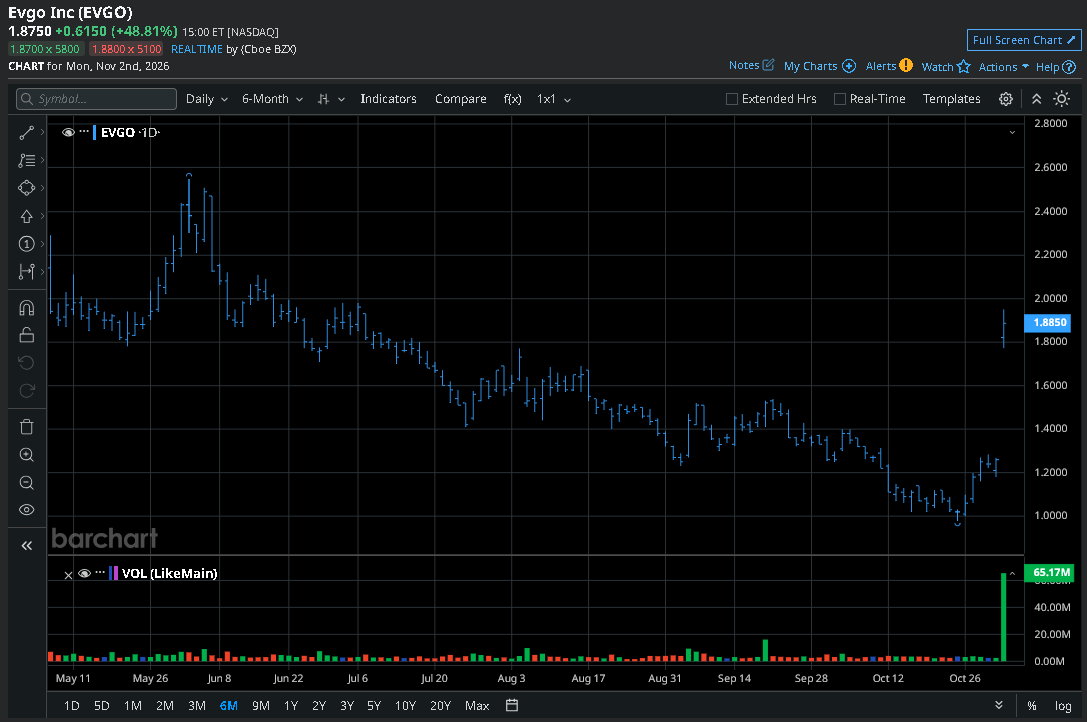
EVgo (EVGO) shares charged higher on Monday after LS Power proposed buying the electric vehicle charging company’s remaining publicly held Class A shares for $2 apiece in cash. LS Power’s approach gives shareholders a potential exit meaningfully above Friday’s closing price, although an acquisition remains uncertain for now.
The announcement brings much-needed reprieve to EVGO stock, which is still down roughly 35% versus the start of this year.
What LS Power’s Proposal Means for EVGO Stock
LS Power’s offer puts a concrete price on a business investors had marked down sharply. At $2 a share, the proposal represented a 59% premium on the EV company’s previous close. Note that the prospective buyer already controls about 56% of EVgo’s voting stock.
For shareholders, the attraction is rather straightforward: a completed cash acquisition would allow them to realize that premium without waiting for EVgo’s operating performance to justify a higher valuation.
That shifts the immediate investment debate. Investors can now assess a potential payout alongside the charging network’s longer-term prospects, which helps explain why EVGO shares were sharply repriced on Monday.
Is There Any Further Upside Left in EVGO Shares?
EVGO stock is currently trading for about $1.88, down roughly 7% versus the proposed $2 buyout price. This gap is basically compensation for uncertainty over whether a transaction really happens, how long it takes, and whether the terms change.
Importantly, LS Power has submitted a proposal — not a definitive acquisition agreement. Its filing explicitly allows it to revise or withdraw the approach and does not assure completion. A higher negotiated offer could create additional upside, but investors currently have no confirmed basis for assuming one.
All in all, investors buying EVGO would be chasing limited upside potential while assuming substantial risk of a failed deal.
Wall Street’s Consensus View on EVgo
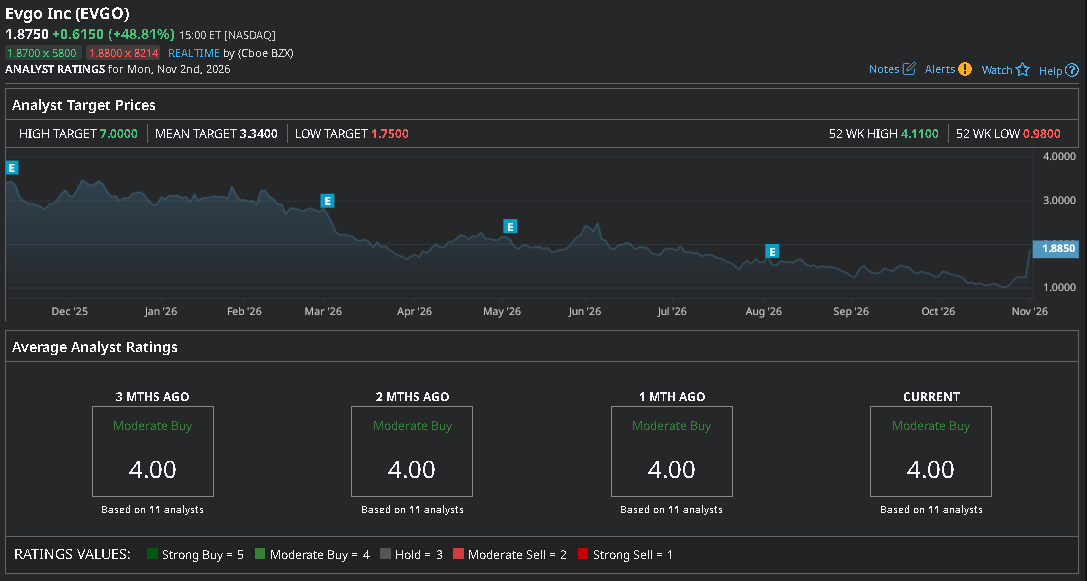
Heading into Nov. 2, Wall Street had a consensus “Moderate Buy” rating on EVGO, with a mean price target of about $3.34.
This is significant because it suggests analysts expected EVGO to eventually be worth more as a standalone company than the valuation LS Power’s proposal has assigned to it.
On the date of publication, Wajeeh Khan did not directly have a position in any of the securities mentioned in this article. All information and data in this article is solely for informational purposes. For more information please view the Barchart Disclosure Policy here.