


With the RBA lifting the cash rate to 4.85% and signalling a tougher stance on inflation, investors are suddenly re-rating what “defensive” really means. Reliable dividends and stronger balance sheets can start to look more attractive as borrowing costs bite and volatility creeps higher. This article unpacks three high-quality Australian dividend stocks exposed to these rate moves, explaining where the pressure points sit and where resilience may still hold.
The stocks covered below are just a sample of the idea, and the full screen has surfaced 9 more large Australian dividend payers with similarly detailed stories that are not included in this article.
If you want to identify potential high quality defensive dividend opportunities faster, head straight to the Australian High-Quality Defensive Dividend Stocks screener to filter, analyze, and focus on the highest conviction plays.
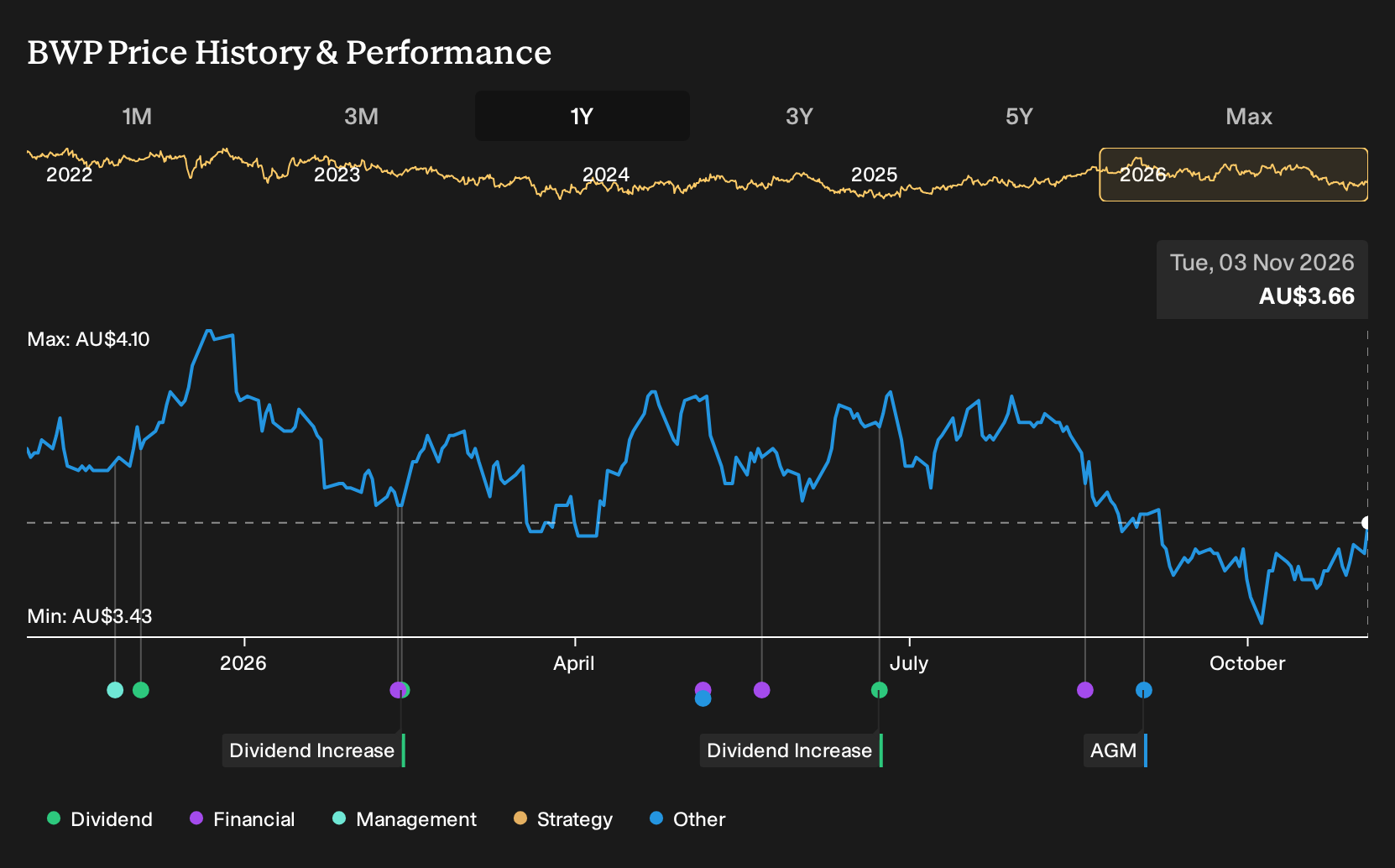
BWP Trust (ASX:BWP)
Overview: BWP Trust is a real estate investment trust that owns and manages Australian commercial warehouse properties, aiming to provide rental income for investors.
Operations: The trust generates A$209 million of revenue from investments in commercial warehouse properties across Australia, reflecting a focused single country portfolio.
Market Cap: A$2.9b
Income focused investors looking for stability in a higher cash rate setting often pay close attention to how BWP Trust funds and supports its distributions over time.
"The decision to guide to a FY27 distribution of A$0.200 per security with an expected payout ratio around 104% of funds from operations, supported by using accumulated capital profits after recent divestments, indicates that future income growth from the portfolio and asset recycling may already be reflected in current distributions. This may, in turn, limit upside to valuation multiples based on earnings.
The key consideration is what happens to that steady income profile if a single unseen funding pressure tightens more than expected.
That pressure point is exactly why it helps to read the full narrative for BWP Trust, where the funding mix, payout stretch, and asset recycling story are all explained clearly.
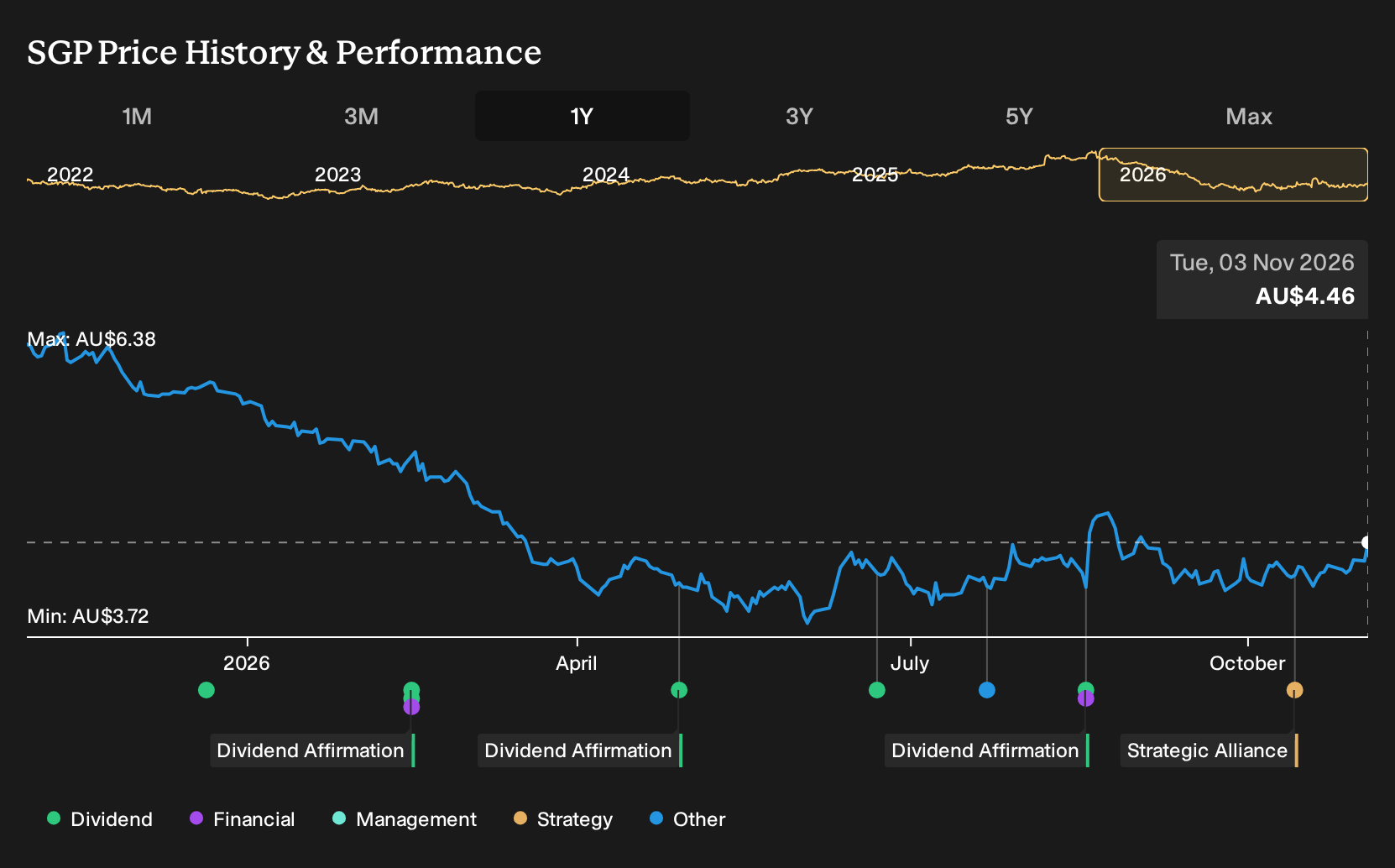
Stockland (ASX:SGP)
Overview: Stockland is a large Australian property group that develops, owns and manages residential communities, retail centres and logistics and workplace assets.
Operations: Stockland generates A$2.8b of revenue from Development activities and A$747 million from Investment Management, reflecting a mixed development and fee income model.
Market Cap: A$10.8b
Stockland fits this defensive dividend screen because its scale and mix of residential, retail and logistics assets create property backed cash flows that can help support payouts even as higher rates reshape borrowing costs.
"Ongoing capital partnering that has added A$5b of assets under management over three years with less than A$1b of extra net funds employed and around 25% per year growth in recurring management income supports the case that Stockland can keep increasing fee based revenue and FFO without matching balance sheet expansion."
What happens to margins and dividend headroom if one key assumption about funding costs or residential demand proves too optimistic?
That funding risk is exactly why it helps to read the full narrative for Stockland, which explains where Stockland’s recurring fees, gearing and dividend capacity could be decoupling.
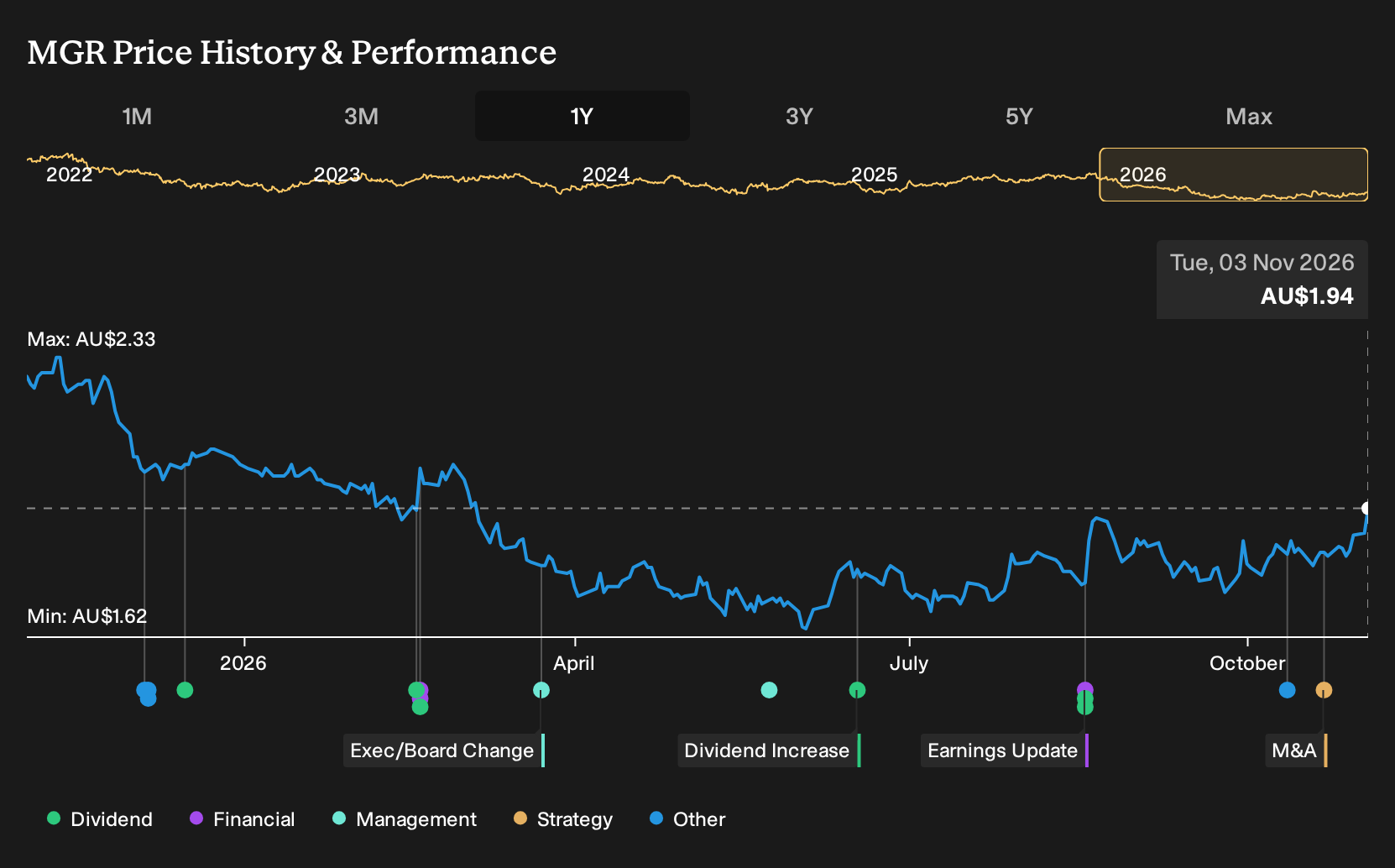
Mirvac Group (ASX:MGR)
Overview: Mirvac Group is a large Australian property group that develops and manages offices, retail, industrial and living assets, supporting dividend focused investors.
Operations: Mirvac generates about A$1.98b from Development, A$976 million from Investment and A$115 million from Funds activities, entirely in Australia.
Market Cap: A$7.6b
Mirvac Group earns its place in a defensive dividend screen because a broad mix of rent producing assets can help temper rate driven shocks.
"Mirvac’s underlying operations remain resilient despite the challenging interest-rate environment facing global real estate."
The real test for Mirvac’s income profile comes if one key assumption about funding costs or tenant demand proves too optimistic.
If that assumption is wrong or too cautious, the full narrative for Mirvac Group shows how Mirvac Group’s income engine, risks and potential re-rating pressures really line up.
Seeking Alternatives Before Momentum Flies
Fresh ideas move first. By the time everyone notices, early entry prices have often gone. Scan these under the radar themes now, before momentum gets away, and consider them early.
- Target resilient income streams as yields shift and tap into the 5 dividend fortresses while the strongest payers are still under the radar for now.
- Explore the next potential commodity breakout by scanning the 34 elite gold producer stocks before sentiment changes and market conditions evolve.
- Identify early growth stories in future infrastructure by filtering the 42 power grid technology and infrastructure stocks while it still reflects grid and electrification trends.
Have feedback on this article? Concerned about the content? Get in touch with us directly. Alternatively, email editorial-team@simplywallst.com