


Vodafone Group has delivered a strong share price run over the past few years, yet recent volatility and fresh headlines leave a clear question for you as an investor. Is the current valuation supported by what the business is generating in sales.
- Over the past 3 years, Vodafone Group has produced a 82.3% share price gain, which puts real weight on whether the current valuation lines up with the strength and quality of its revenue base.
- JPMorgan's recent warning about downside risks, including a possible reversal of German price increases and potential equity injections into the fibre joint venture, can affect how much of Vodafone's sales ultimately turns into cash that supports the equity story.
- There is a second opinion on Vodafone Group worth weighing. See what analysts think Vodafone Group's shares could be worth.
The issue now is whether Vodafone Group's share price is justified by its sales when set against this recent performance and the risks flagged in the latest news flow.
If you want more context around Vodafone Group and its valuation relative to its sales, it can help to compare it with other companies screened for 15 high quality undervalued stocks
Is Vodafone Group Still Cheap on Sales?
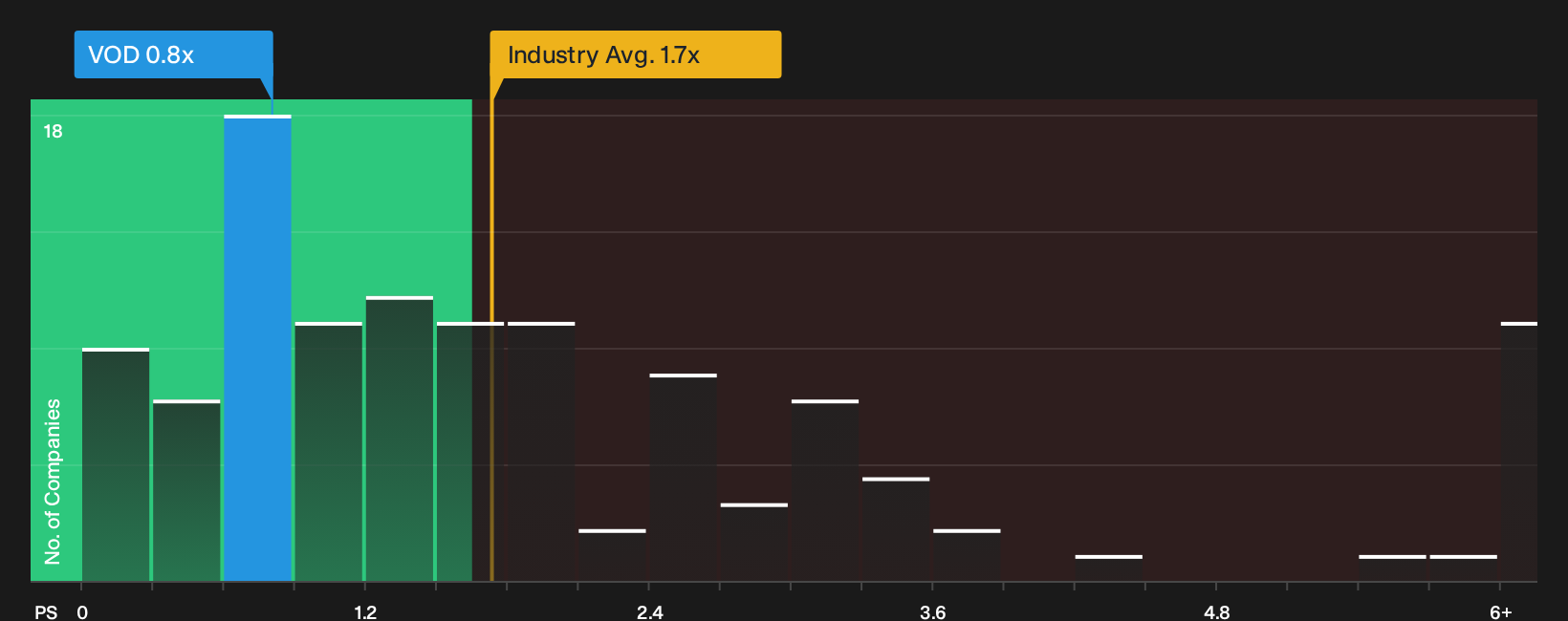
P/S works well for telecom groups like Vodafone Group because investors often focus on what they pay for each unit of revenue in a capital heavy, cash generative sector. On this lens, Vodafone trades on a P/S ratio of 0.8x, which is below the Wireless Telecom industry average of 1.7x and also below the peer group average of 2.2x. That means the market is currently valuing each euro of Vodafone’s sales at a lower level than many comparable operators.
The Fair Ratio model, which adjusts the benchmark P/S for Vodafone’s own margins, scale and business risks, also points to the current multiple sitting beneath the level implied by those fundamentals. As a result, the shares screen as undervalued on this metric. Because JPMorgan has raised concerns about German pricing and possible fibre equity injections, the low P/S may reflect investor caution as much as it does an opportunity, and you need to weigh those risks against the apparent discount before making a judgment. Explore the numbers behind Vodafone Group's P/S valuation.
The Vodafone Group Narrative: What Would Justify Today's Price?
Vodafone Group's Simply Wall St Narratives pick up where the P/S discussion leaves off. They explain which combinations of future growth, margins and earnings would need to occur for the stock to be worth meaningfully more or less than today’s price. Each narrative links its valuation number to a specific view of how Vodafone Group's growth profile, profitability and risks might evolve, giving you something concrete to revisit as fresh information becomes available.
Community views on Vodafone Group are split between those who see enough progress to justify the current tag and those who think expectations already bake in a lot of good news.
Bull case: roughly fairly valued
"The integration of VodafoneThree in the U.K., with increased annual cost and CapEx synergy ambitions of £800 million by FY2030 and a path to £1b by FY2032, is expected to improve net margins and free cash flow…"
Discover why this Narrative puts Vodafone Group at roughly fairly valued.
Bear case: 27% overvalued
"The numbers imply that Vodafone Group's share price already reflects successful execution on UK synergies, Africa and Safaricom growth, portfolio simplification, leverage reduction, dividend progression, and improved ROIC, leaving limited room for disappointment…"
Explore why this Narrative puts Vodafone Group at 27% overvalued.
One more Vodafone Group check before you move on
Price and story only go so far, because Simply Wall St's research has also highlighted specific risk checks on Vodafone Group that you may want to weigh for yourself. Take a closer look at 2 warning signs before settling on a valuation.
Have feedback on this article? Concerned about the content? Get in touch with us directly. Alternatively, email editorial-team@simplywallst.com