


The Zhitong Finance App learned that US President Trump said that he has no plans to launch an attack on Iran immediately after winning the election. In this midterm election, the Democratic Party overwhelmingly defeated its Republican Party to seize control of the National Assembly.
In an interview with the British media, Trump talked about the war situation and said, “It seems we are getting everything we want.” However, he added that the US is still prepared to escalate the conflict with the Islamic Republic of Iran if necessary. “I'm ready, we're all ready. If we need to do it, we've 'loaded the bullet', but there's probably no reason to do it at all.”
Subsequently, Trump said that the war in Iran, which has already entered its ninth month, was not the main reason for the Republican Party's fiasco — although polls unanimously showed that Americans opposed the conflict and were unhappy with the subsequent sharp rise in oil prices.
In an interview with the US media, Trump said, “People understand the necessity of what I am doing to Iran. The world's leading supporter of terrorism must not be allowed to possess nuclear weapons. You know, it's the most dangerous country in the world, and we've almost destroyed its power. This battle isn't over yet; maybe I will, maybe not.”
Mohammed Bagher Ghalibaf, Speaker of the Iranian Parliament and senior negotiator with the US, said that the election results showed that the American people had voted “no to war.”
Ghalibaf commented on the X platform that if the US actually chooses to restart large-scale attacks on Iran, it will face a “nightmare.”
Although officials such as Trump and Vice President JD Vance were slightly mild in their rhetoric about Iran this week, putting pressure on the decline in oil prices, the tension between the warring parties remains high. Tehran has stated that it is ready to deal with the attack at any time and will retaliate violently.
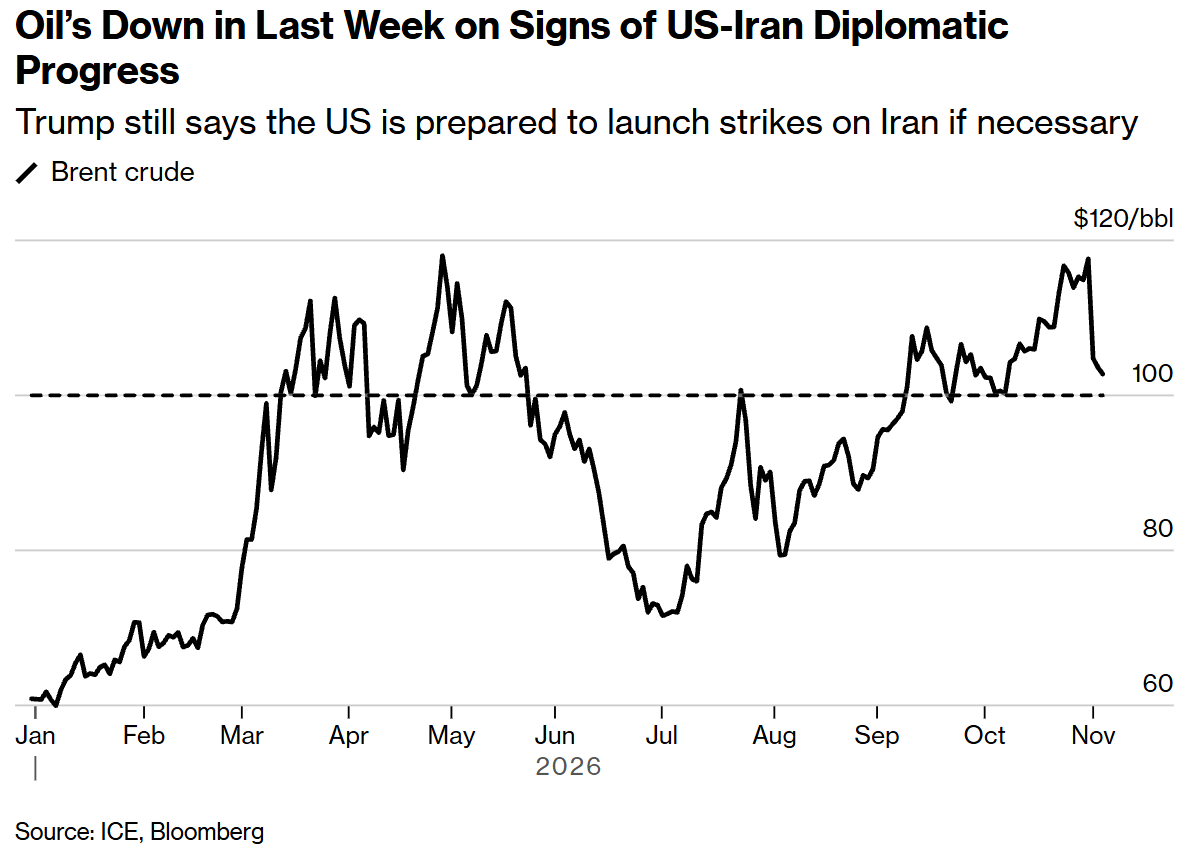
Oil prices fell due to signs of progress in US-Iran diplomacy
The Gulf Arab countries are anxious and are calling on Trump to give more time for diplomacy. America's allies, the United Arab Emirates, Qatar, and Saudi Arabia, were attacked thousands of times by Iranian drones and missiles during the most intense phase of the war from the end of February to the beginning of April before the cease-fire.
Negotiations between Iran and the US mediated by Qatar and Pakistan have made little progress in recent weeks. However, according to media reports on Tuesday, Qatari officials are expected to receive feedback from both sides on the new plan within the next day or two.
The two countries still have differences on many issues: Iran wants the US to lift the maritime blockade on its ports, while Washington is seeking concessions from Tehran on nuclear activities.
Oil prices fell on Wednesday. Brent crude oil was reported at $104 per barrel, far lower than the closing price of about $118 last week, but this year's cumulative increase was 70%, mainly due to the war and its impact on shipping in the Strait of Hormuz — about one-fifth of the world's oil and liquefied natural gas supplies are usually transported through this strait.
This week, Iranian President Masood Pezzahizyan said that Supreme Leader Mujtaba Khamenei has granted his government greater powers to advance peace talks. Pezekhizyan said that this may include issues that Tehran previously regarded as “non-negotiable.”
The war began at the end of February, when the US and Israel attacked Iranian targets and killed senior officials, including former Supreme Leader Ali Khamenei.
US officials initially said that the war would last no more than four to six weeks, and Trump has become increasingly impatient with Iran's resilience. Tehran's counterattack has created chaos in the Persian Gulf region and the wider Middle East.
Rising fuel costs — US diesel prices have reached record highs, and the average price of gasoline has topped $4 per gallon — has largely prompted Americans to turn against the conflict.