


Eurozone rate headlines are pulling investors in two directions at once, with softer wage projections hinting at gentler inflation while energy shocks and sticky price expectations keep the European Central Bank on edge. That tug of war creates pockets of mispricing where steady dividends and value-style stocks can fall out of favour or quietly gain attention. This article walks through three Eurozone large caps exposed to this rate story and explains how the shifting backdrop might matter for each one.
The stocks highlighted below are just a sample of this rate-sensitive dividend and value idea, while the full screen surfaced 12 more Eurozone large caps with equally compelling income and valuation stories that are not covered here. To identify and analyze the highest conviction plays for your watchlist, head straight into the Eurozone Rate-Sensitive Dividend & Value Stocks screener.
A2A (BIT:A2A)
A2A looks like a textbook fit for this Eurozone rate-sensitive dividend and value theme, with a utility-style profile that many investors treat as a partial bond alternative when policy signals from the ECB are mixed and income visibility matters most.
A2A S.p.A. runs electricity and gas generation, networks, district heating, water and waste services, with most revenue coming from Generation and Trading at about €10.4b, plus €2.3b from Circular Economy and €1.2b from Smart Infrastructures, and the group valued at roughly €7.4b in market cap.
"A2A's continued focus on electricity networks, with total regulated asset base around €4b and electricity distribution RAB growth supported by new tariff mechanisms, positions regulated grid revenues and segment EBITDA for further contribution as electrification and connection requests progress."
What happens if one unseen pressure on A2A's funding costs and cash generation shifts at the same time as those network investments ramp up?
If that funding squeeze is what you are really weighing, the full narrative for A2A outlines how A2A's capital plan, dividend profile and rate sensitivity could be decoupling.

Électricite de Strasbourg Société Anonyme (ENXTPA:ELEC)
Électricite de Strasbourg Société Anonyme is a long-established French utility that fits the rate-sensitive dividend and value theme through its regulated power grid and heating activities. It generates about €880 million from electricity and gas production and marketing, €337 million from distribution, and has a market cap of roughly €1.1 billion.
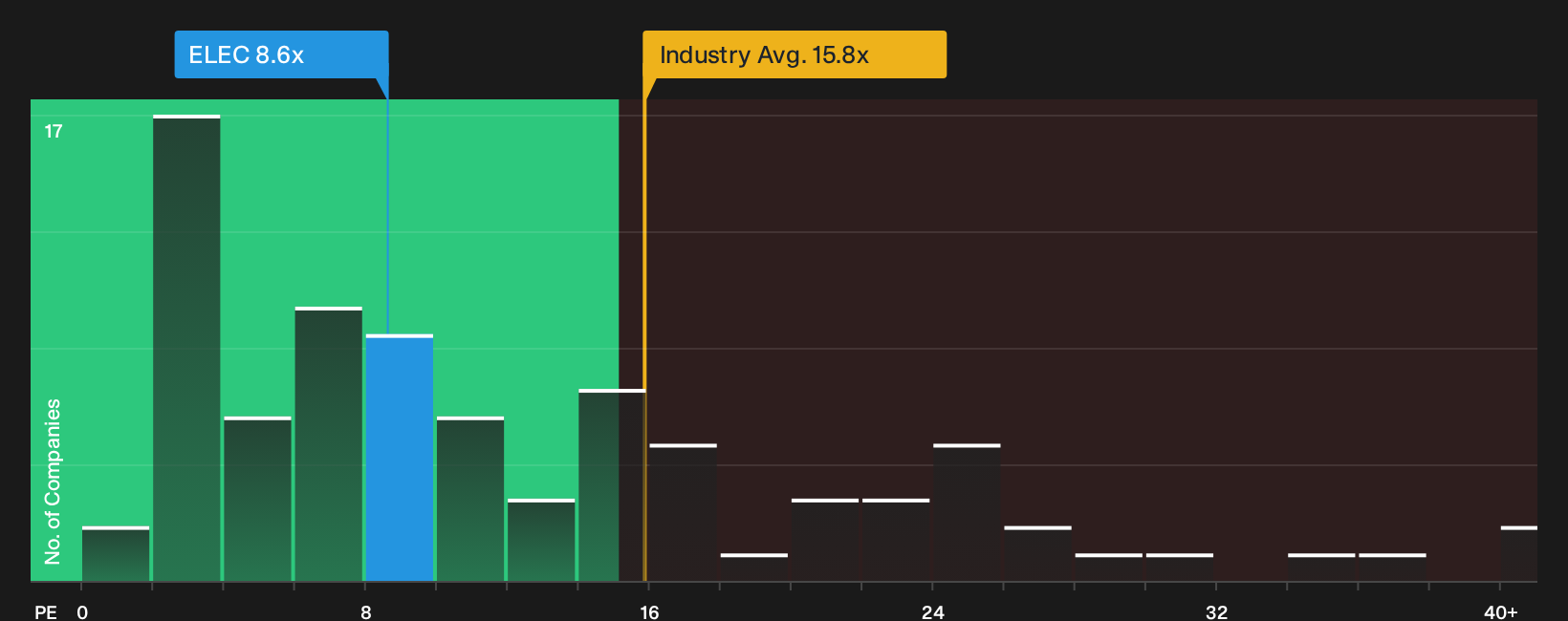
Électricite de Strasbourg Société Anonyme brings a regulated French grid, a P/E of roughly 8.6x against higher electric utility peers, a high 8.78% yield and a reported ROE of 20.1%. Income investors may consider that profile, depending on how one unresolved pressure on funding costs and free cash flow plays out.
That funding question is exactly what the analysis report for Électricite de Strasbourg Société Anonyme unpacks, showing how Électricite de Strasbourg Société Anonyme's yield and valuation could react if financing costs accelerate.
Rubis (ENXTPA:RUI)
Rubis fits the Eurozone rate-sensitive dividend and value theme through its fuel distribution and infrastructure-like energy assets. The business leans on a broad mix of energy products and renewables that can appeal when investors want income supported by tangible operations.
Rubis, a Paris headquartered energy distributor with a market cap of about €3.7b, earns roughly €7.3b from Energy Distribution and about €68 million from Renewable Electricity Production, with only small eliminations and parent company adjustments affecting reported totals.
"Rubis’ investment in low carbon energy, particularly the Photosol solar portfolio that reached 1.5 GWp of secured capacity and generated €25 million of Power EBITDA in H1 2026, reflects potential for additional revenue from new projects entering operation and a rising earnings contribution from long term contracted power."
One question for investors is what happens if an unseen pressure on funding costs shifts at the same time as contracted power flows and fuel logistics margins become more important for Rubis.
With that funding squeeze in mind, the full narrative for Rubis shows how Rubis could balance financing risks with contracted power, dividend resilience and any overlooked upside in its shift toward low carbon energy.

Curious About What You Might Be Missing Next
Fresh opportunities do not stay under the radar for long. Some are already building breakout momentum while others are quietly dropping into better value. Scan them before the crowd and get in early.
- Spot sturdier balance sheets before the market fully catches on by running the list of solid balance sheet and fundamentals (196 results) through your next round of portfolio ideas.
- Position for the next leg of the energy transition by tapping into the 16 nuclear energy infrastructure stocks while nuclear infrastructure stocks are still flying under the radar.
- Turn early curiosity about gold into a focused shortlist by scanning the 34 elite gold producer stocks before momentum and sentiment move ahead without you.
Have feedback on this article? Concerned about the content? Get in touch with us directly. Alternatively, email editorial-team@simplywallst.com