


Procter & Gamble (PG) just tapped debt markets again, completing multiple euro and US dollar fixed income offerings that raised several billion in long dated notes at fixed coupons.
Procter & Gamble’s latest bond raises arrive as the equity story has been quietly gathering pace, with a 30 day share price return of 11.83% and a year to date share price gain of 14.30%, alongside a 1 year total shareholder return of 13.31% that reflects both price moves and reinvested dividends.
Scan how other consumer staples are handling debt, dividends, and breakout charts by reviewing the hand picked 30 resilient stocks with low risk scores alongside Procter & Gamble’s latest moves.
The sharp move in Procter & Gamble over the past month could be pointing to investors finally re-rating the underlying earnings machine rather than just chasing a chart. Do current valuation markers back that up, or suggest that sentiment has run ahead of itself?
Most Popular Narrative: 51% Overvalued
On the most followed valuation work for Procter & Gamble, the fair value sits at $107.52 against a last close of $162.06, which is a wide gap for a mature consumer staples heavyweight.
Despite this, I feel the future for this company still holds some friction by the appearance of fierce competition, pressuring Procter & Gamble to reduce its prices and by consequence its operating margins. Also, unless something exceptional happens, given the maturity of the business, I see its revenues grow below or at the economy growth rate.
See why 34 investors see Procter & Gamble as 51% overvalued.
Result: Fair Value of $107.52 (OVERVALUED)
Still, the Procter & Gamble story could change quickly if competitive pressure bites into its 17.5% profit margin or if the 8.32% discount rate rises materially.
Find out about the key risks to this Procter & Gamble narrative.
Another View On Procter & Gamble’s Valuation
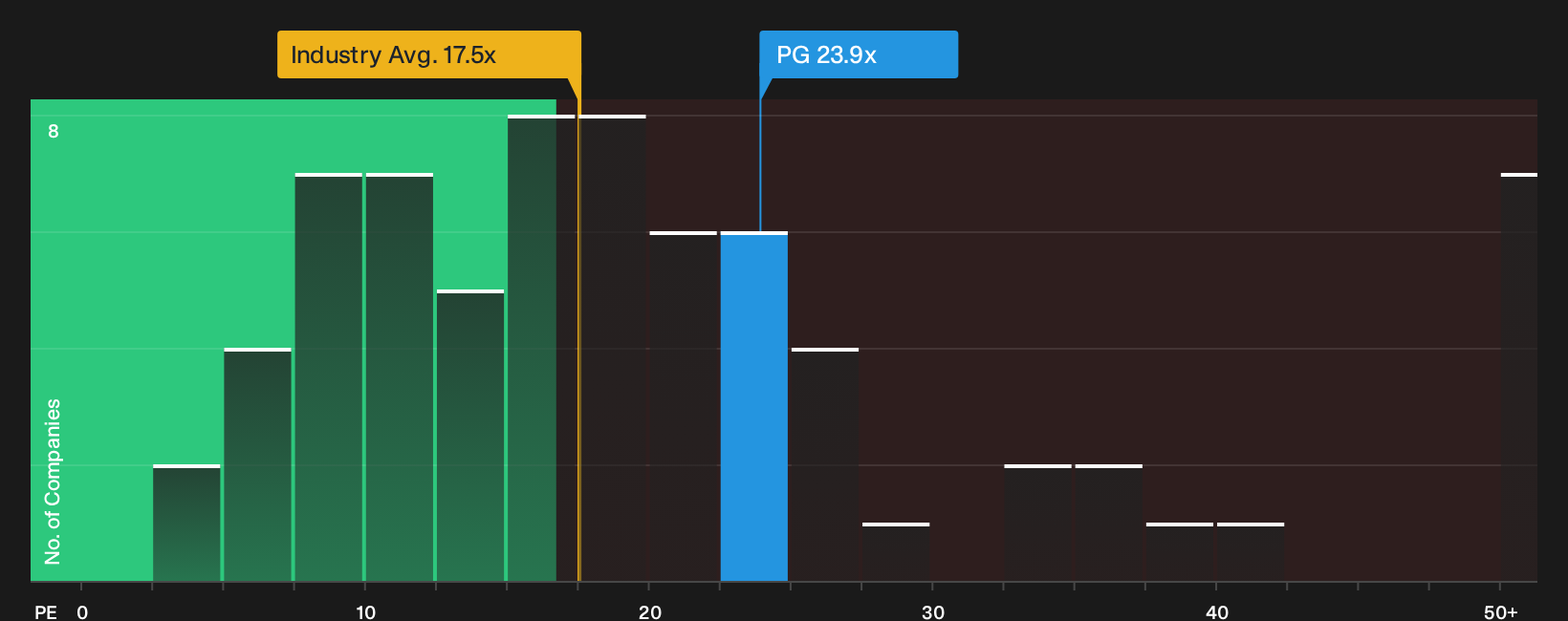
The narrative workup paints Procter & Gamble as 51% overvalued, yet the market’s own yardstick tells a different story. On a P/E of 23.9x, the stock trades cheaper than both its direct peers at 26.9x and an estimated fair ratio of 27.8x. That gap suggests investors are paying less than the model implies for each dollar of earnings. Is the crowd underpricing the stability on offer, or simply demanding a lower entry point for slower growth?
See what the numbers say about this price, find out in our valuation breakdown See what the numbers say about this price — find out in our valuation breakdown.
Next Steps
Views on Procter & Gamble in this piece range from cautious to outright skeptical, so consider reviewing the data yourself and weighing both sides using 3 key rewards and 2 important warning signs
Looking for more investment ideas beyond Procter & Gamble?
Do not stop your research with Procter & Gamble. Broadening your watchlist with high quality ideas can help you compare resilience, income potential, and value across sectors.
- Target dependable income streams by scanning for companies that resemble long term income engines using the 4 dividend fortresses.
- Hunt for mispriced quality by lining up opportunities that score well on value and fundamentals through the 35 high quality undervalued stocks.
- Prioritize resilience first by focusing on financially robust businesses using the list of solid balance sheet and fundamentals (23 results).
Have feedback on this article? Concerned about the content? Get in touch with us directly. Alternatively, email editorial-team@simplywallst.com