


Braveheart Bio has had a rough run so far in 2026, and the slide in the share price raises a basic question for investors who care about balance sheets. Is the current market value still in line with what the company’s book value can support?
- The stock is down 32.5% year to date, which puts fresh pressure on the question of how solid the valuation is relative to the assets on Braveheart Bio’s balance sheet.
- Upcoming American Heart Association presentations for BHB-1893 may shape expectations for future funding needs and how quickly the business might convert its research pipeline into assets that feed into book value.
- There is a second opinion on Braveheart Bio worth weighing. See what analysts think Braveheart Bio's shares could be worth.
For investors, the debate is whether Braveheart Bio’s current share price fairly reflects what its reported book value can justify.
If you want more context on how Braveheart Bio’s book-value story stacks up, it can help to compare it with other companies using the 35 high quality undervalued stocks.
Putting Braveheart Bio in Context on Book Value
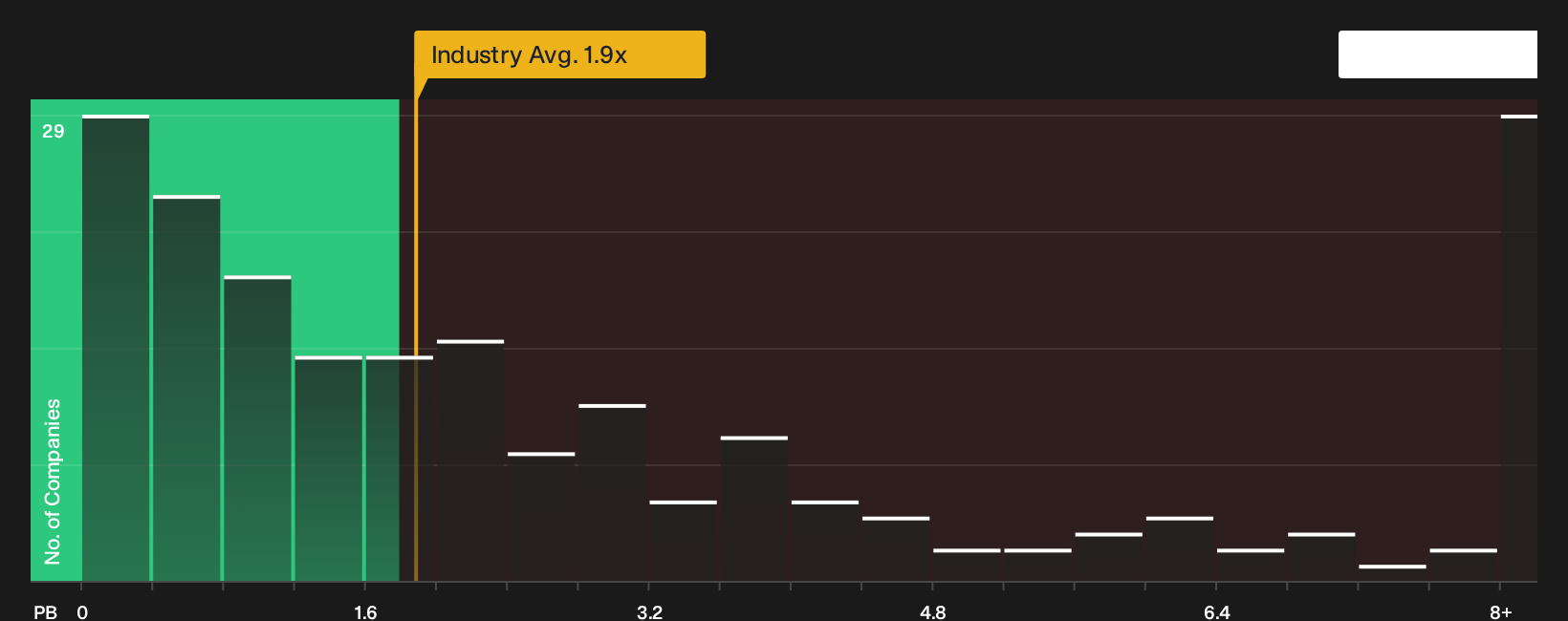
The P/B ratio suits Braveheart Bio because the balance sheet is the main hard reference point while the business is still loss making. Right now the stock shows a P/B of -17.1x, which reflects a decline in shareholder equity rather than a conventional premium or discount to assets.
Because the equity base has moved below zero, this negative P/B does not give a usable signal on whether the current share price is high or low. It mainly indicates that holders are paying for future outcomes around BHB-1893 and other programs rather than for existing net assets, even with the upcoming American Heart Association data in view. To judge valuation, investors need to consider the cash runway, potential future capital raises and the possibility that Braveheart Bio eventually rebuilds a positive book value that the market can anchor to. With this multiple ruled out, take a closer look at what Braveheart Bio's balance sheet and debt position show instead.
The Braveheart Bio Narrative: What Would Justify Today's Price?
Simply Wall St Narratives pick up where Braveheart Bio's book value puzzle leaves off by spelling out which assumptions on future growth, margins and earnings would need to hold for the shares to look meaningfully higher or lower than today’s price. Each one treats Braveheart Bio's implied fair value as a thesis you can track over time rather than a single frozen snapshot.
A written, number-driven narrative on Braveheart Bio provides a clear reference point for the assumptions about funding, cash use and the future economics of BHB-1893 that would need to hold for today’s valuation to appear reasonable. With new American Heart Association data on BHB-1893 expected, having that framework in place now makes it easier to compare expectations with the actual results that investors can track from the company.
Share your own Narrative for Braveheart Bio and set out the assumptions behind your valuation.
The Braveheart Bio story is not just about what the market is willing to pay
Price and book value only tell part of the Braveheart Bio puzzle, because the research has also highlighted potential pressure points in the fundamentals that investors may want to inspect for themselves. Take a closer look at 4 warning signs (2 major) before settling on a valuation.
Have feedback on this article? Concerned about the content? Get in touch with us directly. Alternatively, email editorial-team@simplywallst.com