


The Morning Bull - Canadian Market Morning Update Thursday, 5 Nov 2026
Canadian equities are set for a softer open, with sentiment dominated by another weak reading on domestic business activity. The Canada Composite PMI printed 48.1 in October, keeping private sector output in contraction territory for a fifth straight month.
That single data point matters more than the upbeat headlines on trade. Record September exports of about C$78.5b to C$78.6b and a C$5.4b surplus highlight external strength, but the PMI shows domestic demand still fading and cost pressures persisting.
Weak internal demand, combined with firmer input costs, complicates the interest rate picture. Higher selling prices feed inflation concerns, while softer orders argue against tighter policy, which leaves borrowing costs and earnings expectations for Canada focused sectors in an awkward middle ground.
The key question now is which signal policymakers and investors treat as the truer guide. If upcoming Canadian labour data contradicts the PMI weakness, the case for steady or even firmer rates strengthens. If it aligns, the growth worries take precedence.
Stocks to Watch Before the Opening Bell
Canadian Natural Resources (CNQ)
Fresh third quarter results put Canadian Natural Resources in focus. Management reported record thermal in situ and North American conventional liquids production and said the Horizon turnaround finished safely and ahead of schedule, with an eye to longer intervals between shutdowns. The group has hit its net debt target and now plans to direct all free cash flow to shareholder returns.
MDA Space (MDA)
MDA Space reported third quarter 2026 revenue of $498.1 million, about 21.5% to 22% higher year over year, with adjusted EBITDA of $96 million and a 19.3% margin. The firm lifted its full year 2026 revenue outlook to a range of $1.90 billion to $1.95 billion and adjusted EBITDA to a range of $355 million to $375 million, while pointing to a $3.9 billion backlog and pending Blue Canyon and CLS acquisitions.
South Bow (SOBO)
South Bow released third quarter 2026 results alongside a fresh 2027 outlook and a quarterly dividend of $0.50 per share payable in January 2027. Management is progressing the Prairie Connector and Liberty Bridge Pipeline projects and is targeting a final investment decision around mid 2027. Readers may want to track how capital plans line up with that dividend commitment.
Top Movers
- Benz Mining (TSXV:BZ) surged 14.48%, extending momentum after fresh BMO Outperform initiation and bullish exploration commentary.
- G Mining Ventures (TSX:GMIN) jumped 13.97%, with traders responding to strong trading volumes and ongoing gold project development progress.
- Equinox Gold (TSX:EQX) climbed 12.40%, as investors focused on higher Canadian gold output contributions and the new Valentine mine.

Top Losers
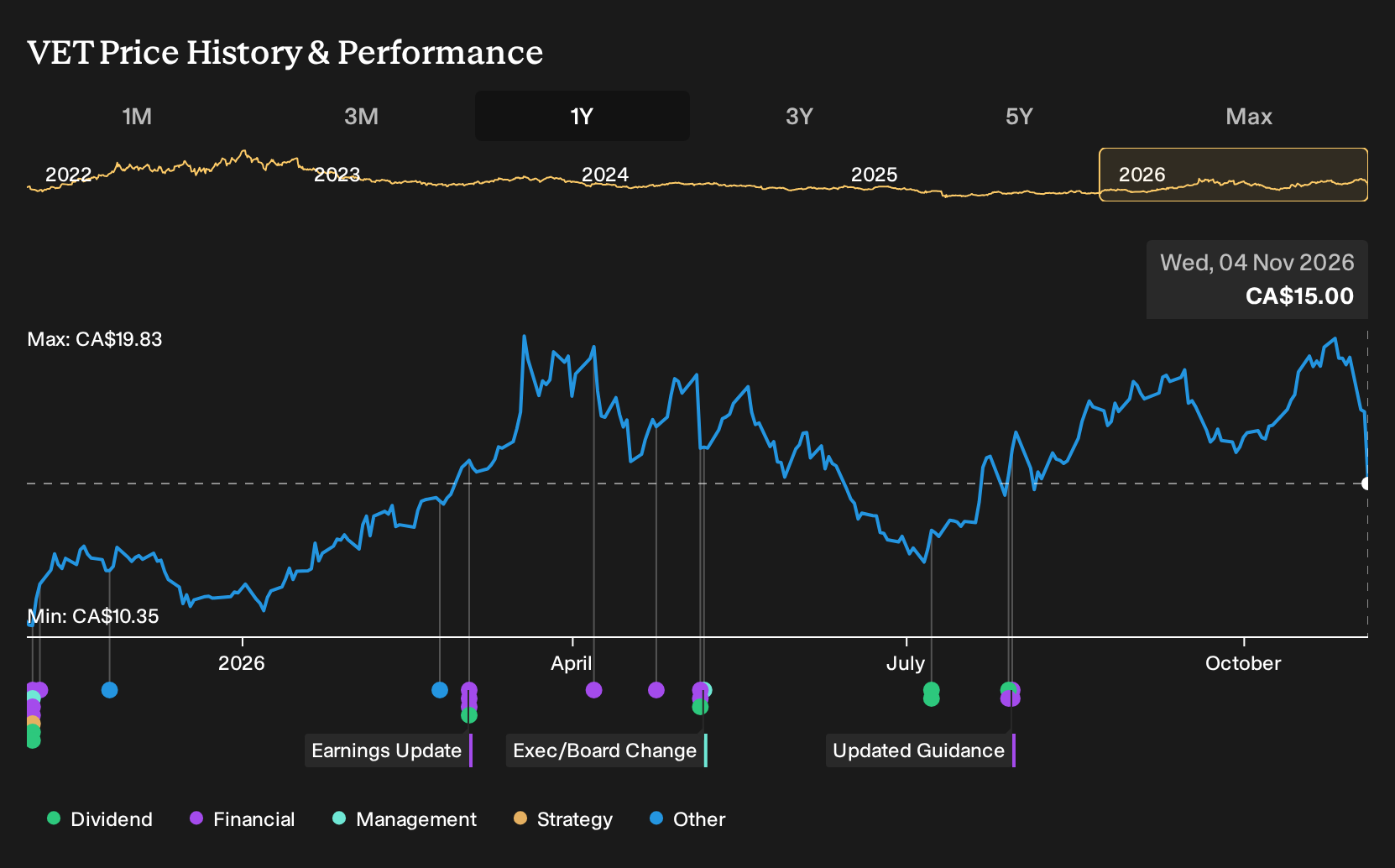
- Vermilion Energy (TSX:VET) fell 13.54% after third quarter results showed a net loss despite higher reported revenue.
- Enerflex (TSX:EFX) declined 12.90% as TD Securities cut its rating to Hold from Buy.
- Superior Plus (TSX:SPB) dropped 11.81% after TD Securities downgraded the stock to Sell from Hold.
On The Radar
For Canadian investors, the next few sessions hinge on domestic jobs data and a heavy run of utilities, pipelines, miners, and financials reporting Q3 results.
- Canada labour force survey, Fri 6 Nov. The unemployment rate is projected at 6.5% with employment expected to rise 13,600 after a decline of 68,300. A softer print would keep pressure on domestic demand and rate expectations already framed by the 48.1 Composite PMI.
- Canada Ivey PMI, Fri 6 Nov. The index last sat at 58.2 with consensus near 58. A weaker reading would reinforce the message of fading private sector activity that is already weighing on Canada focused equities and the loonie.
- Enbridge, Fri 6 Nov. Q3 2026 results arrive before the bell, and cash flow guidance around its regulated and contracted pipeline assets will matter for how investors think about dividend resilience across Canadian midstream stocks.
- Brookfield Asset Management, Fri 6 Nov. The 7:00 AM Eastern Q3 2026 update puts fee related earnings and fundraising trends in focus. This feeds directly into sentiment on Canadian alternative asset managers and listed private equity vehicles.
- Hydro One, Tue 10 Nov. Pre market Q3 2026 numbers will highlight regulated revenue and operating costs in Ontario wires and transmission. This is a key reference point for how rate decisions and inflation pass through into Canadian utility cash flows.
Sector & Industry Watch
Energy: Strong year, rough week for oil
Energy stocks have pulled back over the past 7 days, with the sector down about 7% even though the 1 year return is still close to 29%. Recent updates from Canadian Natural Resources, Surge Energy and InPlay Oil keep attention on dividends, free cash flow and 2027 capital plans while share prices cool.
If you hold Canadian producers, the near term swing factor is Friday’s Canada employment report, since a weaker jobs backdrop can feed into fuel demand expectations and how investors view planned dividend increases or bigger drilling budgets.
Tech: Selling pressure stays concentrated in chips
Tech remains under pressure, easing about 5% over the past week and down roughly 14% over 12 months, with Semiconductors showing a much steeper slide and a very large year on year decline. Recent Q3 updates from Lumine Group, Constellation Software, Topicus and others show revenue growth and acquisitions, while sector returns stay weak.
For Canadian tech investors, CGI’s results and call on 11 November are the next clean read on IT budgets, because its comments on cloud, logistics and automation spending will shape how comfortable the market feels holding software and services after such a sharp move lower in Semiconductors.
Financials: Dividends and deals keep income story alive
Financials have added to an already strong run, gaining about 3.4% over the past week and sitting more than 30% higher over 12 months, with Banks up roughly 46% over the year. Fresh news from Sun Life, Manulife, TD, Fairfax India and DeFi Technologies spans higher common share dividends, preferred payouts, buybacks and fresh equity stakes.
If you own Canadian banks or insurers, Friday’s domestic unemployment and employment change figures are the main stress test, since labour trends feed into credit card spending, mortgage demand and potential loan losses that support those payout and buyback decisions.
Real Estate: REITs lean on rents as rates bite
Real Estate has started to recover, up roughly 3.3% over the past week and about 5% over 30 days, even though 1 year and year to date returns are still slightly negative. Updates from Killam Apartment REIT, CAPREIT, Granite REIT and Mainstreet Equity show high occupancies, selective asset sales and unit splits aimed at liquidity while funding costs stay elevated.
For income focused investors, Friday’s Canada labour force survey is the key check, because tenant incomes and household formation affect apartment rent growth, and a softer job market can eventually influence office and industrial leasing decisions that support REIT distributions.
Consumer Staples: Defensive shares quietly grind higher
Consumer Staples have had a solid stretch, rising about 4.5% over the past week and more than 10% over 30 days, with the 1 year return near 18%. Companies such as Loblaw, Empire’s Farm Boy unit and North West are focusing on dividends, supply chain upgrades and managing freight and fuel costs while keeping shelves stocked and prices competitive.
If your portfolio leans on grocery or pharmacy exposure for stability, the next macro cue is Canada’s unemployment print on Friday, since household job security tends to drive grocery basket size, trading up or down on brands and the room retailers have to hold margins without losing traffic.
Find Stocks Poised To Move
If steady dividends and buybacks are the part of the Canadian banks and insurers story that matters most to you, start with this list of 3 dividend fortresses
Have feedback on this article? Concerned about the content? Get in touch with us directly. Alternatively, email editorial-team@simplywallst.com