


Wall Street loves a good panic. The AI trade wobbled hard last week. Software names got smoked. Fear spread fast. But Dan Ives did not flinch. The Yorkville Ives analyst pounded the table on Apple (AAPL) and told clients to buy the dip. His message was simple. Apple is not an AI laggard – it is an AI rental machine. The company does not have to create huge data centers, but rather sources artificial intelligence using suppliers and memory chips. This allows flexibility in costs, letting it maintain positive cash flow. Ives sees the iPhone Duo upgrade cycle as the real catalyst nobody is pricing in. Wall Street is obsessing over memory costs, but Ives is looking at sold-out stores and a services flywheel that keeps spinning.
The bears see margin pressure, yet Ives sees a buying opportunity. The stock is not cheap. Still, the bull case outweighs the fear, and Apple just proved them wrong again. Here is why the smart money is not blinking.
The Stock Keeps Winning Even When Tech Wobbles
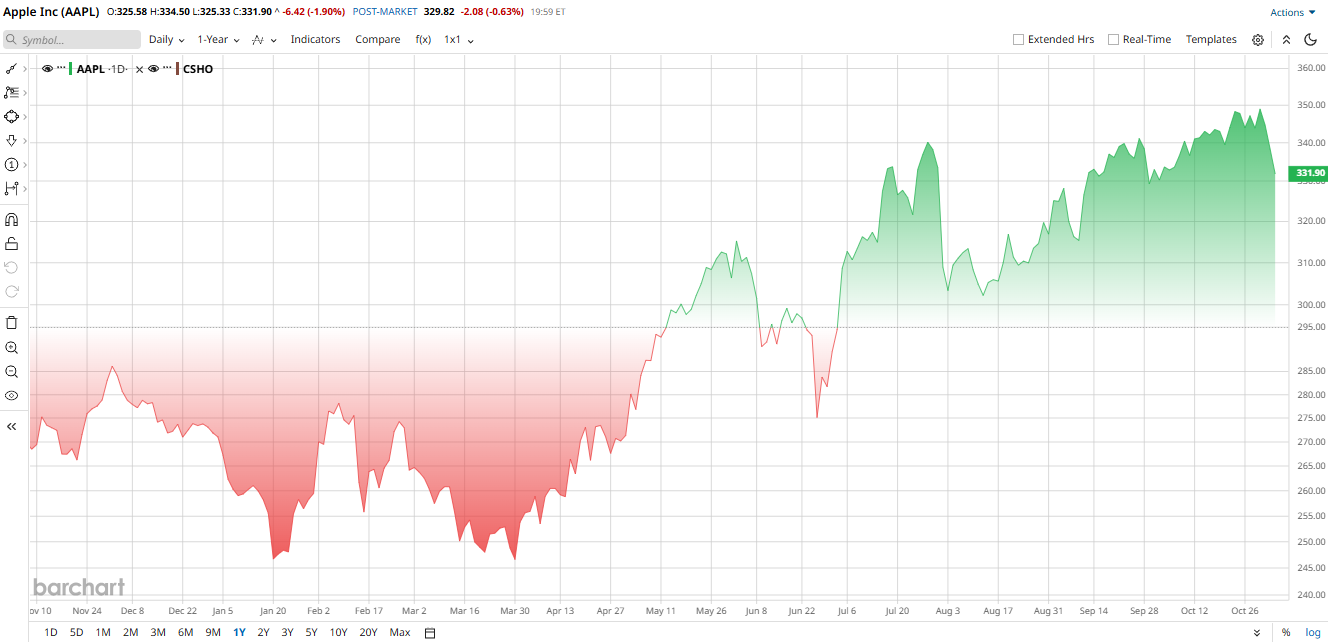
After slumps in the first half of 2026, Apple shares have rebounded strongly, able to recover the early losses and gain more than 28% year-to-date (YTD). There are definite triggers for the rally. The first one is the iPhone Duo launch. Other examples include record service revenue and aggressive buybacks.
After 2018, Apple again paid back a total of $102 billion to shareholders. That's 75% of FCF. The stock has also been welcomed as hyperscalers splashed billions on AI CapEx. Apple only invested $9 billion in property and equipment, equating to less than 2% of revenue. This discipline is a favorite among investors.
The bad news is that the cost of memory increases over time. Net margins for the December quarter were guided to fall to 45% to 46% due to management's efforts. This put some of the traders on their guard, but Apple's long-term potential is intact.
However, this growth came at a cost: AAPL stock is very expensive compared to sector peers. Its Price-to-Book value is 46, far above the sector median of 4.5, and Price-to-Sales is 11 compared to the sector’s 3.4, signaling that shares trade at a significant premium. The dividend yield is 0.31%, well below the sector’s 1.09%, indicating weaker income potential.
The AI Story Nobody Is Pricing Correctly
This is where it gets interesting. Apple isn't exactly an owner of its AI. It rents it. The company's profit is from memory sales, supplier income, and cloud partners. Those are in cost of sales and not capex. It is variable. It can be quickly repriced. Once a hyperscaler is ready to build a data center, pricing options can't be significantly changed. The Ives thesis is about that. Apple is the only mega cap that can avoid the “AI capex trap” for Mr. Apple Boycott, at least according to him.
The Broadcom (AVGO) deal proves the point. Over $30 billion is projected to be spent by Apple when it signed a multi-year deal with Broadcom in July. The agreement includes custom silicon and wireless chips through 2031. Apple is getting locked in, but does not own the fabs. When prices of memory decrease, Apple’s costs likewise drop quickly. When the price goes up, Apple increases device pricing. That's a moat. According to Ives, the Duo could achieve 10 million sales over the coming few quarters. The Street just doesn't have the swing factor.
Record Quarter but December Guidance Is the Story
Apple has just released its Q4 2026 earnings. Revenue hit $114.5 billion. This is up 12% YOY. Net income totaled almost $30.7 billion. Adjusted EPS was $2.10. That's a 14% increase from last year, and revenue for the iPhone grew to $57.6 billion, or 17%, while Mac revenue jumped 24%.
Tim Cook was straight to the point on the call. The company reported a record in terms of total revenue, he said. He cited the installed base and upgrade activity. Advice is the tricky part, though. The December quarter sales expansion is expected to be between 7% and 10% on the top line, continuing to maintain gross margin at 45% to 46%. This is down from 47.9% one year ago.
The problem is the price of memory. Analysts forecast a print around $9.61 per share for fiscal 2027. There is consensus on the revenue estimate of around $480 billion. Apple is still an emerging business. Its rate of growth is sluggish, and it's becoming more expensive on parts.
What Wall Street Is Saying About Apple Stock
Analysts are split on Apple stock’s future. Morgan Stanley has a $350 Target and is Overweight. Goldman Sachs’ Buy target is $380. JPMorgan analysts have raised the valuation of its stock to Overweight at $355.
The black line is KeyBanc. Analyst Brandon Nispel rates Apple Underweight with a target price of $250, he states that there's extreme undervaluation due to a hardware slowdown. Ives disagrees. He explained that Apple's place is where demand is contracted, funding is contracted, and velocity growth is certainly increasing.
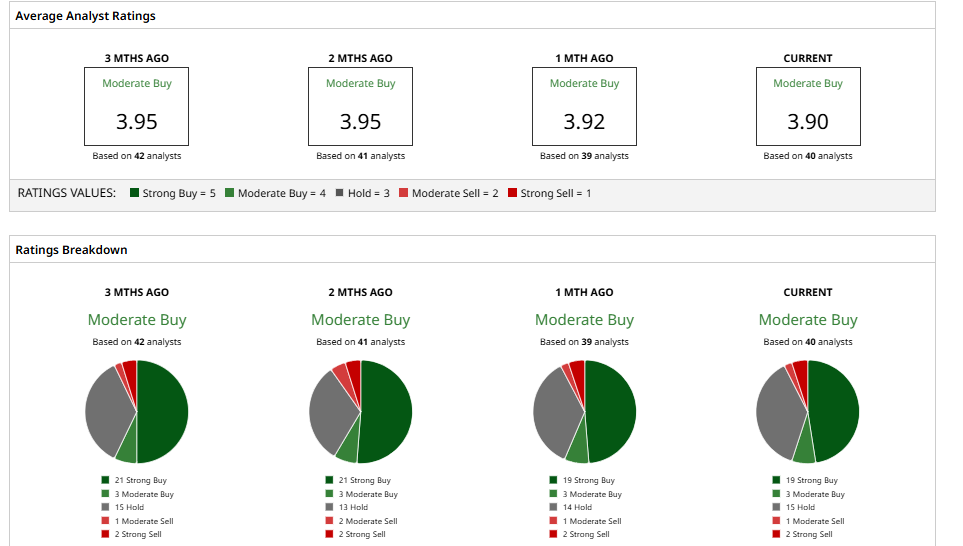
The overall rating is consensus “Moderate Buy.” As Apple stock recently hit an all-time high at $349.9, it is also surging, with a mean price target of $337.8. That suggests a marginal decline from the recent price.
On the date of publication, Nauman Khan did not directly have a position in any of the securities mentioned in this article. All information and data in this article is solely for informational purposes. For more information please view the Barchart Disclosure Policy here.