


Politics just rewired part of the clean energy story. A Democratic sweep of the 2026 US midterms has sharply cut perceived policy risk around renewables, and traders have already pushed many US exposed green developers higher as they price in steadier tax credits and fewer project roadblocks. This article unpacks what that shift could mean and profiles 3 stocks from the screener that are closely tied to this news.
The three stocks covered below are a small sample. The full screen surfaced 38 more US exposed renewable energy developers and utilities with equally compelling policy stories around wind, solar and storage that do not fit into this article. If you want to identify your own angles off the back of the election result, head straight to the US-Exposed Renewable Energy Developers screener to filter, analyze and focus on the cleaner energy developers that best match your conviction level.
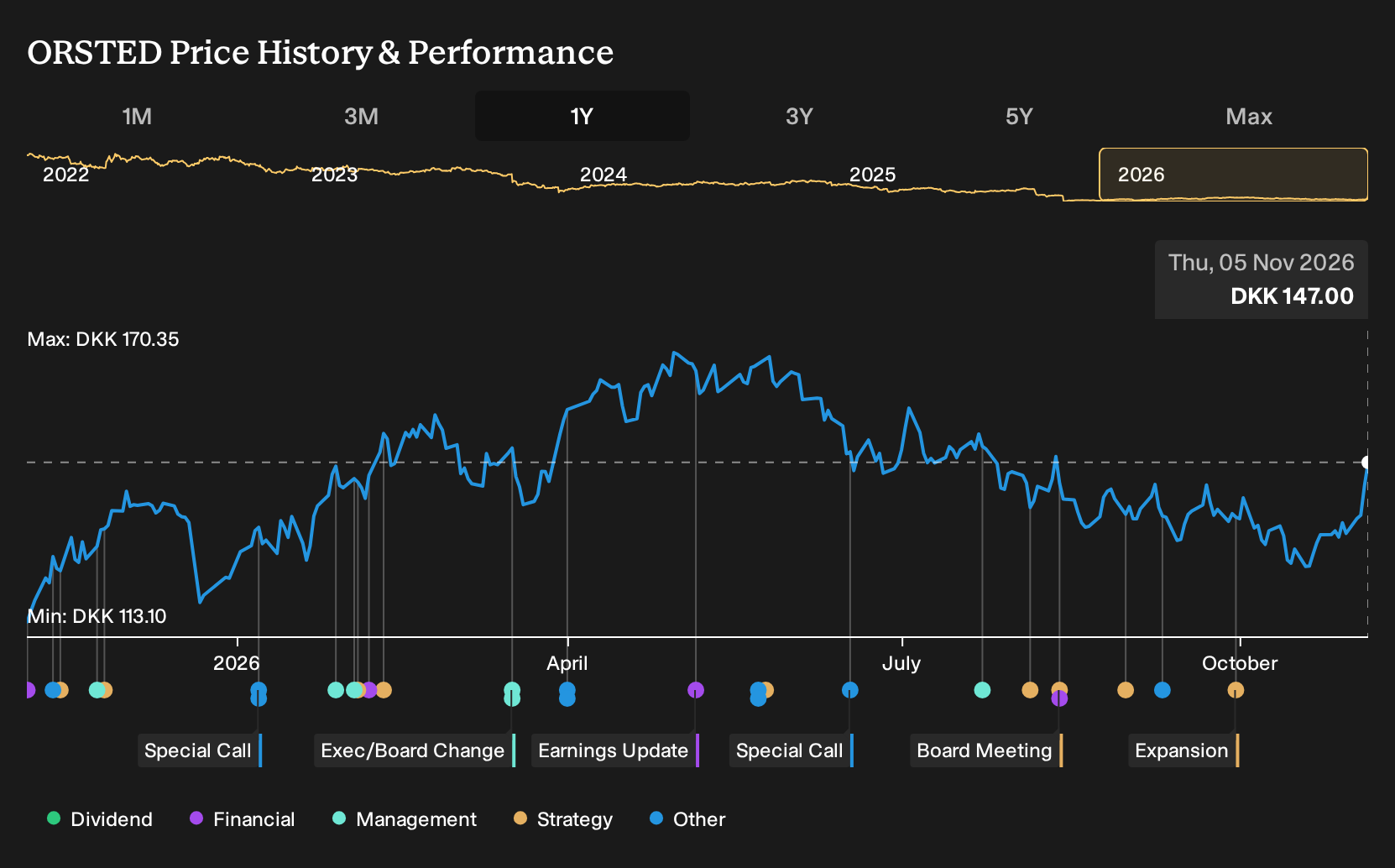
Ørsted (CPSE:ORSTED)
Overview: Ørsted develops, builds and operates offshore and onshore wind farms, solar projects and energy storage, with a significant US focused renewables pipeline.
Operations: Most revenue comes from Offshore at DKK 64.1b, with Bioenergy & Other at DKK 17.0b and Onshore at DKK 2.9b.
Market Cap: DKK 194.2b
Ørsted matters for this screener because it is one of the purest plays on large scale offshore wind linked directly to US tax-credit and permitting trends.
"Ørsted controls approximately 25 to 30% of the global offshore wind market."
What happens to future project margins if one less visible pressure on financing costs and policy support shifts direction again.
If that pressure point matters to you, read the full narrative for Ørsted to see how Ørsted’s US pipeline risk and upside could be separating from old assumptions.
Public Service Enterprise Group (PEG)
Overview: Public Service Enterprise Group runs regulated electric and gas networks and nuclear generation in the US, with growing clean energy programs that fit the renewables focused screener theme.
Operations: Public Service Electric and Gas supplies about US$10.1b of revenue and PSEG Power & Other about US$3.4b, all earned in the United States.
Market Cap: US$36.5b
Public Service Enterprise Group matters here because it blends regulated New Jersey wires and gas assets with cleaner generation that is closely tied to federal incentives and evolving state level support.
"Growing demand for electricity from large loads such as data centers and other economic development projects in the PJM region continues to reshuffle load forecasts, and Public Service Enterprise Group is pursuing bilateral arrangements through PJM’s Reliability Backstop Procurement process. These could translate these inquiries into contracted generation and transmission revenue and a larger rate base over time."
What happens to future earnings power if one unresolved policy and rate decision shifts how much of that potential load actually lands on PSEG’s system?
That policy swing could reshape PSEG’s trajectory, and the full narrative for Public Service Enterprise Group lays out how rate cases, load growth and clean incentives might be quietly accelerating the story.

EDP Renewables (ENXTLS:EDPR)
Overview: EDP Renewables develops, builds and operates wind and solar power plants worldwide, with a large US focused portfolio and project pipeline.
Operations: EDP Renewables generates about €1.0b from North America, €952 million from Europe and €145 million from APAC, with small segment adjustments.
Market Cap: €14.5b
EDP Renewables is one of the clearest pure plays in this screener, because so much of its wind and solar build out is tied directly to US incentives, safe harbored capacity and long term contracts with energy buyers and large tech companies.
"Capital recycling through asset rotations, such as the 0.8 GW of European deals and 49% U.S. portfolio stake sales that generated gains on invested capital and significant proceeds, offers an ongoing mechanism to fund new projects while aiming to support earnings and limit pressure on leverage and equity issuance."
What happens to future returns if one assumption about how easily those assets can be recycled into fresh US projects stops holding?
If that risk starts to ease, the full narrative for EDP Renewables shows how EDP Renewables’ recycling model could accelerate, with policy and financing friction no longer masking the full story.

Curious About What You Might Be Missing?
Fresh themes gain momentum, older stories lose steam and the best opportunities often move first. Scan tightly curated ideas before the crowd notices and get in early.
- Track cash generating miners that can keep funding growth by reviewing the 33 elite gold producer stocks before bullion sentiment really starts flying and premiums get fully priced in.
- Spot infrastructure players tied to rising electricity demand as you work through the 40 power grid technology and infrastructure stocks while grid upgrades remain under the radar for now.
- Target cash generative AI platforms instead of hype with the 40 profitable AI stocks that aren't just burning cash before stretched valuations and dropping entry points close the most attractive gaps.
Have feedback on this article? Concerned about the content? Get in touch with us directly. Alternatively, email editorial-team@simplywallst.com