


As the scale of skits surpasses the sum of long-form video platforms, breaking tens of millions of dollars in accounts with major Internet companies — AIGC is profoundly reconstructing the underlying logic of the film and television industry to push the old model of traditional film and television “heavy assets, low turnover, and strong reliance on manpower” to the iterative stage, and AI industrial production is moving from concept to large-scale implementation.
As AI long-form dramas land on TV one after another and AI theatrical movies have successively obtained screening licenses, AI Film and Television has completed admission verification for mainstream channels. The focus of industry discussions has long been shifting from “whether it can be done” to “whether it can be done stably and in batches”. In the context of accelerated commercialization of content and the market size moving to the 100 billion level, the competitive dimension has also sunk from surface content production to a deep competition between technical engineering, vertical digital asset accumulation, and industrial production pipeline construction — this is exactly the link that most players are difficult to make up for in the short term, but a few players are already leading the way.
At the critical point where the industry is gradually entering the deep-water zone, on November 6, the Hong Kong stock listed company Yili International (00585) officially announced that it plans to acquire 67% of the shares of the leading domestic film and television visual effects production company, Beijing Tairan Ruoqing Culture Development Co., Ltd., with an overall valuation of about RMB 223 million. The corresponding transaction consideration is about HK$171 million, to be paid in cash plus shares. This is not an ordinary outreach merger and acquisition, but a key layout for the company's comprehensive strategic transformation into the AI film and television field. According to industry observers, the signalling significance of this deal is far greater than the deal itself: while most players still rely on generic models to compete for the amount of content, Yili International resolutely included the core production capacity aspects of AI film and television industrialization.
AI film and television enter the deep-water zone, and the core of competition shifts to industrial production capacity
The speed of commercialization of AI movie and TV drama content is exceeding the market's early expectations, and a 100-billion-level incremental track is being quickly ignited.
According to DataEye estimates, the domestic short drama market will exceed 121 billion yuan in 2026, of which the AI skit and comic segments will exceed 40 billion yuan. According to monitoring data from mobile internet data platform QuestMobile, as of September 2026, the daily activity of Hongguo skit surpassed 200 million, surpassing the daily activity of the four mainstream long video platforms of Ai, You, Teng, and Mang; the daily usage time per user was as high as 165.98 minutes, far exceeding the 125.36 minutes of Douyin during the same period — skits have completely moved from the edge content form to the mainstream content consumption circuit.
At the same time, platforms such as ByteDance, Kuaishou, Tencent, and Ali have successively added AI content layouts, and the application scenarios of AI technology have rapidly expanded from short dramas to various fields such as long dramas, brand advertisements, theatrical movies, and interactive movies. From a global perspective, the ceiling of the animation and visual effects market continues to be raised by AI, and AI applications in the movie industry are generally regarded as one of the fastest growing segments — this means that what Yili International chose to enter is not an existing racetrack, but an upward channel that is being fueled by accelerated technology and the incremental space is far from fully priced.
However, under the supply side of prosperity, the division of the industry has quietly become apparent. DataEye data shows that in the first half of 2026, 221,900 new native AI skits were added to the Douyin platform, but only 1,055 works were played over 100 million, accounting for about 0.48%. This means that depending on the low-cost distribution volume of GM's large models, although it is possible to manufacture and supply quickly, it is difficult to continuously gain user attention and platform distribution preferences.
The general model lowered the threshold for image generation, but it did not automatically solve core issues such as character consistency, camera language scheduling, unified aesthetic standards, and refined project management. Cinema-level, high-quality AI content still requires a set of reusable and standardized production processes, covering early development, digital asset management, model scheduling, professional manual review, and post-stage full-link delivery.
Research reports related to CITIC Securities pointed out that the core value of the AIGC creation platform is to achieve accurate matching of large model capabilities with creators' professional intentions, and to build long-term barriers through model scheduling engineering, commercialization, and vertical data deposition. In other words, what is really scarce is not a team that can use AI tools, but an industrialized platform that can engineer professional aesthetics and align model capabilities to high-quality delivery standards.
This is the underlying logic behind Yili International's move at this point, and it is also the “amazing” aspect of this acquisition — when the industry says goodbye to barbaric growth, and the core of competition shifts to technical barriers, digital assets, and industrial assembly lines, whoever has a place in the core production capacity chain will be tantamount to locking in the second half of the year ahead of schedule.
As Clear as Clear: The Value Transition from Leading VFX VFX VFX Vendors to AI Production Platforms
Why is it so calm? Because this is a visual effects “iron army” that has been repeatedly verified by popular models at the national level.
As a leading domestic visual effects production company, Tairan Ruoqing's business covers various fields such as special effects for movies and TV dramas, digital advertising, game titles and video, virtual reality (VR), and AIGC digital content generation. The business boundary spans film, television, games, advertising and immersive content, and has strong cycle resistance and diversified monetization capabilities. The company was founded in Beijing in 2017 and has been deeply involved in the visual effects industry for nearly ten years. The team size has exceeded 150 people. Artists come from all over the world, and have participated in the production of hundreds of film and television culture projects (including more than 50 projects from 2022 to 2026). Its core value is that it has completed the transformation from a traditional VFX service provider to a full-stack AI film and television production platform, realized the deep integration of industrial visual effects processes with self-developed AI technology systems, and opened up a closed loop of service in the entire industry chain from pre-production to terminal applications.
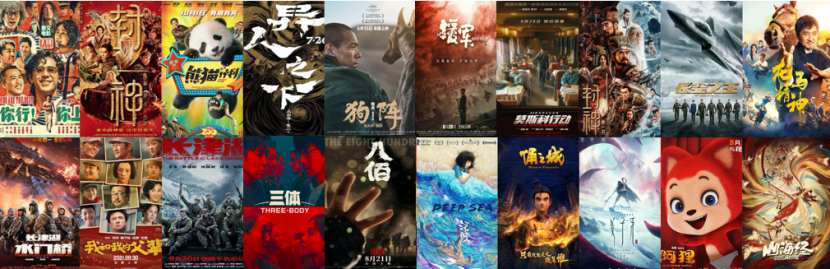
Tairan Ruoqing participated in the VFX production of over 50 industry-influential movies and TV dramas (Source: The company's official website)
On the traditional visual effects circuit, Tairan Ruoqing has verified its industrial delivery capabilities with leading projects. The famous “Operation Guzheng” scene in the drama “Three Bodies”, which was hailed by the audience as a “cinema-grade texture”, 80% of which was created by the team; in the movie “Fengshen: Morning Song Fengyun”, it undertook the production of more than 600 visual effects lenses, and won the “Outstanding Visual Effects of the Year” award at the first China Chongqing Science and Technology Film Week for its “Outstanding Visual Effects” award from the first China Chongqing Science and Technology Film Week - “Lutai” did not have any ready-made scan data, and relied on special effects artists to “build one brick by one” in the digital world. After more than half a year of polishing, as small as cracks and blood stains on the wall, down to a tiger in the courtyard The fur has been carefully crafted, which shows their ingenuity for “cinematic quality.”
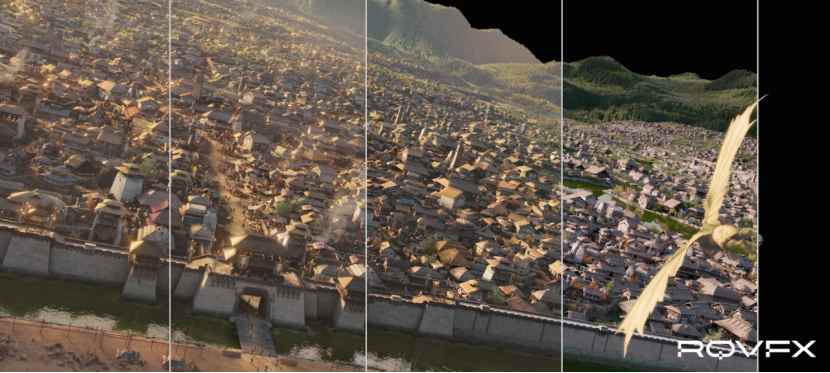
Video effects production clip for the movie “Fengshen 1” (Source: company website)
In the movie “Under a Stranger,” the team also undertook over 1,400 special effects lenses, accounting for 95% of the total visual effects of the entire film. However, in heavy industry blockbusters such as “Kongo River” and “King of the Long Sky,” its self-developed simulation technology allows almost all of the fighter cameras in the sky to be digitally synthesized without any violation. “It can both simulate the environment and can be mass-produced” — this kind of “cinema-quality” engineering delivery capability is a moat that is difficult for any new entrant to replicate for years.
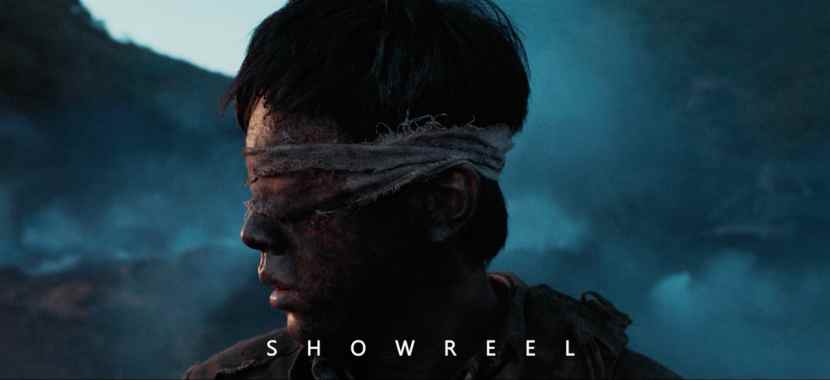
Video effects production clip for the movie “Kongo River” with a sense of calm (source: company website)
What really makes it a scarce asset on the AI circuit is its active upgrade to an “AI-driven high-end content technology company.”
Relying on a self-developed full-stack AI intelligent production platform, AI has been fully embedded in production processes such as conceptual design, intelligent image capture, automatic intermediate frame generation and dynamic preview. The team's production efficiency has increased by about 20%, and is further advancing this goal by 30% to 40%. The value of “making capital understandable” is that in the past, the early communication cycle, which relied on text descriptions and repeated alignment, was reduced from about 4 months to about 1 month, and early preparation saved about 50% of the time — AI turned the loss of “you say A, he understands B, make C” into an instant confirmation of “directly generating images to watch”, and is gradually getting rid of the pain points of traditional film and television industries that focus on labor and cycle fluctuations in the later stages. In terms of technical depth, the team also developed their own “muscle system” to overcome the “gummy man/puppet” problem common in 3D character animations, so that digital characters can develop logical muscle movements and solve the pain points of “one glance off” in close-up. At present, the company has reached cooperation with more than 15 leading series producers, launched more than 50 AIGC experimental projects, and established deep binding with 3 major video platforms to promote large-scale integration of AI and core production processes in stages. The ultimate goal is to build a standardized cinema-level AI film and television production pipeline.
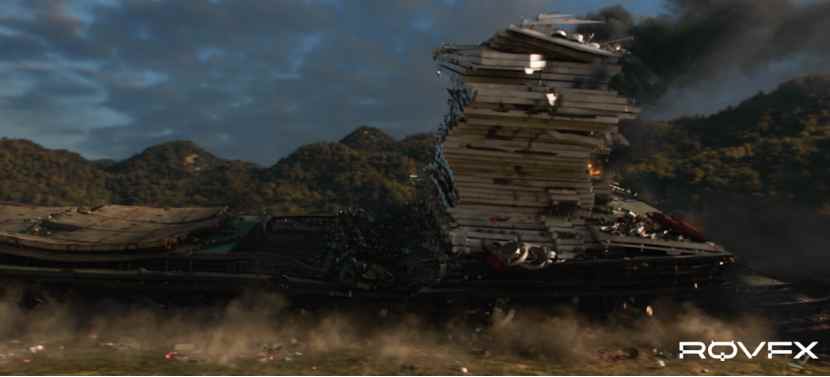
Tairan Ruoqing TV drama “Three Body” visual effects production clip (Source: company's official website)
“For film and television creators, AI has always been a tool. Even if AI participation is high in a movie or TV drama, the middle involves all aspects of the process, such as script, splitting, footage, modeling, and movement. Any quality deviation in any part will lower the standard of the final film.” Wang Haomian, executive director and vice president of product and technology at Yili International, said, “These processes require professional film and television talents to continue to talk and refine with big video models so that big models can truly understand what is a good film and television product—in other words, what the industry often calls 'aesthetic'. What we value is precisely the film and television aesthetic system that has settled behind Tairan Ruoqing's top traditional film and television VFX capabilities, and their already successful implementation experience of integrating aesthetics into the entire AI production process.” The judgment of Yin Duanyang, the spiritual soul of technology and director of visual effects, echoes this — in his opinion, “AI is always an external brain rather than a replacement”, and “every frame is a collusion between technology and art”. No matter how strong the tools are, what ultimately determines the upper limit of a film is still human control over aesthetics and narrative.
In an industry trend where large model capabilities continue to rise and generation costs continue to decline, AI technology itself is no longer a barrier; the complex ability to “understand film and television, understand aesthetics, and understand engineering implementation” is a real scarce resource.
An acquisition that “repairs the chain and strengthens the chain”: it is not a border crossing; it is the return of the king of industrial genes
The core of the strategic value of dismantling this acquisition is not the “cross-border layout,” but “the coupling of industrial genes and the completion of the industrial chain.”
Yili International is not a new entrant in the film and television industry — this time, it is the return of the digital genes that the Group has built up for 20 years. As early as 20 years ago, the company was deeply involved in the production of world-famous animated films such as “Teenage Mutant Ninja Turtles” and “Astro Boy”. Among them, “Teenage Mutant Ninja Turtles” reached the top of the North American weekend box office, surpassing 90 million US dollars in the global box office. As a result, the company became “the first computer animation studio in Asia to win the US Weekend Championship”. After many rounds of technological and content cycle changes, the company has developed a deep industrial heritage and global vision in computer imaging, visual effects, industrial production and IP operations. What is more critical is the “engineering cost reduction” gene engraved in the company's bones — in the early years, it organized production using the “Hollywood script+Hong Kong-style technology+late Hollywood” pipeline, and the production cost of a work of the same size was only about 1/5 of its American counterpart. This underlying capability of “using engineering methods to reduce costs” is in line with today's core that uses AI to improve efficiency, and also lays the groundwork for post-acquisition linkages. This partnership is essentially a deep graft between visual content capabilities that have been accumulated over many years with the new AI film and television circuit, so that the roots of a former business can be consolidated with a top team on the same balance sheet.

The “Teenage Mutant Ninja Turtles” movie produced by Yili International once topped the first weekend box office title in North America (Source: Company website)
Organizational adjustments have also already paved the way for transformation. Since Han Xuyang joined the board of directors in April of this year, the board of directors of Yili International has completed almost “a series of changes” — executive directors, technical executives, compliance and legal affairs, and even independent non-executive directors have taken on new positions one after another, and the entire team's image has been completely refreshed into a complex structure of “technology+industry+capital.” When Yili International changed its board of directors this time, it was not just a face, but a governance team that really shared the same frequency as its AI strategy. Among them, Han Xuyang, the newly appointed chairman of the board of directors, is the core of this team. As a rare leader of a post-90s listed company in the Hong Kong stock market, he has mixed experience in the fields of law, capital, and science and innovation. He is not a young chairman who was temporarily promoted to power, but a continuous trader with a successful precedent. A listed company with the post-90s at the helm, determined the core production capacity of the card position at the inflection point of AI film and television, which in itself is a kind of foresight.
Judging from the industrial chain layout, this acquisition accurately targets the core production link of the AI film and television industry chain, and is a typical reinforcing chain layout. Tairan Ruoqing has not only settled down Hollywood-level industrial visual effects technology, but also built a self-developed AI technology system in the vertical field of film and television. It has completed the construction of a cinema-level standardized AI production pipeline, and is at a critical stage in the transition from traditional VFX engineering services to a full-stack AI film and television production platform.
“They know both movies and AI.” Wang Haomian summed up the core values of being calm in this way. “In a trend where large model capabilities continue to rise and token costs continue to decline, what is really scarce is not AI technology itself, but the deep integration of film-level visual effects aesthetics with AI engineering capabilities.”
In the current AIGC boom, the shortcut for most players is a “short, smooth and fast” skit track, trying to quickly harvest traffic using the GM Big Model. However, the strategic starting point of the acquisition by Yili International directly anchored the highest standard of “movie grade”. This is not a simple epitaxial expansion, but a fundamental difference in perspective — ordinary AI skit studios on the market may be able to produce skits by piecing together prompts, but being calm represents the true standards of the film industry. What Yili International bought in this deal was never a few ready-made sets of AI tools, but rather the engineering ability to deeply integrate AI technology into the entire theater-level film production process. This means that Yili International's position to enter AIGC directly stands at the pinnacle of high-quality theatrical movies.
A hidden asset with even more barriers is the “circle of friends” where Tairan Ruoqing's VFX business has settled down for more than ten years. Over the past ten years, Tairan Ruoqing has deeply served many first-tier domestic film directors and producers, and has been deeply involved in the refinement of heavy industry film and television projects such as “Fengshen,” “Three Body,” and “King Kong River.” This deep trust established on set and in later computer rooms, as well as an accurate understanding of the aesthetic intentions of top creators, cannot be directly generated by any general AI model. For AI film and television, computing power can be purchased and code can be open source, but first-line directors' narrative experience, aesthetic intuition, and tacit agreement with the production team cannot be quickly replicated. This group of first-class directors and production resources is the “driving force” for Yili International to continue to produce movie-like AI film and television content in the future. Using the highest standards of industry to match the top creators, what Yili International is trying to get through is a long-term path of reshaping high-quality content production with hard-core industrialization capabilities.

Video effects production clip for the movie “Under a Stranger” (Source: company's official website)
For Yili International, this acquisition has formed a clear two-way enabling logic: upward, integrating professional visual effects aesthetic systems, vertical digital assets, and AI engineering capabilities into the listed company system as a whole to make up for the core production capacity shortcomings of AI film and television industrialization; downward, feeding back content production and distribution scenarios, promoting the extension of “professional image capabilities” from traditional customized production to large-scale AI mass production, creating a complete commercial closed loop from visual creativity and intelligent production to large-scale delivery.
On the one hand, Tairan Ruoqing can rely on AI technology to reduce the cost and efficiency of VFX services, drastically reduce the marginal cost of visual effects production, and increase the profit level of a single project; on the other hand, Tairan Ruoqing's visual effects process and AI technology have a cross-market reuse foundation, and efforts to accumulate global resources and overseas channels over many years can open up overseas market space for them and create a second growth curve for the business. Once this link is completed, the synergy between the two parties will go far beyond “1+1>2.”
What is more noteworthy is that what both parties give each other is exactly what the other side doesn't have at all — this makes collaboration not adding scale, but rather multiplying capabilities. First, ability forms a closed loop: Yili International has capital, listing platforms, global distribution channels, and IP operation experience. The former complements production capacity and technology, and the resources of leading producers. The former complements production capacity and technology, while the latter supplements ammunition and channels. The two combine to form a complete closed loop of “creativity/capital → AI production → large-scale delivery → global distribution → monetization and backfeeding”. Second, the cost curve has declined twice: Yili International is famous for “the same cost of quality as about 1/5 of its American counterpart,” Tairan Ruoqing also used AI to increase efficiency by another 20% (and target 30% to 40%), save about 50% in early preparations, and the superposition of the two “cost reduction” curves mean that the marginal cost of large-scale delivery is expected to decline nonlinearly. This is the “operating leverage” that the capital market is most willing to give flexible valuations. Third, going overseas opens up a second growth curve: the stable visual effects process and AI tools are reusable across markets, but there is a lack of overseas channels; the global vision and distribution network established by Italy to serve Hollywood and the North American box office 20 years ago can just “reverse export” this set of AI production capabilities that have already run domestically overseas, adding a revenue curve for both parties. Fourth, activate existing IP operations: After many rounds of content cycles, Yili International has accumulated experience and resources in IP operations and global content cooperation, but in the past it was limited by high-cost and difficult large-scale redevelopment capabilities; after connecting to a peaceful AI production pipeline, the costs of animation, visual effects reproduction, and derivative content development costs of IP-related content are expected to drop significantly, and dormant content assets have room to be revitalized and repriced more efficiently. However, the structure of 67%/33% joint venture+warrants and a three-year revenue ladder mechanically guarantees that the original team continues to operate at the table — making this collaboration truly change from “paper integration” to “someone continues to cash in.”
Valuation logic was restructured, and AI film and television entered the “hard power” competition stage
As far as the capital market is concerned, the most direct impact of this acquisition is that Italy International's valuation logic will be reshaped.
As acquisitions are implemented and strategic transformation progresses, the company's positioning will shift to an “AI-driven film and television industrialization enterprise”. On the AI film and television circuit, professional film and television visual effects technology, digital assets in vertical fields, and mature industrial pipelines are all high-barrier resources that are difficult to replicate quickly. The company's accurate card position is the core link, which is expected to enjoy the valuation premium of “AI technology infrastructure empowers industrial applications”.
In the longer term, this deal is also a microcosm of the entire AI film and television industry. As the popularity of early concepts in the industry receded, the focus of the capital market and industry was shifting from “having an AI concept” to “having real production capacity, barriers to implementation, and a closed loop of commercialization.” Whoever can take the lead in building a stable, efficient, and high-quality AI industrial production system can dominate the 100-billion-level or even larger market expansion.
Essentially, Yili International offered capital, listing platforms, global channels, and IP operation experience, while Tairan Ruoqing offered aesthetics, craftsmanship, and AI production capacity — this is an integration of “multiplying capabilities” rather than “adding scale”. Relying on a stable technical foundation, Yili International is seizing the window of opportunity in the AI film and television industry, seizing the high ground of cinema-level AI visual effects and intelligent production at a critical point in the industry's transition to boutique and industrial delivery. The company's business model will also be transformed along with it, extending from a single high-end visual effects delivery to AI film and television full-link technology and production capacity.
For Italy International, this is just the first step in transformation. However, for the AI film and television industry as a whole, a Hong Kong stock listed company with an accumulation in the global film and television industry has entered the core link of AI film and television industrialization through mergers and acquisitions, which undoubtedly sends a clear signal: in the second half of AI film and television, the competition is no longer speed and quantity, but the real hard power of AI film and television industrialization.