


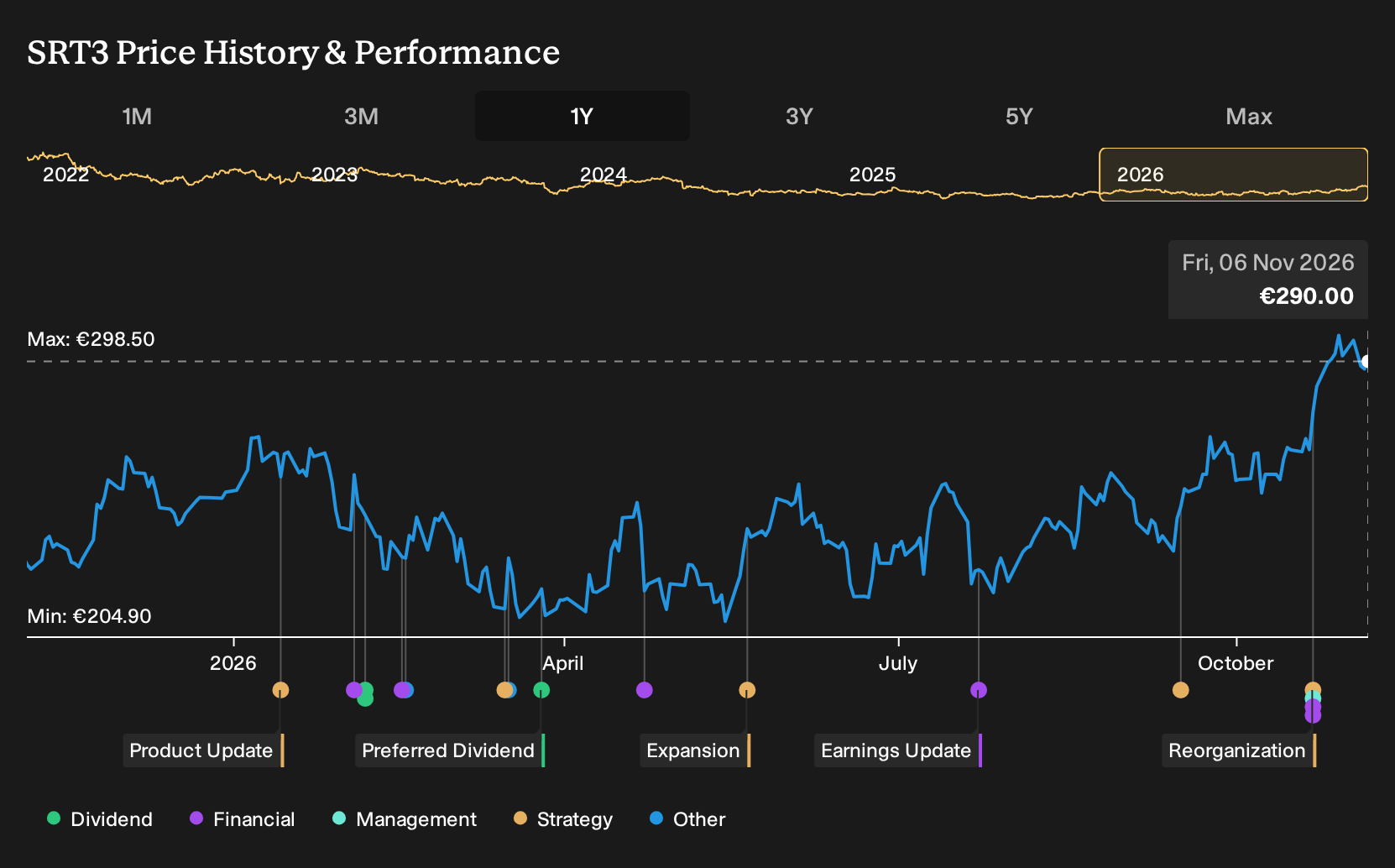
If Sartorius was on your watchlist rather than in your portfolio, the past year may feel like a missed shot. For Sartorius shareholders, the return over the past year was 31.1%, including dividends. That outcome invites a harder question. Back on 6 November 2025, when bullish analysts argued that cell and gene therapies would expand bioproduction demand, what clues, if any, pointed to that secular bet being more than just an optimistic story?
Sartorius is not the only name tied to this theme. Zero in on 126 healthcare AI stocks and compare how each one is priced.
The Two Stories Sartorius Investors Had To Weigh
The shares cost €223 at the start of the period, and Sartorius sat between two very different but plausible stories about its future.
The bullish narrative argued that expanding cell and gene therapies, together with the shift away from animal testing, would support a Fair Value of €310. This price level was implied by assumptions of 10.9% annual revenue growth and profit margins rising from 3.0% to 11.8% by 2028.
The bearish view pointed to tariffs, regulatory pressure and lower cost rivals, backing a Fair Value of €175. This scenario assumed slower 6.6% revenue growth with margins reaching only 7.5% despite higher earnings.
What The Results Changed For The Sartorius Debate
The most concrete update came from Sartorius reporting Q3 2026 revenue of €926.3 million and net income of €66.1 million, with net margin rising from 5.2% to 7.1% versus Q3 2025. That shift in profitability leaned toward the bullish story that imagined margin expansion. Tariff and cost concerns in the cautious case were not disproven, so the evidence cut both ways.
The hinge assumption here was margin progress. For any other stock built on a similar thesis, track whether net margin and absolute profit both move toward the forecast rather than just watching headline revenue or the share price.
What Sartorius Is Asking You To Believe Now
Today Sartorius changes hands at €290, and the key question is whether sentiment has moved faster than operations. Revenue in Q3 2026 reached €926.3 million with net income of €66.1 million, and net margin at 7.1% compared with 5.2% a year earlier.
The share price now rests on how durable that profitability shift proves to be. The valuation CTA can help you test how much of the current tag assumes margins will remain close to that higher level.
The return is settled. The valuation question is not. Pinpoint what our model says Sartorius is worth.
Another Bet Beside Sartorius
If Sartorius puts bioprocessing in view, your mind may jump to therapies themselves. That is only half the picture.
Drug developers still need a steady flow of new medicines to justify all that manufacturing capacity. One large healthcare group is pushing deeper into cancer, immunology and brain disorders.
It sells finished treatments and medical devices rather than production gear. Those products aim to keep hospitals using its therapies across multiple disease areas.
If that pipeline keeps feeding new launches, the demand pattern around Sartorius could look very different to what its own orders alone reveal.
That argument has a Narrative and a number behind it. → See the company one Narrative values 16% above its price
Have feedback on this article? Concerned about the content? Get in touch with us directly. Alternatively, email editorial-team@simplywallst.com