


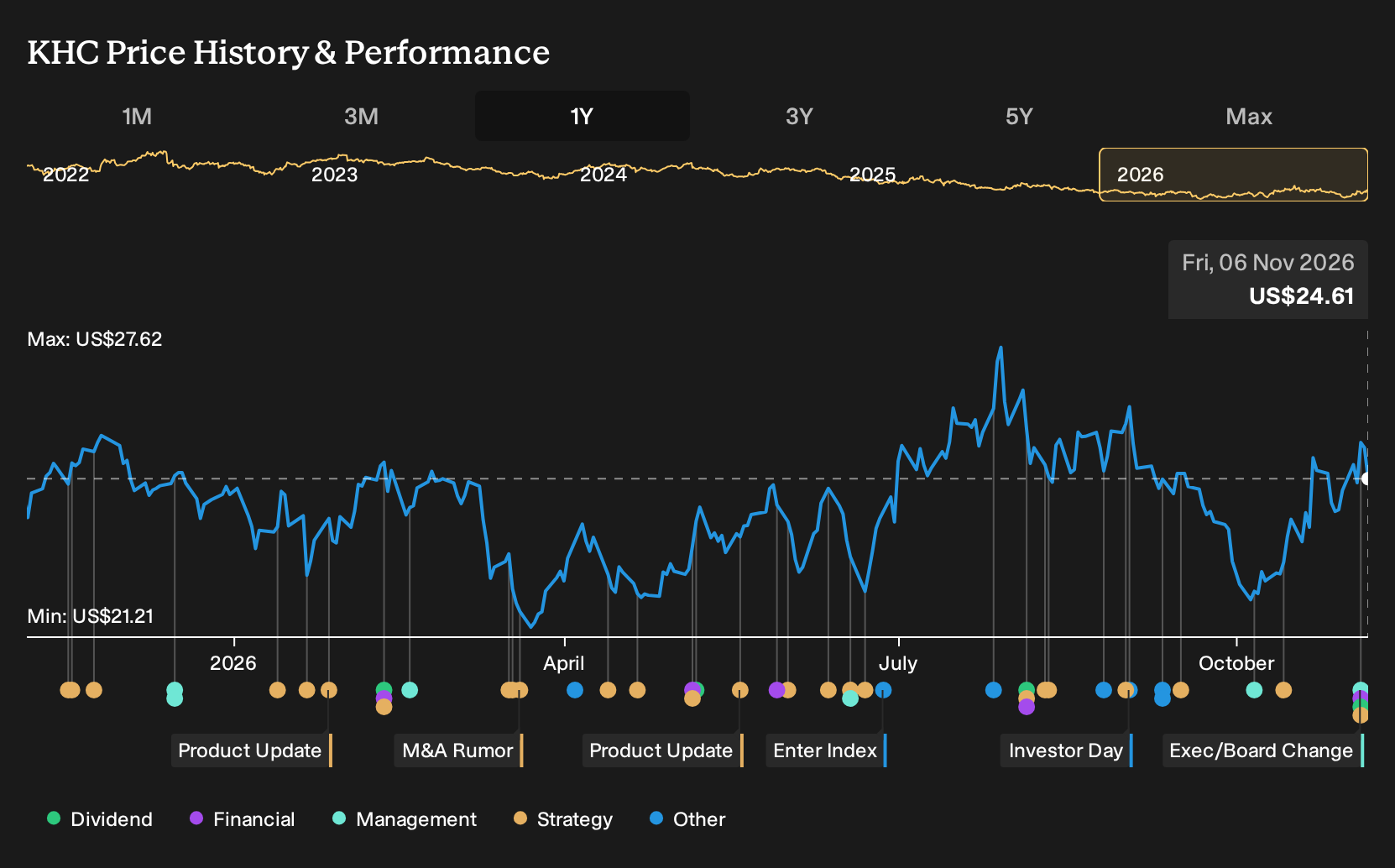
- Kraft Heinz reported third quarter 2026 sales of US$6,115 million and net income of US$544 million, while its board affirmed a regular US$0.40 quarterly dividend payable in December 2026 and recorded goodwill and intangible asset impairments.
- The decision to sell the North American coffee business and retain a 30% stake, alongside higher 2026 earnings guidance, indicates Kraft Heinz’s push to simplify its portfolio and free up cash for debt reduction and brand investment.
- Next, the focus shifts to how Kraft Heinz’s renewed turnaround plan and coffee divestiture could reshape the existing investment narrative.
Scan how Kraft Heinz’s boardroom refresh and coffee exit compare with other packaged food players by reviewing our hand picked 39 high quality undervalued stocks with similar balance sheet and earnings profiles.
Kraft Heinz Investment Narrative Recap
To stay invested in Kraft Heinz, you need to be comfortable with a packaged food group that is still leaning heavily on brand strength, cost savings, and heavier marketing to support volume and pricing, while overall organic sales guidance for 2026 remains soft. The short term swing factor is whether the U.S. turnaround, portfolio simplification and higher 2026 earnings guidance translate into steadier volumes in core categories despite pressure on consumer spending and GLP 1 related demand risks.
The biggest risk right now is that weak organic net sales and fresh goodwill and intangible impairments signal ongoing strain in parts of the portfolio, even as marketing and restructuring spend increases. Recent Q3 figures, including a loss over the first nine months of 2026 and higher impairment charges, keep execution risk on margins and brand health firmly in focus over the next few quarters.
The most relevant update for this story is the appointment of Kelly Dilts and Mike Schlotman to the Kraft Heinz board on 4 November 2026. Both bring deep retail, grocery and finance backgrounds, which connects directly to the central catalyst investors are watching: whether management can generate more reliable growth and cash from a mature set of brands while consumer behavior evolves.
Fresh boardroom experience in areas such as analytics, cost efficiency, capital allocation and digital retail could influence how Kraft Heinz prioritizes its US$700 million of incremental 2026 brand spending, productivity programs and the coffee divestiture proceeds. For shareholders tracking catalysts, the key question is whether this refreshed governance mix improves day to day execution sufficiently to offset risks from high debt levels, dividend coverage, and potential volume pressure from changing eating habits.
Kraft Heinz's narrative projects US$25.2b revenue and US$2.9b earnings by 2029. This assumes relatively flat yearly revenue performance and an earnings increase of about US$6.3b from the current earnings of a US$3.4b loss.
Discover why the current outlook for Kraft Heinz's fair value is essentially in line with its current price.
Exploring Other Perspectives
One alternative view leans hard into the GLP 1 risk. The most cautious Kraft Heinz analysts were looking for about US$24.9b in 2029 revenue and US$2.6b in earnings before this board refresh and dividend decision. That is a more pessimistic script, and these updates may prompt you to reassess which story feels closer to your own view.
Explore 10 other Kraft Heinz fair value estimates, including one that suggests as much as 23% downside from the current price!
Decide For Yourself
Disagree with existing narratives? Extraordinary investment returns rarely come from following the herd, so trust your own research and judgment.
- A great starting point for your Kraft Heinz research is our analysis highlighting 2 key rewards and 2 important warning signs that could impact your investment decision.
- See our latest analysis for Kraft Heinz. The report includes a comprehensive fundamental analysis summarized in a single visual, the Snowflake, making it easy to evaluate Kraft Heinz's overall financial health at a glance.
Looking For More Investment Ideas Beyond Kraft Heinz?
If the Kraft Heinz story has you thinking about portfolio balance, it can help to line it up against other opportunities with different risk and income profiles using the Simply Wall St Screener.
- For investors who want income to feel more predictable, review companies that offer steady yields and payout records through our 8 dividend fortresses.
- If capital preservation sits high on your list, compare Kraft Heinz with a broader group of sturdier balance sheets and resilient fundamentals using the list of solid balance sheet and fundamentals (24 results).
- When you are hunting for future candidates before the market pays attention, scan the 19 high quality undiscovered gems and see which stories you want to research next.
Have feedback on this article? Concerned about the content? Get in touch with us directly. Alternatively, email editorial-team@simplywallst.com