


- Consolidated Edison reported third quarter 2026 revenue of US$4.91b and net income of US$766m, with basic EPS from continuing operations at US$2.07, all above the prior year period.
- The utility paired this higher year to date profit with plans for about US$797m of climate resilience spending through 2030, linking recent earnings strength to long term infrastructure hardening.
- We will now look at how Consolidated Edison’s stronger revenue performance fits into its existing investment narrative and how it may influence that narrative over time.
Scan how Consolidated Edison's earnings story compares with other regulated utilities by reviewing our hand picked list of 42 power grid technology and infrastructure stocks.
Consolidated Edison Investment Narrative Recap
For a shareholder in Consolidated Edison, the core belief is that a tightly regulated utility can keep turning heavy grid and resilience spending into dependable earnings. The latest quarter delivered higher revenue and net income year on year, which supports that thesis. The near term swing factor is still how regulators treat returns on this growing rate base, and this update does not materially change that.
The biggest operational worry remains stress during extreme weather and the cost of preventing or fixing outages. Higher nine month profit gives management some room to fund climate and reliability projects, but large capital needs, debt coverage and free cash flow pressure stay front of mind for anyone watching the balance sheet.
The most relevant recent announcement is Consolidated Edison’s plan for about US$797m of climate resilience investment from 2026 to 2030. That sits on top of a much larger long term grid program and directly links to the rate base growth many investors focus on. It also targets the same reliability issues that showed up during the 2026 heat waves.
This resilience plan interacts closely with the current earnings story. Stronger operating results in 2026 help support a heavier capital program, while regulators decide how much of that spending goes into rates and allowed returns. For you, the key question is whether this combination of higher capital intensity, debt funding needs and regulatory oversight still lines up with your view of Consolidated Edison’s risk and reward profile.
Analyst Expectations Behind the Consolidated Edison Story
Analysts are effectively sketching a steady, regulated glide path for Consolidated Edison. Their models assume revenue grows by 3.5% a year over the next few years while profit margins lift from 12.5% today to 14.2% by 2029. That set up points to earnings moving from about US$2.2b today to a consensus forecast of roughly US$2.8b by 2029, an increase of about US$600m that depends heavily on regulators allowing returns on a larger rate base.
Those same forecasts feed directly into how the stock is currently framed. To line up with the analyst view, you would need to accept that by 2029 Consolidated Edison generates about US$19.6b of revenue and US$2.8b of profit, with the shares trading around 18.9x those earnings. The implied future P/E sits a little below the current US integrated utilities industry level quoted in the report, which suggests the group of analysts see the stock as reasonably priced rather than a clear outlier on either value or risk.
Consolidated Edison's narrative projects about US$19.6b revenue and US$2.8b earnings by 2029. This requires 3.5% yearly revenue growth and an earnings increase of roughly US$600m from current earnings of about US$2.2b.
Uncover why Consolidated Edison's fair value indicates a 9% potential downside to its current price, leaving little room for error.
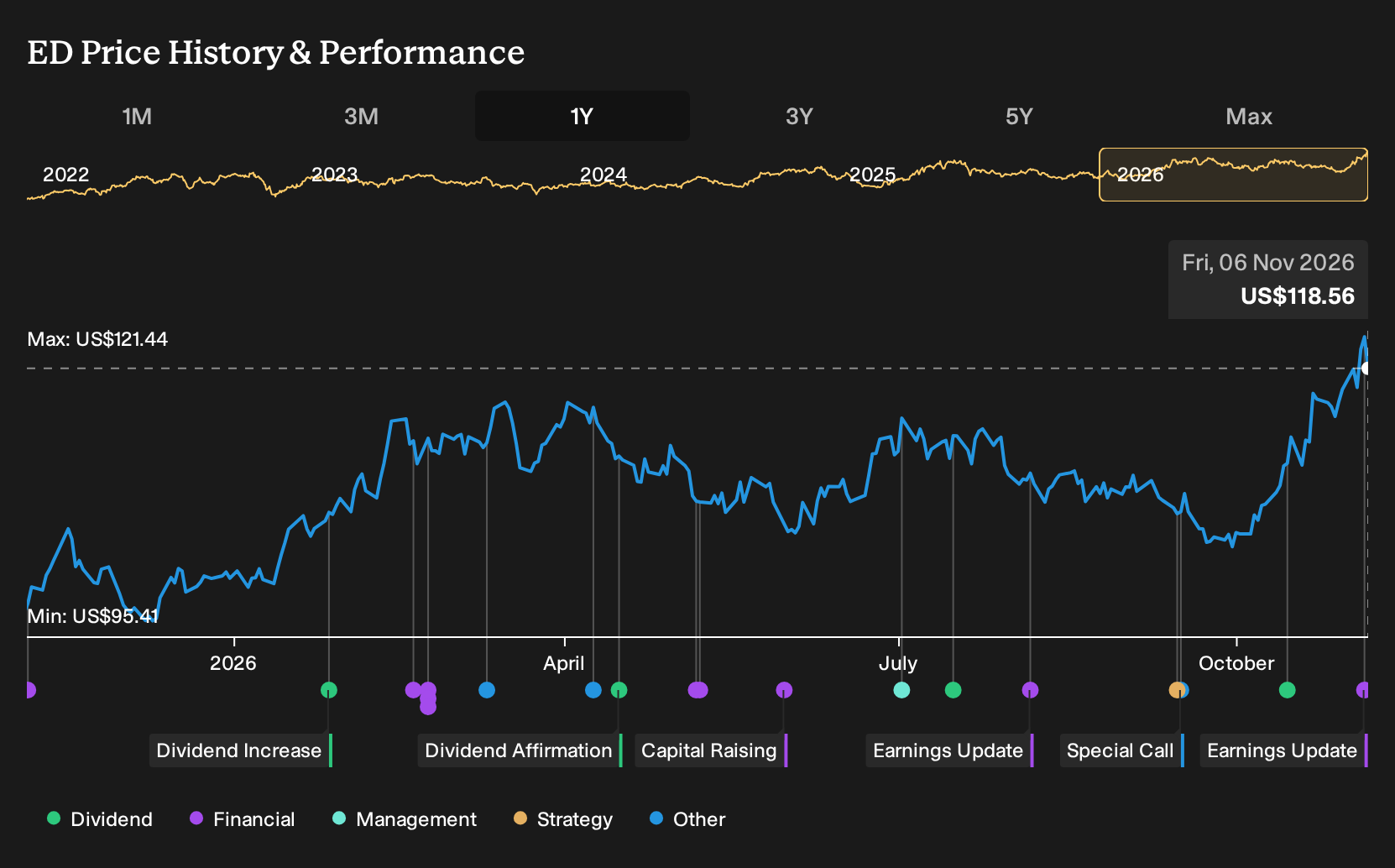
Exploring Other Perspectives
Three fair value views from the Simply Wall St Community cluster tightly between about US$107.38 and US$107.70, which signals little disagreement among those retail investors. You still face real dispersion in opinion once you weigh in regulatory risks, heat related reliability issues and the scale of Consolidated Edison’s planned grid spending.
Explore 2 other Consolidated Edison fair value estimates, including one that suggests as much as 9% downside from the current price.
Decide For Yourself
Don't just follow the ticker; dig into the data and build a conviction that's truly your own.
- A great starting point for your Consolidated Edison research is our analysis highlighting 3 key rewards and 2 important warning signs that could impact your investment decision.
- See our latest analysis for Consolidated Edison. The report includes a comprehensive fundamental analysis summarized in a single visual, the Snowflake, making it easy to evaluate Consolidated Edison's overall financial health at a glance.
Looking For More Investment Ideas Beyond Consolidated Edison?
Once you have a view on Consolidated Edison, it can help to widen the lens and compare it with other opportunities that match your risk tolerance and income goals using the Simply Wall St Screener.
- For investors who want resilient businesses with modest volatility, start with 29 resilient stocks with low risk scores. This can help anchor a more defensive portfolio.
- If reliable income matters most to you, scan through 8 dividend fortresses. These combine higher yields with an emphasis on durability.
- For those hunting for under the radar potential, check out 19 high quality undiscovered gems. These pair solid fundamentals with less crowded ownership.
Have feedback on this article? Concerned about the content? Get in touch with us directly. Alternatively, email editorial-team@simplywallst.com