


Readers hoping to buy BP p.l.c. (LON:BP.) for its dividend will need to make their move shortly, as the stock is about to trade ex-dividend. The ex-dividend date is two business days before a company's record date in most cases, which is the date on which the company determines which shareholders are entitled to receive a dividend. It is important to be aware of the ex-dividend date because any trade on the stock needs to have been settled on or before the record date. Therefore, if you purchase BP's shares on or after the 12th of November, you won't be eligible to receive the dividend, when it is paid on the 18th of December.
The company's upcoming dividend is US$0.0866 a share, following on from the last 12 months, when the company distributed a total of US$0.35 per share to shareholders. Last year's total dividend payments show that BP has a trailing yield of 4.6% on the current share price of UK£5.594. Dividends are an important source of income to many shareholders, but the health of the business is crucial to maintaining those dividends. So we need to investigate whether BP can afford its dividend, and if the dividend could grow.
Dividends are typically paid out of company income, so if a company pays out more than it earned, its dividend is usually at a higher risk of being cut. BP paid out 59% of its earnings to investors last year, a normal payout level for most businesses. That said, even highly profitable companies sometimes might not generate enough cash to pay the dividend, which is why we should always check if the dividend is covered by cash flow. What's good is that dividends were well covered by free cash flow, with the company paying out 22% of its cash flow last year.
It's positive to see that BP's dividend is covered by both profits and cash flow, since this is generally a sign that the dividend is sustainable, and a lower payout ratio usually suggests a greater margin of safety before the dividend gets cut.
Check out our latest analysis for BP
Click here to see the company's payout ratio, plus analyst estimates of its future dividends.
Have Earnings And Dividends Been Growing?
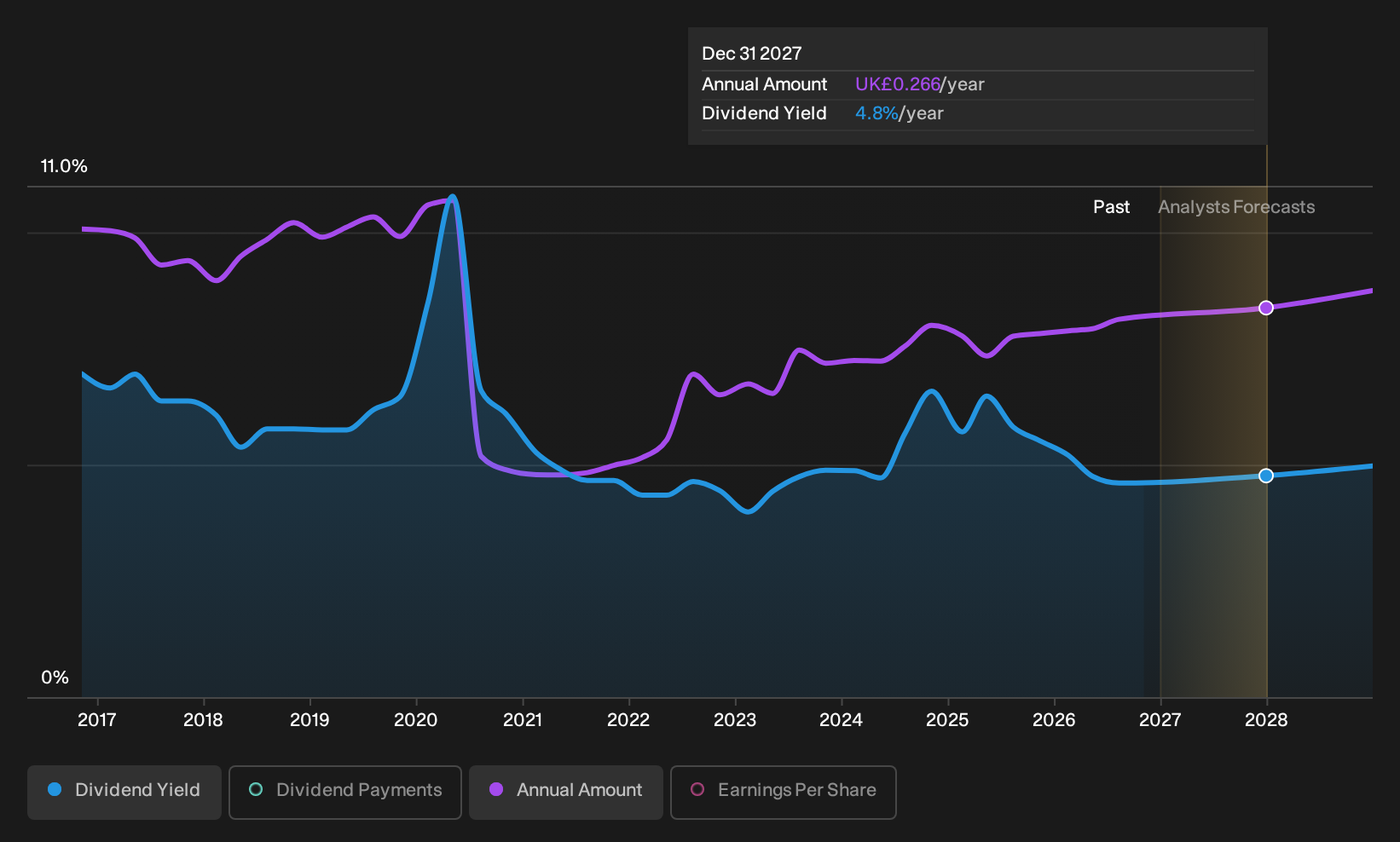
Companies with consistently growing earnings per share generally make the best dividend stocks, as they usually find it easier to grow dividends per share. If earnings fall far enough, the company could be forced to cut its dividend. With that in mind, we're encouraged by the steady growth at BP, with earnings per share up 8.5% on average over the last five years. Decent historical earnings per share growth suggests BP has been effectively growing value for shareholders. However, it's now paying out more than half its earnings as dividends. Therefore it's unlikely that the company will be able to reinvest heavily in its business, which could presage slower growth in the future.
Another key way to measure a company's dividend prospects is by measuring its historical rate of dividend growth. BP has seen its dividend decline 1.4% per annum on average over the past 10 years, which is not great to see.
The Bottom Line
From a dividend perspective, should investors buy or avoid BP? Earnings per share growth has been modest and BP paid out over half of its profits and less than half of its free cash flow, although both payout ratios are within normal limits. Overall, it's not a bad combination, but we feel that there are likely more attractive dividend prospects out there.
With that in mind, a critical part of thorough stock research is being aware of any risks that stock currently faces. Be aware that BP is showing 3 warning signs in our investment analysis, and 1 of those is concerning...
If you're in the market for strong dividend payers, we recommend checking our selection of top dividend stocks.
Have feedback on this article? Concerned about the content? Get in touch with us directly. Alternatively, email editorial-team (at) simplywallst.com.