


Readers hoping to buy GSK plc (LON:GSK) for its dividend will need to make their move shortly, as the stock is about to trade ex-dividend. The ex-dividend date is two business days before a company's record date in most cases, which is the date on which the company determines which shareholders are entitled to receive a dividend. The ex-dividend date is an important date to be aware of as any purchase of the stock made on or after this date might mean a late settlement that doesn't show on the record date. This means that investors who purchase GSK's shares on or after the 12th of November will not receive the dividend, which will be paid on the 7th of January.
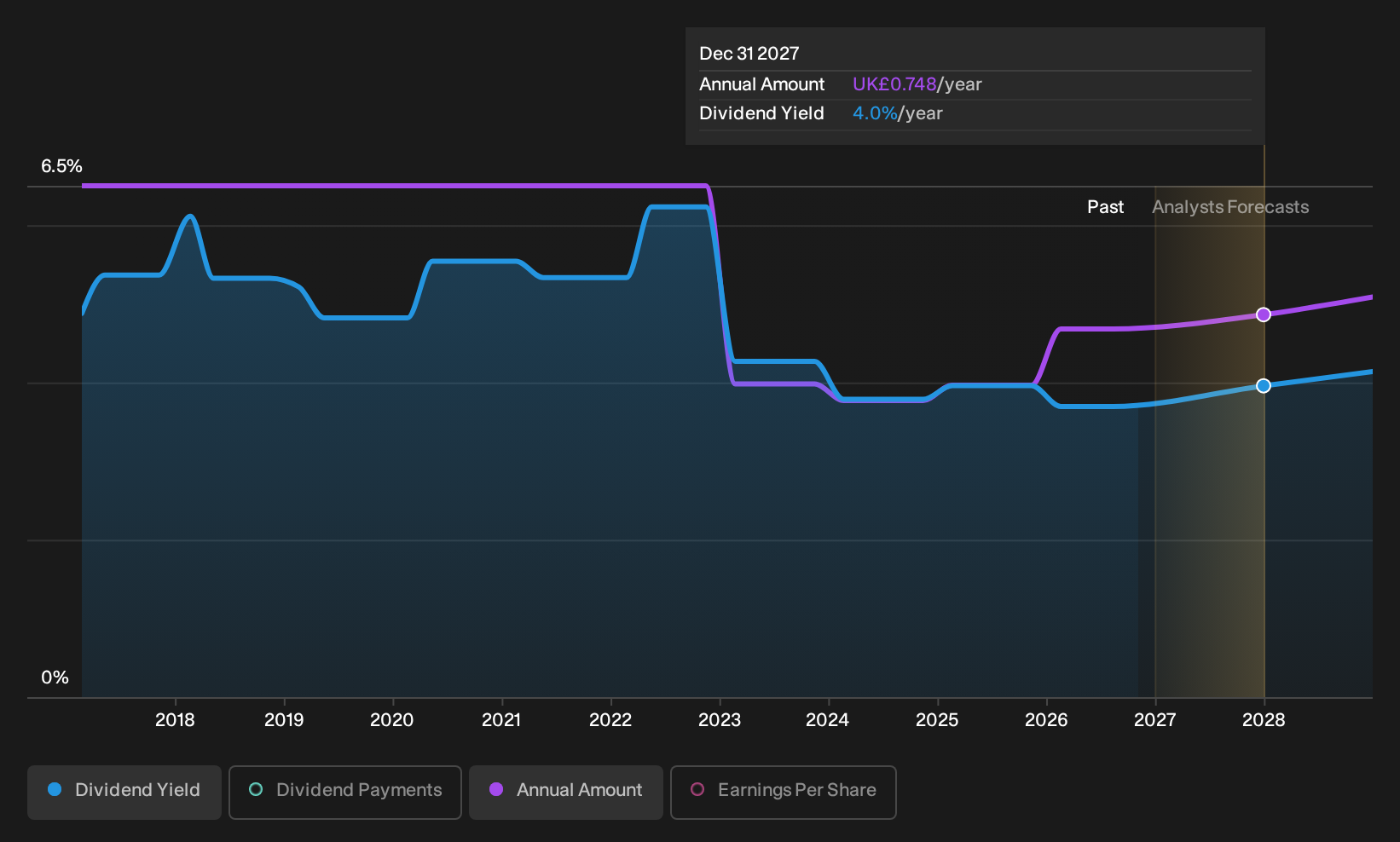
The company's next dividend payment will be UK£0.17 per share, on the back of last year when the company paid a total of UK£0.72 to shareholders. Last year's total dividend payments show that GSK has a trailing yield of 3.8% on the current share price of UK£18.90. Dividends are an important source of income to many shareholders, but the health of the business is crucial to maintaining those dividends. As a result, readers should always check whether GSK has been able to grow its dividends, or if the dividend might be cut.
If a company pays out more in dividends than it earned, then the dividend might become unsustainable - hardly an ideal situation. GSK is paying out an acceptable 73% of its profit, a common payout level among most companies. A useful secondary check can be to evaluate whether GSK generated enough free cash flow to afford its dividend. Thankfully its dividend payments took up just 41% of the free cash flow it generated, which is a comfortable payout ratio.
It's encouraging to see that the dividend is covered by both profit and cash flow. This generally suggests the dividend is sustainable, as long as earnings don't drop precipitously.
See our latest analysis for GSK
Click here to see the company's payout ratio, plus analyst estimates of its future dividends.
Have Earnings And Dividends Been Growing?
Companies with falling earnings are riskier for dividend shareholders. Investors love dividends, so if earnings fall and the dividend is reduced, expect a stock to be sold off heavily at the same time. So we're not too excited that GSK's earnings are down 2.4% a year over the past five years.
Another key way to measure a company's dividend prospects is by measuring its historical rate of dividend growth. GSK has seen its dividend decline 3.2% per annum on average over the past 10 years, which is not great to see. It's never nice to see earnings and dividends falling, but at least management has cut the dividend rather than potentially risk the company's health in an attempt to maintain it.
The Bottom Line
Should investors buy GSK for the upcoming dividend? The payout ratios are within a reasonable range, implying the dividend may be sustainable. Declining earnings are a serious concern, however, and could pose a threat to the dividend in future. Overall, it's hard to get excited about GSK from a dividend perspective.
With that being said, if dividends aren't your biggest concern with GSK, you should know about the other risks facing this business. To help with this, we've discovered 3 warning signs for GSK that you should be aware of before investing in their shares.
If you're in the market for strong dividend payers, we recommend checking our selection of top dividend stocks.
Have feedback on this article? Concerned about the content? Get in touch with us directly. Alternatively, email editorial-team (at) simplywallst.com.