


When a brutal tech sell-off sends volatility soaring and traders scramble to reposition, the quiet toll collectors of the market can suddenly move into the spotlight. Exchanges, clearing houses and trading platforms live on transaction fees rather than hype, so frantic repositioning can matter more than index levels. This article unpacks three U.S.-listed trading infrastructure stocks exposed to this week’s turmoil and explores how their business models might react if choppy conditions persist.
The three stocks covered next are just a sample set. The wider screen surfaced 20 more U.S. exchanges and trading infrastructure companies with equally compelling stories that are not broken down in this article. To see the full picture, head straight into the U.S. Exchanges and Trading Infrastructure Stocks screener to identify, filter and analyze the ideas that best fit your own conviction.
Charles Schwab (SCHW)
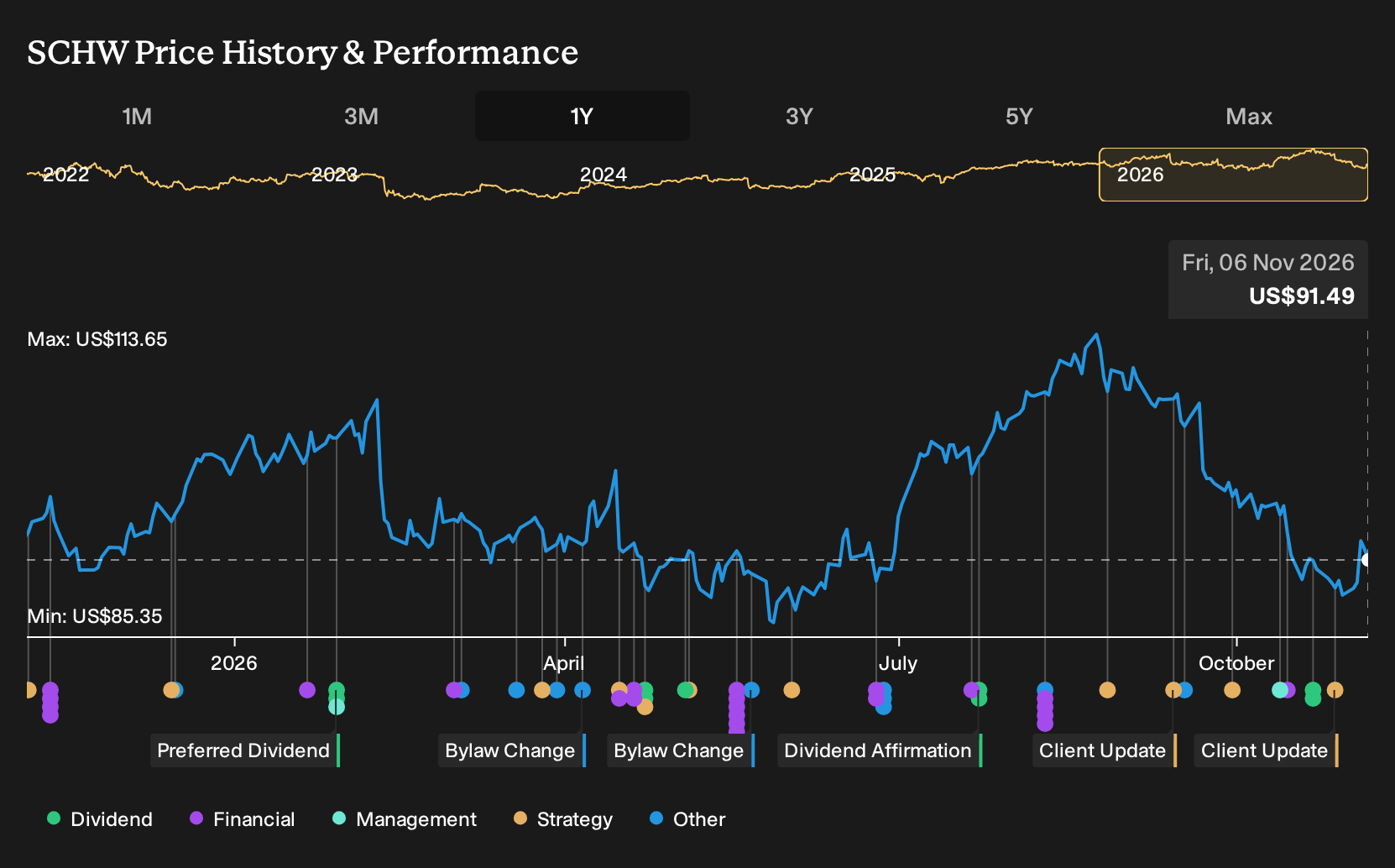
Charles Schwab is one of the clearest pure plays in this screener’s theme, with a massive brokerage and custody platform that earns when clients trade, hold assets and use cash and margin, so spikes in volumes and volatility go straight into its fee and interest engine.
Charles Schwab runs a broad wealth and trading platform spanning brokerage, banking, advice and custody, largely serving U.S. clients who generated about US$27.1b of revenue. The stock’s size reflects that reach with a market value around US$160.1b.
In a week where volumes and volatility have exploded, Schwab’s multi-pronged model shows why transaction-driven infrastructure can quietly become a central character rather than a background utility.
"When trading slows, asset-based fees help. When markets recover, net interest income and client engagement tend to follow."
The real swing factor is how one pressure on the funding side resolves, because that could meaningfully shift where future profitability settles.
If that funding pressure is what you are watching, the full narrative for Charles Schwab explains how Schwab’s engine could react if volatility remains elevated.
UP Fintech Holding (TIGR)
UP Fintech Holding runs the Tiger Trade platform, a cross border brokerage focused on Chinese investors trading global markets, with all reported revenue of about US$607 million coming from brokerage services and the stock valued by the market at roughly US$668 million.
Where Schwab captures mainstream U.S. flows, UP Fintech Holding plays in the higher velocity corner of the theme, sitting between Chinese clients and overseas exchanges when volatility and derivatives trading pick up.
"Expansion of UP Fintech Holding’s user base and client assets in Singapore, Hong Kong, Australia, New Zealand and the U.S., with these markets contributing the majority of recent net asset inflows and new funded accounts, could gradually rebalance revenue and earnings away from onshore Mainland China."
What happens to profitability if one quiet cost line tied to this shift moves faster than trading activity and client balances?
If that cost curve is what you are tracking, read the full narrative for UP Fintech Holding to see how UP Fintech Holding’s cross border model could accelerate or stall in the future.

XP (XP)
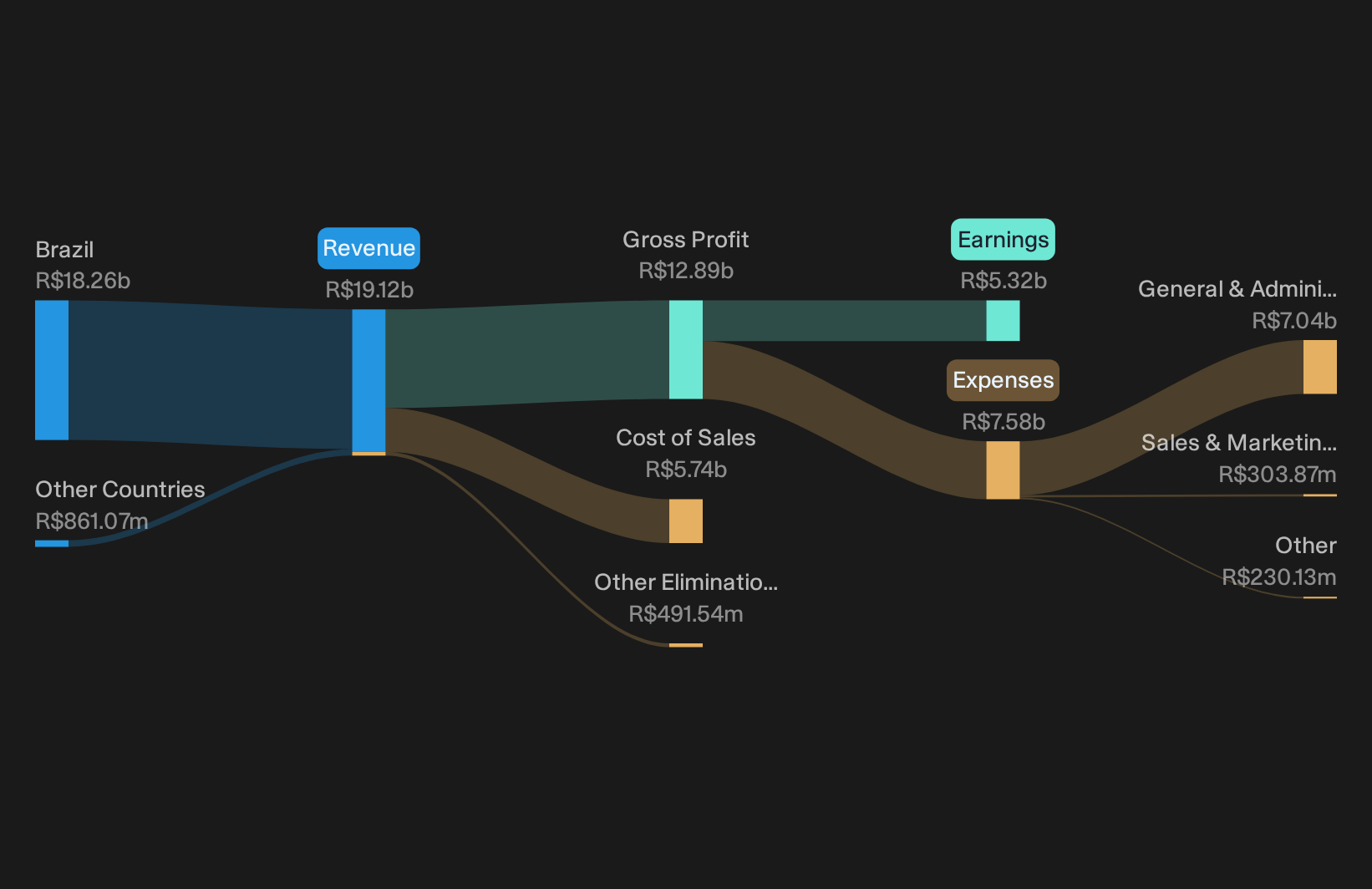
XP brings the U.S. Exchanges and Trading Infrastructure theme into Brazil, operating a broad brokerage and investment platform where client trading, derivatives activity and wealth products all feed into fee income tied to portfolio reshuffles when markets become volatile.
XP generates about R$18.6b in brokerage revenue from its Brazil-focused platform, linking client activity to fees, and has a market value of roughly US$7.7b.
"The shift of retail client assets into holistic, fee based or consulting models, which currently cover roughly 23% to 26% of retail assets with a management target of around 50% of assets under coverage over 3 to 5 years, provides a path for more recurring advisory fees and potentially more stable revenue and margins."
What happens to XP’s earnings power if one quiet pressure on how clients trade through the cycle pulls harder than management expects on that mix?
If that pull on client behavior is what you are weighing, read the full narrative for XP to see how XP’s fee mix could accelerate or stall through the next cycle.
Seeking Fresh Alternatives Before Others?
Fresh ideas move first while slow capital waits and watches. Catch potential breakout momentum and under the radar stories before the crowd, then act now.
- Spot under the radar strength in balance sheets and cash flows by scanning a curated list of solid balance sheet and fundamentals (24 results) before valuations get fully caught up.
- Chase accelerating demand for next wave automation by tracking hand picked leaders in the 89 robotics and automation stocks while expectations are still dropping behind reality.
- Review early energy infrastructure opportunities by looking at targeted contenders in the 42 power grid technology and infrastructure stocks while they remain largely under the radar for now.
Have feedback on this article? Concerned about the content? Get in touch with us directly. Alternatively, email editorial-team@simplywallst.com