


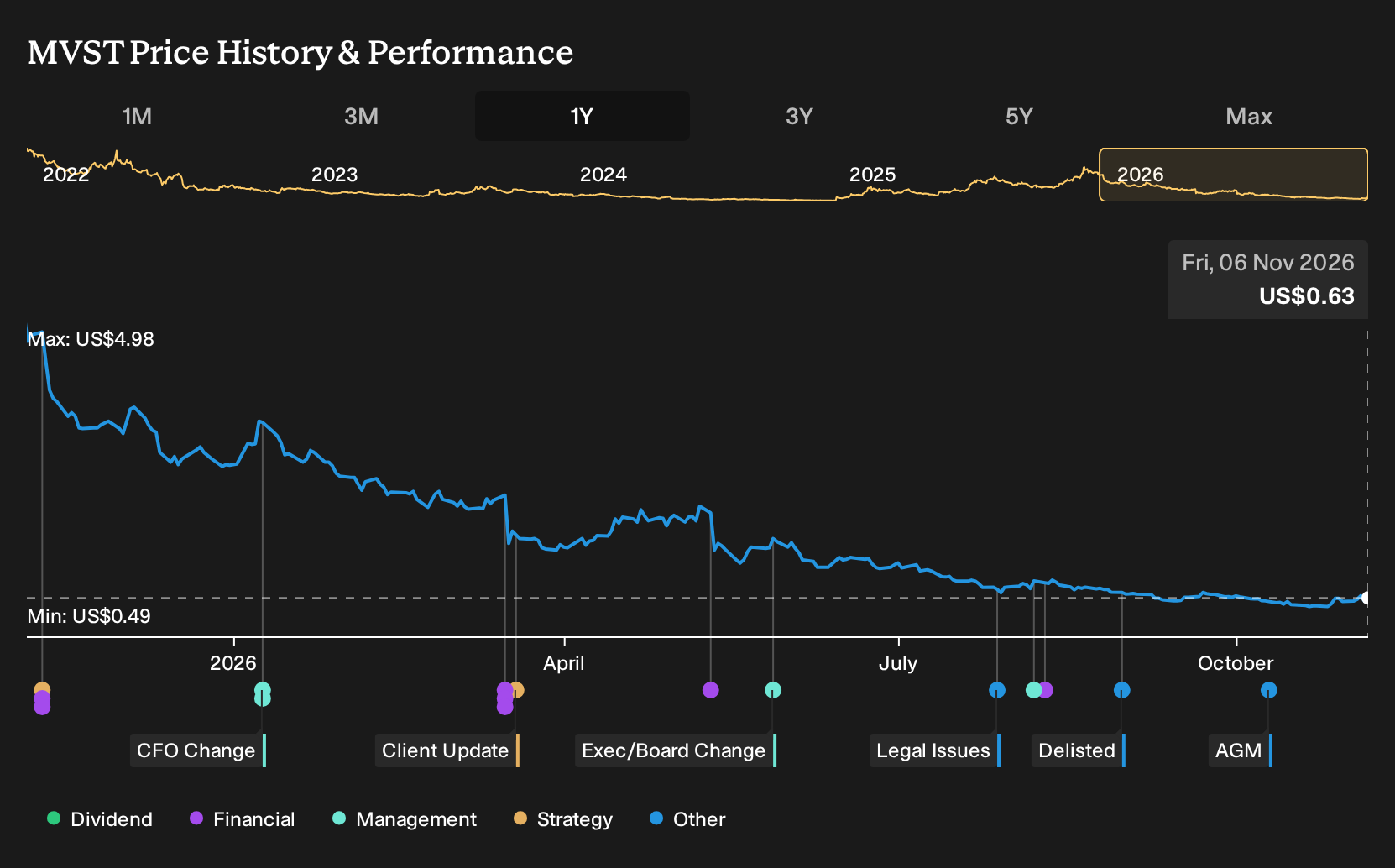
If you had decided to back Microvast on 6 November 2025, drawn in by detailed bullish and bearish analyst narratives around advanced battery demand and geopolitical risk, the outcome over the next twelve months would have been harsh. For Microvast shareholders, the loss over the past year was 87.2%, including dividends. Faced with that result now, which assumptions in those earlier forecasts would you want to scrutinize most closely before committing capital?
On Simply Wall St, a Narrative is an investor's thesis written down: the reasoning, plus the numbers it rests on. Run those numbers and you get an estimated Fair Value.
This theme extends beyond Microvast. See which of 40 profitable AI stocks that aren't just burning cash may still merit a closer look.
The Two Microvast Stories Investors Had To Weigh
The shares cost US$4.83 at the start, and anyone looking at Microvast then was really choosing between two well-argued stories about its future.
The bullish narrative put fair value at US$5.5. That view leaned on revenue growth of 19.8% a year and a shift from a net loss to a 10.9% profit margin within about three years.
The bearish narrative set fair value at US$3. It accepted similar 19.7% revenue growth, but stressed the risk that battery oversupply and pricing pressure would limit margins to 7.9% and keep the future P/E nearer 22.6x.
What The Results Changed For The Microvast Narratives
Microvast’s later filings showed revenue slipping from US$91.3 million in Q2 2025 to US$87.3 million in Q2 2026, yet the loss narrowed and net margin improved from a deeply negative 116.1% to a less severe 13.7% loss. That shift toward profitability supported the bullish margin story, but the weaker top line and the later Q1 2026 revenue drop challenged the growth assumptions. Overall, the evidence cut both ways.
The lesson is simple. When a thesis leans on rapid expansion and margin recovery, track them separately in reported numbers. Test revenue against the growth percentage that was assumed and compare actual net margin to the target level that was written into the original case.
Microvast Today, After The Fall In Expectations
Today Microvast trades at US$0.63, so the big question is whether sentiment has faded more than the underlying business. Revenue in Q2 2026 was US$87.3 million compared with US$91.3 million a year earlier, yet the loss narrowed sharply as net margin moved from a 116.1% loss to a 13.7% loss.
That mix of softer sales and a much smaller deficit leaves investors asking what they are really paying for now. One key assumption the valuation tool can help you test is how quickly, if at all, Microvast might reach and sustain a positive net margin.
One number the run does not answer is what Microvast is worth today. Zero in on our valuation.
Before The Next Story Makes Headlines
The next headline does not have to be where your research begins. Go straight to the companies and see whether a contrarian opportunity could be taking shape.
- Company 1 - 40% below our estimate - targets data centre build outs that need massively higher AI power density.
- Company 2 - 36% below our estimate - embeds custom silicon and software into critical data plumbing that must keep scaling with traffic.
- Company 3 - 16% below our estimate - extends a teahouse network where overseas franchises rapidly add higher margin transaction volume.
That is three of the list. See the full list of 36 companies trading below our fair value estimates →
Have feedback on this article? Concerned about the content? Get in touch with us directly. Alternatively, email editorial-team@simplywallst.com