


Tariffs have quietly sat in the background of markets for years, but the latest U.S. midterm results have pushed trade policy back into the spotlight and put potential tariff relief on the table. If those barriers start to come down, cost structures and pricing power for some companies could look very different. This article walks through three trade sensitive U.S. stocks that screen as potential beneficiaries of that shift.
The three stocks highlighted below are a small sample, and the full screen surfaced 32 more U.S. and Canadian trade sensitive cyclicals with equally compelling tariff stories that are not covered here. If you want to identify and analyze potential tariff relief beneficiaries across industrials, materials, autos and select consumer groups in one place, head straight to the U.S. Trade-Sensitive Cyclical Stocks (Tariff-Relief Beneficiaries) screener.
ATS (TSX:ATS)
Overview: ATS Corporation designs and services complex automated manufacturing and assembly systems worldwide, helping global manufacturers run large, trade exposed production lines more efficiently.
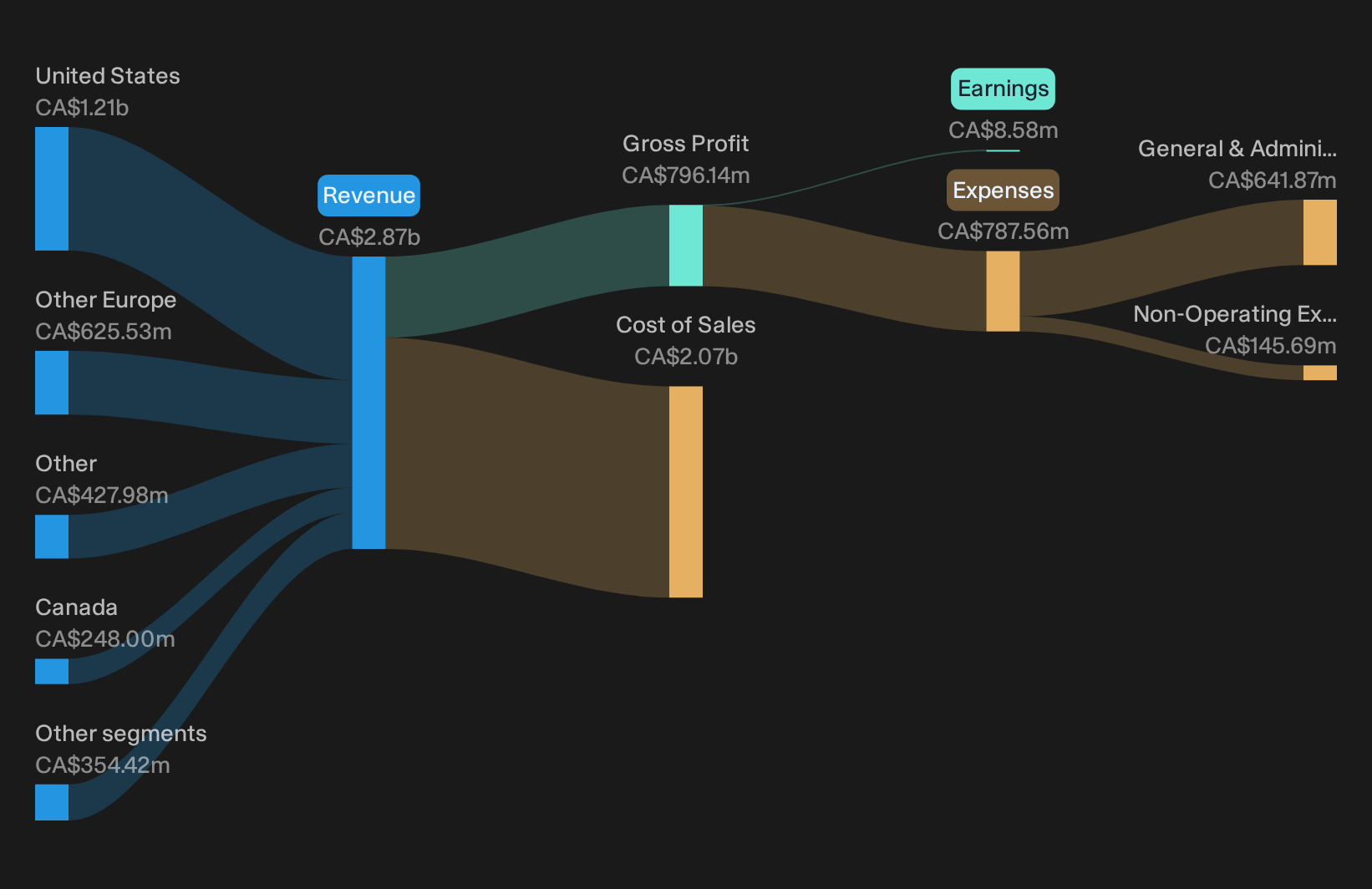
Operations: ATS generates about CA$2.9b from Automation Systems, with CA$1.2b coming from the United States and significant revenue across Europe and Canada.
Market Cap: CA$2.3b
ATS sits squarely in the tariff conversation because its automation projects span cross border supply chains. That exposure now intersects with a push toward higher quality, more recurring service work.
"The ongoing mix shift toward higher margin aftermarket, services, and other recurring or faster turn revenue, where services already support higher gross margins and the goal is to move closer to peers with more than 40% aftermarket exposure, can gradually raise ATS’s gross margin and support more stable earnings."
What happens to ATS’s margin ambitions if a single pressure point in those cross border projects tightens just as this shift gathers pace?
If that margin question matters to you, read the full narrative for ATS to see how tariff shifts, contract mix and automation demand could be quietly reshaping the earnings profile at ATS.
West Fraser Timber (TSX:WFG)
Overview: West Fraser Timber is a Vancouver based wood products producer that supplies lumber, panels and pulp into heavily trade exposed U.S. and international construction and packaging markets.
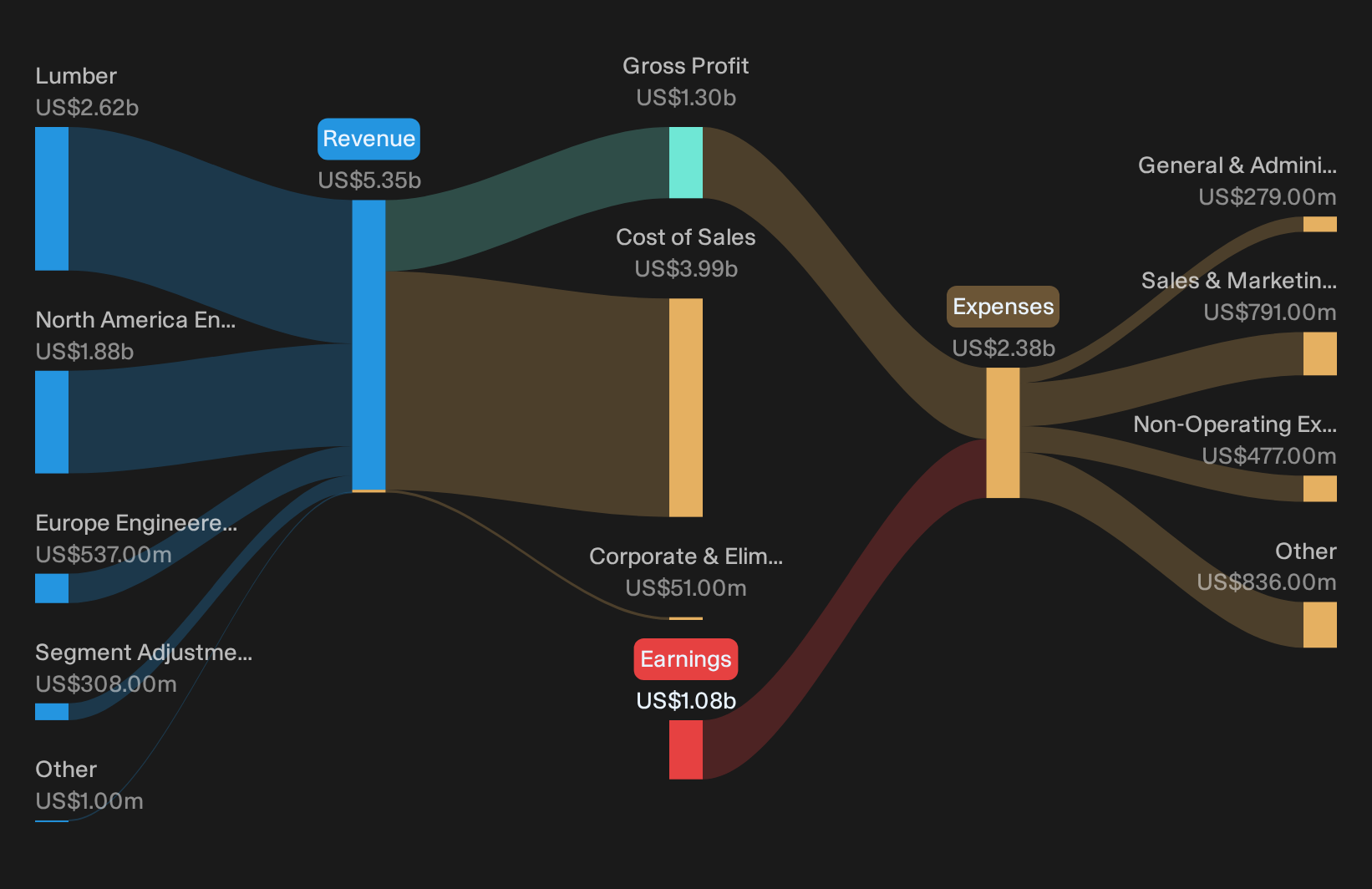
Operations: West Fraser Timber generates about $2.6b from Lumber, $1.9b from North America Engineered Wood Products and $0.5b from Europe EWP, with $3.5b of revenue from U.S. customers.
Market Cap: CA$7.5b
West Fraser Timber sits near the center of the tariff conversation because its lumber and panel flows between Canada, the U.S. and Europe plug directly into housing and renovation cycles on both sides of the border.
"Reduction in the combined softwood lumber duty cash deposit rate to 20.02% following the AR7 outcome, along with earlier favorable duty adjustments, directly lowers cash outflows on U.S. shipments and can lift net margins and earnings compared with prior periods that carried higher duty rates."
The real swing factor is how one more policy shift on cross border duties could reshape pricing power and earnings sensitivity for West Fraser Timber.
That pricing reset is only the start, and the full narrative for West Fraser Timber unpacks how West Fraser Timber’s duty shifts, capacity choices and housing exposure could be quietly decoupling earnings risk.
DNOW (DNOW)
Overview: DNOW Inc. supplies energy and industrial customers with pipe, valves, fittings, pumps and related services across U.S., Canada and international markets.
Market Cap: $2.4b
DNOW matters in this tariff focused screen because it sits at the junction of steel heavy hardware, cross border sourcing and cyclical project demand. As a result, small shifts in trade policy can ripple quickly through volumes, pricing and cash generation.
"Expansion into midstream markets that DNOW has been pursuing is now supported by U.S. midstream revenue reaching a more than $1b annualized run rate in Q2 2026."
This raises the question of what happens to that midstream heavy mix if a single unresolved cost pressure changes the balance between pricing power and project wins.
If that balance interests you, read the full narrative for DNOW to see how DNOW’s tariff exposure, mix shifts and capital discipline could be quietly accelerating future cash generation.

Seeking Alternatives Before The Crowd
Fresh ideas move first. Breakout stories, new momentum and quietly dropping valuations usually get caught late. Scan these under the radar lists while it matters and get in early.
- Spot resilient cash generators before momentum headlines them by scanning the list of solid balance sheet and fundamentals (5 results), which filters for robust finances and disciplined fundamentals.
- Track where infrastructure spending and electrification demand could be flying next through the curated 41 power grid technology and infrastructure stocks built to surface potential grid winners early.
- Target potential compounding income opportunities by reviewing the 3 dividend fortresses focused on high-yield businesses that pair payouts with balance sheet strength.
Have feedback on this article? Concerned about the content? Get in touch with us directly. Alternatively, email editorial-team@simplywallst.com