


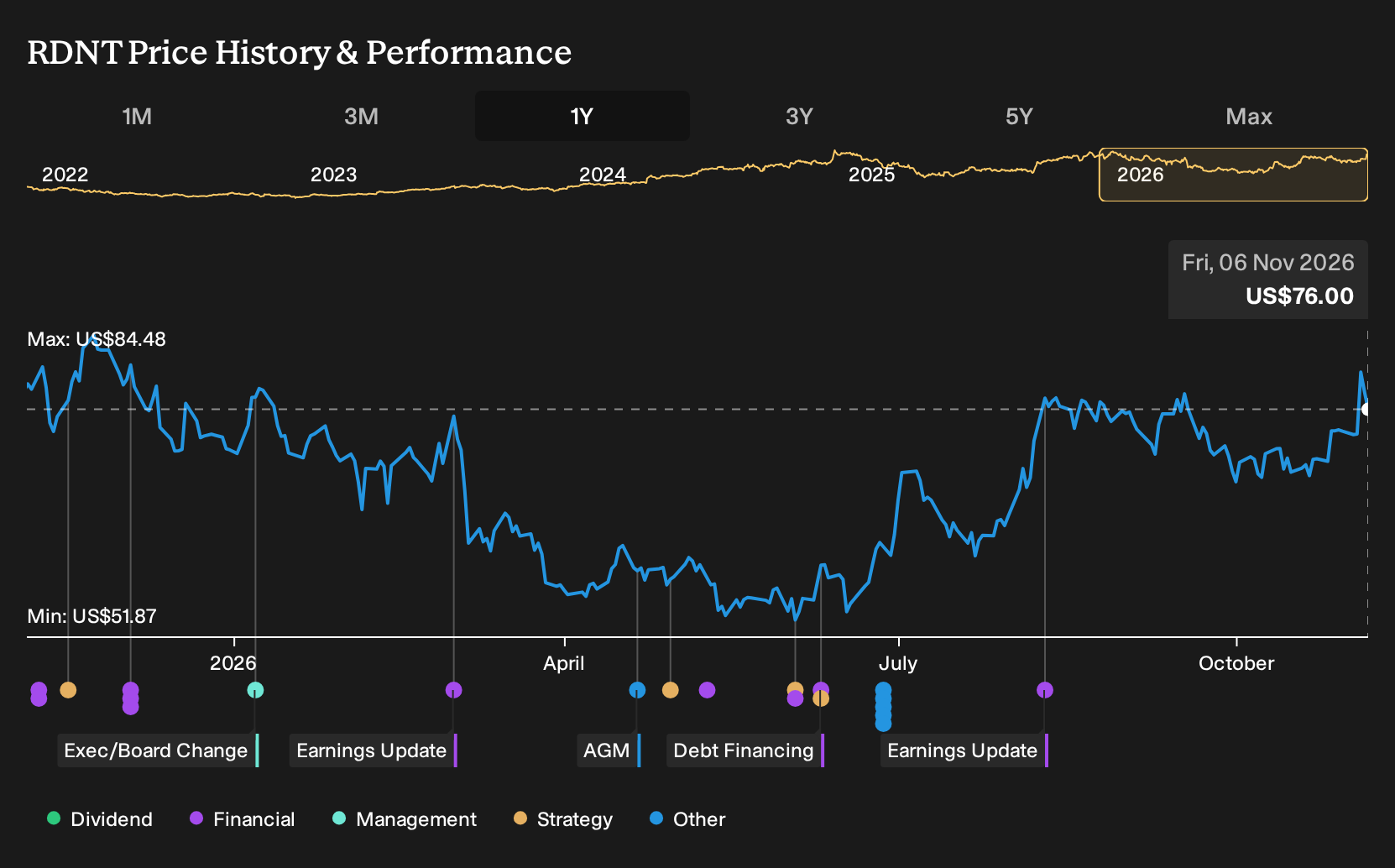
- RadNet reported third quarter 2026 revenue of US$638.26 million compared with US$522.87 million a year earlier, while net income declined to US$4.15 million and diluted earnings per share from continuing operations moved to US$0.05 from US$0.07.
- The business showed higher revenue for both the quarter and the first nine months of 2026, yet reported a larger net loss of US$21.78 million and a higher loss per share, which points to meaningful cost or investment pressures behind the top line.
- This context provides a basis for examining how RadNet's higher revenue but weaker profitability in Q3 2026 fits into the existing investment narrative.
Look beyond RadNet's mixed earnings and explore other healthcare operators with stronger margins or cleaner balance sheets using our hand picked 35 healthcare AI stocks.
RadNet Investment Narrative Recap
To own RadNet, you need to believe its heavy spending on AI tools and digital health will eventually turn higher imaging volumes into better margins and steadier free cash flow. The analyst consensus narrative on Simply Wall St leans on that idea, tying DeepHealth and workflow software directly to throughput and EBITDA improvement across the network.
The latest quarter keeps that thesis intact but underlines the near term trade off. Revenue is higher, while profit is weaker and the nine month loss has widened, which keeps funding and interest coverage risk front of mind. The key short term catalyst is execution on AI driven efficiency. The biggest risk is that costs outpace any operational gains.
The most relevant development here is the third quarter and nine month 2026 earnings release itself. It shows US$638.26 million of Q3 revenue and US$1,836.61 million over nine months, alongside a small quarterly profit and a larger year to date loss. That mix reinforces how capital intensive the model is as RadNet rolls out AI platforms and capacity.
For you, the earnings print feeds straight back into the existing catalyst list. Higher imaging and software revenue helps support the continued build out of DeepHealth, TechLive and joint venture partnerships. However, the wider net loss and interest coverage flag from Simply Wall St’s risk work keep leverage in focus. Execution now is less about new announcements and more about converting these investments into cleaner margins.
RadNet's analyst narrative points to revenue of US$3.2b and earnings of US$155.5 million by 2029, implying forecast revenue growth of 12.2% a year and an earnings swing of roughly US$176.6 million from current earnings of a US$21.1 million loss.
Uncover why RadNet's fair value indicates a 25% potential upside to its current price. This is a gap that could narrow quickly once sentiment shifts.
Exploring Other Perspectives
Some of the lowest RadNet analysts put far more weight on partnership risk than on AI execution. Before this Q3 release, they were modeling about US$3.0b of 2029 revenue and earnings of roughly US$123.1 million, and used that to argue for a much flatter upside story. Your own view can sit anywhere between these extremes and may shift as fresh results like today’s feed into updated forecasts.
Explore 2 other RadNet fair value estimates, including one that suggests it could be worth just $80.63.
Decide For Yourself
Disagree with existing narratives? Extraordinary investment returns rarely come from following the herd, so go with your instincts.
- A great starting point for your RadNet research is our analysis highlighting 3 key rewards and 1 important warning sign that could impact your investment decision.
- See our latest analysis for RadNet. The report includes a comprehensive fundamental analysis summarized in a single visual, the Snowflake, making it easy to evaluate RadNet's overall financial health at a glance.
Looking for more investment ideas beyond RadNet?
Fresh results from RadNet are one piece of your portfolio puzzle. To balance the picture, it can help to line this story up against other listed businesses with different risk profiles, return drivers, and balance sheet strength using the Simply Wall St Screener.
- For investors who care most about defence and capital preservation, filter for companies with resilient finances through the 31 resilient stocks with low risk scores.
- If income is your priority, scan for established payers with higher yields and consistent distributions using the 7 dividend fortresses.
- For those hunting for underfollowed stories with solid fundamentals, widen your radar with the 19 high quality undiscovered gems.
Have feedback on this article? Concerned about the content? Get in touch with us directly. Alternatively, email editorial-team@simplywallst.com