


The Morning Bull - US Market Morning Update Monday, Nov, 9 2026
US stocks are set for a cautiously positive open, with sentiment centered on a jobs market that still looks too firm for a relaxed Federal Reserve. Investors see the latest employment data as the main force behind today’s tone.
October non farm payrolls came in at 165,000, above expectations, while the unemployment rate edged down to 4.1% as 463,000 more people found work and the labor force grew. Average hourly earnings rose 0.4% in October, the strongest wage gain since January, keeping upward pressure on the Fed’s rate debate.
A labor market that continues to generate jobs and stronger pay points to borrowing costs staying elevated for longer. This directly affects corporate financing plans and interest sensitive areas of the market. Faster wage growth also keeps margins under pressure, especially in businesses with limited pricing power.
The unresolved question now is which signal matters more for the Fed and for US markets. Michigan survey data shows year ahead inflation expectations easing to 4.3%, and upcoming Fed speeches today could clarify how policymakers weigh that against firm wage momentum.
Stocks to Watch Before the Opening Bell
Tesla (TSLA)
Tesla is widening its robotaxi footprint, rolling out service to San Antonio after starting in Austin in June 2025 and extending to other Texas and Florida cities. The business already operates driverless rides in Austin without human safety monitors. Watch how regulators, ride volumes, and pricing shape this push beyond car manufacturing.
NVIDIA (NVDA)
NVIDIA is part of a new collaboration with Rebellions and SK Telecom to support Korea's sovereign AI buildout using NVLink Fusion. Rebellions plans to link its R200 chips into NVIDIA's platform, and SK Telecom aims to use the systems in its AI data center. Investors will focus on scale, timelines, and any disclosed revenue visibility from these deployments.
Incyte (INCY)
Incyte is moving two cancer drug candidates for KRAS G12D-mutated pancreatic and colorectal tumors into late stage development after early data showed solid objective response and disease control. Phase 3 studies are ongoing or planned for 2027. The key questions now are durability of benefit, safety outcomes, and how large the eventual treatment population could be.
Top Movers
- Rocket Lab (RKLB) surged 15.39% after a sharp rebound in sentiment following extended share price weakness.
- Ubiquiti (UI) jumped 15.29% after record fiscal Q1 results, higher revenue, and a declared US$1.00 dividend.
- Coherent (COHR) gained 13.58% after Citi raised its target to US$440, highlighting recent earnings and guidance.

Top Losers
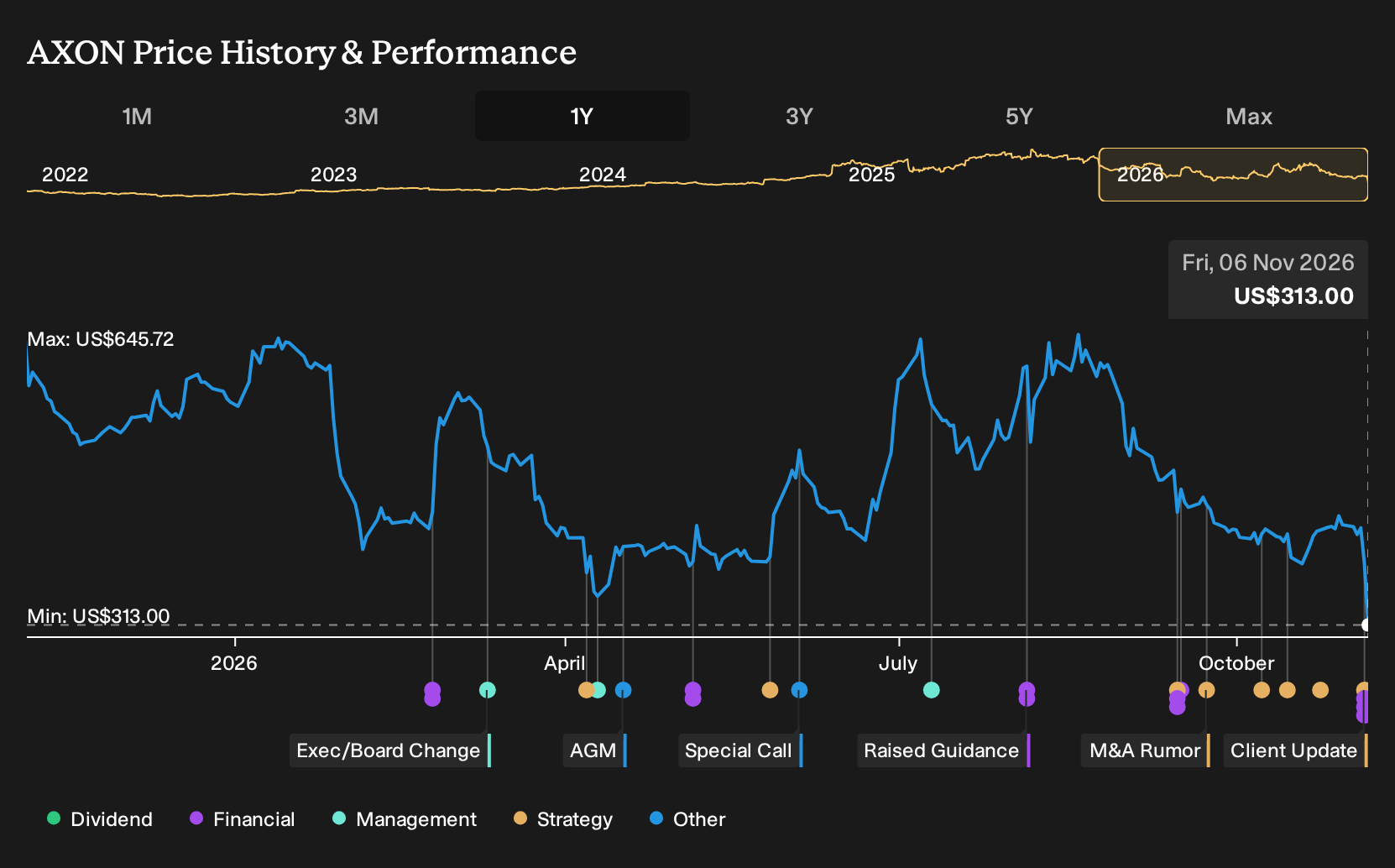
- Axon Enterprise (AXON) fell 18.18% after cutting its 2026 revenue outlook and facing a new securities investigation.
- Atlassian (TEAM) declined 16.15% as multiple banks trimmed price targets following earnings and a cautious outlook.
- Natera (NTRA) dropped 14.59% after an unexpected CEO transition and lower analyst price targets despite recent results.
On The Radar
Inflation prints and a busy slate of Fed speakers crowd the next few days, setting the backdrop for a cluster of tech and energy earnings in US trading hours.
- Fed Bowman, Goolsbee, Barkin speeches, Mon 9 Nov. Any hint on how a 0.4% October wage gain feeds into the policy path could sway expectations for how long borrowing costs stay elevated across credit and equity markets.
- US CPI and Core CPI, Tue 10 Nov. A headline CPI result far from the 3.9% consensus or a core reading away from 2.8% would quickly reset views on rate cuts and filter into rate sensitive sectors like housing and utilities.
- Applied Materials, Thu 12 Nov. Q4 2026 results put orders and revenue in focus for chip equipment tied to AI and data center buildouts, which can influence sentiment around broader semiconductor capital spending plans.
- Cisco Systems, Thu 12 Nov. Q1 2027 earnings at 4:00 PM US Eastern Standard Time will make guidance and enterprise networking revenue the key read on corporate IT hardware budgets.
- Occidental Petroleum, Mon 9 Nov. Q3 2026 numbers after the close will put cash flow and any capital spending commentary under the microscope for investors tracking US energy exposure alongside weekly crude inventory data later in the week.
Sector & Industry Watch
Tech: AI leaders under political spotlight
Tech has been weak over the past week, with a clear 7 day slide and a softer 30 day pattern even though the 1 year return is still positive. Fresh scrutiny of AI and data center projects after the Democratic midterms, plus headlines around Microsoft, BILL, Dropbox and IBM events, keeps attention on how much high cost cloud spending higher rates will support.
If you hold broad tech or software ETFs, Tuesday’s US CPI inflation report is the key macro check because any upside surprise can keep rate cut hopes on hold and usually hits long duration growth sectors hardest.
Semiconductors: Chip stocks digest Nvidia shock
Semiconductors have retreated more than broader Tech over 7 days, with the group down about 11% while year to date and 1 year returns remain ahead of the US Market. The Nvidia board investigation, questions around OpenAI and Anthropic valuations, and fresh news from Qualcomm and Semtech underline how closely chip demand now ties to AI data centers, telecom infrastructure, and policy decisions.
If you own chip ETFs or GPU exposed stocks, Thursday’s Applied Materials earnings is the single release to watch because its commentary on wafer equipment orders and AI related spending often shapes expectations for the whole semiconductor chain.
Energy & Oil and Gas: Strong year meets crude reset
Energy and Oil and Gas each show strong 12 month gains, in the low to mid 30% range, yet both are down over the past week and the last month as crude and product prices eased. Deals involving Sable Offshore, Greenfire Resources and Excelerate Energy plus focus on Occidental’s upcoming results highlight how producers and midstream players are adjusting capital plans when prices and financing costs move together.
If your portfolio includes US producers, pipelines, or LNG exposed companies, this week’s EIA crude and gasoline inventory data is the key driver because swings in stockpiles can affect pump prices, inflation expectations, and in turn how investors treat Energy versus more rate sensitive sectors.
Real Estate: Rate sensitive REITs track housing pulse
Real Estate is up over the last 7 and 30 days and ahead of the US Market on year to date and 1 year returns, helped by steadier long term yields and firm office leasing metrics in places like Manhattan. Activist pressure at Service Properties Trust, dividend decisions at Sunstone Hotel Investors and commentary around Zillow’s past missteps all point to property returns being highly asset specific while financing costs remain elevated.
If you hold REITs or property heavy funds, Thursday’s US Existing Home Sales report is the housing read that matters most because turnover in residential markets often shapes lender appetite, cap rates, and how boardrooms think about maintaining current dividend levels.
Consumer Staples & Food, Beverage & Tobacco: Value shoppers support defensive sectors
Consumer Staples and Food, Beverage & Tobacco have both gained over the past week and month and outperformed the US Market over year to date and 12 month periods as investors look for steadier demand. Dollar General traffic trends, BJ’s Wholesale expansion plans, and clean beauty and hydration launches around e.l.f. Beauty and Jetty show how brands are leaning into value and wellness themes as budgets stay tight.
If you tilt toward supermarkets, discount chains, or packaged food and drink companies, Tuesday’s US CPI print is the macro backdrop to watch because any surprise on food or shelter costs can influence how easily these businesses can adjust prices without pushing consumers more aggressively toward lower priced options.
How To Act On Today's Market
If you care most about keeping risk contained while October’s 0.4% wage gain keeps rates higher for longer, start with this list of 31 resilient stocks with low risk scores
Have feedback on this article? Concerned about the content? Get in touch with us directly. Alternatively, email editorial-team@simplywallst.com