


- Valaris reported third quarter 2026 results with revenue of US$593.6 million and net income of US$46.1 million, compared with US$595.7 million and US$188.1 million a year earlier.
- The sharp drop in basic and diluted earnings per share from continuing operations to US$0.66, from more than US$2.60 a year ago, highlights meaningful pressure on profitability despite broadly steady sales.
- We will examine how Valaris's investment narrative, built around offshore drilling scale and backlog, is challenged by this weaker year over year net income.
Scan how Valaris compares to other offshore and energy contractors under earnings pressure by reviewing our hand picked 33 high quality undervalued stocks with solid cash flows and balance sheets.
Valaris Investment Narrative Recap
For an investor to stay with Valaris, the belief has to be that a large, contracted offshore fleet can translate into steadier cash generation, even when quarterly profit swings are sharp. The third quarter figures, where revenue stayed close to last year but net income and EPS dropped, put execution firmly under the microscope rather than breaking that idea outright.
The analyst consensus narrative on Simply Wall St leans heavily on backlog, utilisation and the planned Transocean merger as key near term levers. The latest earnings make the main short term catalyst management delivering cleaner, less volatile profitability, while the biggest current risk is that higher costs or idle time offset any benefit from existing contracts.
The pending all stock merger with Transocean is the announcement that now matters most in light of this weaker quarter. It is framed around more than US$200m of annual cost synergies, a pro forma backlog above US$10b and an aim to bring leverage to about 1.5x within 24 months of closing.
Those merger promises sit next to earnings that just moved sharply lower year over year on flat sales, which raises the bar for integration and cost control. For you as a shareholder, the key questions are whether Valaris can convert that combined backlog into high utilisation, maintain rig reliability and actually realise the efficiency gains implied in the merger story.
Valaris' current analyst story points to revenue of US$2.8b and earnings of US$507.6m by 2029, based on an assumed 9.0% yearly increase in revenue and a decline in earnings from US$797.6m today that would require you to accept roughly US$290m less profit than current levels.
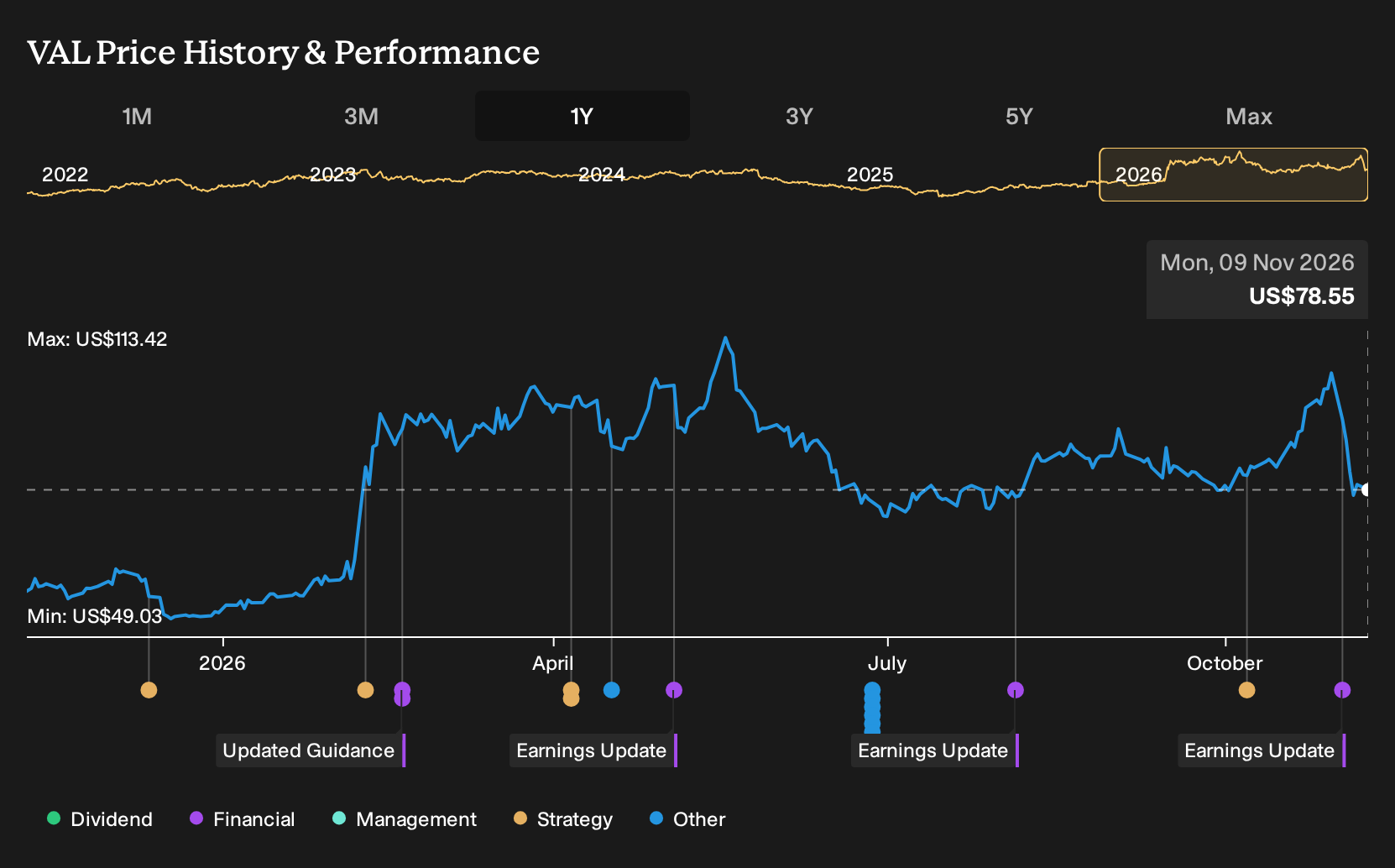
Discover how Valaris' fair value indicates an 11% potential downside to its current price that leaves little room for error.
Exploring Other Perspectives
Some of the most optimistic analysts focus on the Transocean merger as the real swing factor for Valaris, arguing that the more than US$10b combined backlog and projected 2029 earnings of about US$481.6m could justify a higher P/E multiple than consensus models. You can treat this quarter’s weaker profit as a fresh test of that upbeat view and explore whether those pre news forecasts still feel realistic to you.
Explore 4 other Valaris fair value estimates, including one that suggests as much as 142% upside from the current price!
Form Your Own Verdict
Don't just follow the ticker. Dig into the data and build a conviction that's truly your own.
- A great starting point for your Valaris research is our analysis highlighting 3 key rewards and 2 important warning signs that could impact your investment decision.
- See our latest analysis for Valaris. The report includes a comprehensive fundamental analysis summarized in a single visual, the Snowflake, making it easy to evaluate Valaris' overall financial health at a glance.
Looking for more Valaris sized investment ideas?
If this review of Valaris has you thinking about portfolio upgrades, use the Simply Wall St screener to scan for other businesses that match the kind of balance, income potential and risk profile you want, rather than just the latest headline.
- For investors who want resilient balance sheets and healthy fundamentals, start with a curated list of solid balance sheet and fundamentals (25 results) that can help you focus on sturdier businesses.
- If capital preservation sits high on your list, narrow your watchlist to a 30 resilient stocks with low risk scores that may better fit a steadier approach to returns.
- When you are hunting for opportunities the market may be overlooking, scan through a 19 high quality undiscovered gems that filters for quality first and potential re rating second.
Have feedback on this article? Concerned about the content? Get in touch with us directly. Alternatively, email editorial-team@simplywallst.com