


The Zhitong Finance App learned that European gas prices continued to rise due to uncertain prospects for the Middle East conflict and regional supply balance. Benchmark futures rose further above €85 per MWh after rising 2.7% on the previous trading day. Negotiations to end the war with Iran have made little progress, and attacks on oil tankers in the Strait of Hormuz continued this week. According to Iranian media reports, Iran's top security official denied ongoing negotiations with the US. As of press release, Dutch futures in recent months — the European gas benchmark — rose 2.4% to €86.78 per MWh.
Europe's liquefied natural gas imports are lagging behind the same period last year, and already abnormally low winter inventories are falling as the heating season begins. Europe's supply balance this winter largely depends on how quickly the flow in the Strait of Hormuz can recover, especially from Qatar, the largest exporter.
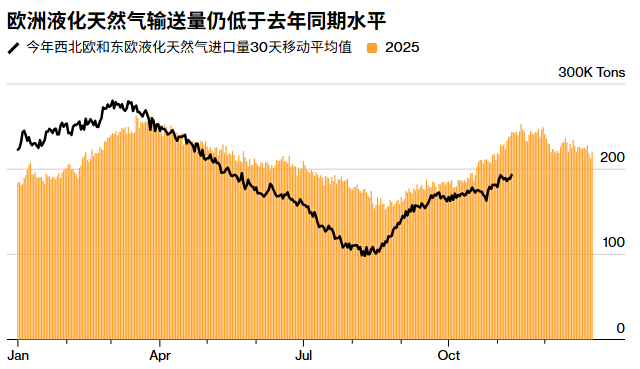
The war in Iran has taken about one-fifth of the world's liquefied natural gas exports out of the market, and Europe can only compete with Asia for limited supply. Gas prices in both regions have recently risen to their highest level since 2022, more than tripling the level at the beginning of the year.
As hopes for progress in peace negotiations have heated up since the US midterm elections, gas prices have declined somewhat this month, but the market continues to be tight, and prices are still high.
Another blow to Qatar, a major liquefied natural gas exporter: Polish energy company Orlen terminated a long-term contract with Qatar Energy (QataREnergy) on the grounds that the Middle East conflict disrupted transportation and Qatar was unable to deliver.