


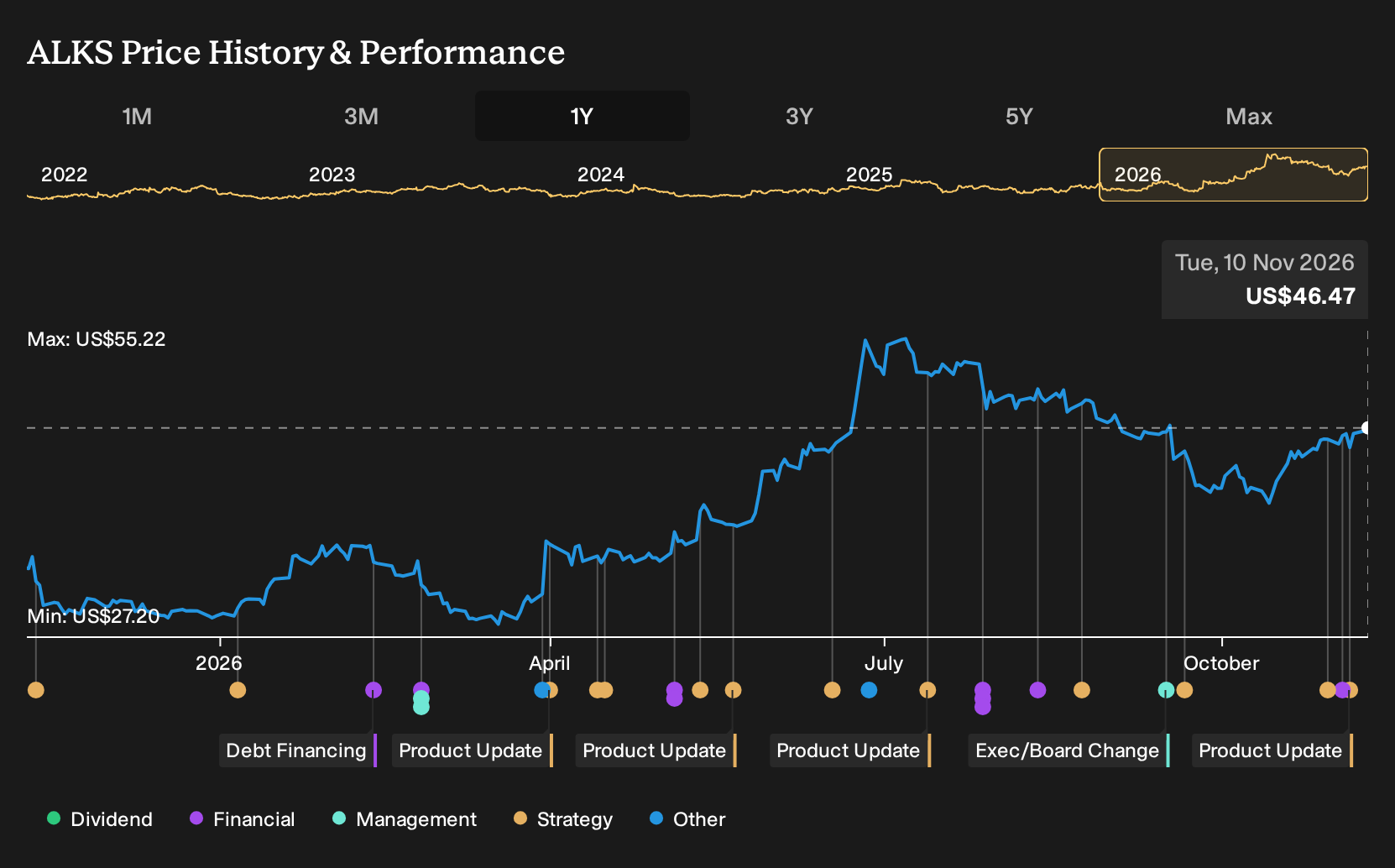
If you had looked at Alkermes in November 2025, analysts were openly split between a growth story tied to neuroscience drugs and a cautionary view focused on product concentration and pricing pressure. For Alkermes shareholders, the return over the past year was 37.4%, including dividends. If you were weighing a purchase back then, how much weight would you have put on reliance on a few core therapies versus the promise of the orexin pipeline?
This theme extends beyond Alkermes. See which of 36 healthcare AI stocks may still merit a closer look.
The Two Alkermes Stories Investors Had To Weigh
The shares cost US$32.65 at the start of the period, and Alkermes sat between two very different but reasonable storylines about its future.
On the optimistic side, one analyst framework pointed to a Fair Value of US$41.5, a notional future price based on expectations that proprietary neuroscience drugs and orexin agonists could support earnings even as analysts assumed revenue would decline 1.3% a year and margins would shrink.
A more cautious view used a Fair Value of US$30, again a hypothetical figure, and placed heavier weight on pressure from drug pricing scrutiny and Alkermes reliance on a concentrated group of therapies.
What The Alkermes Evidence Actually Showed
The clearest new fact for Alkermes was Q3 2026 data. Total revenue reached US$480.1 million compared with US$394.2 million a year earlier, which backed the optimistic case that the top line could hold up. Net income excluding extra items dropped to US$16.3 million from US$82.8 million and net margin fell to 3.4%, which supported the cautious storyline on profitability pressure. Overall, the evidence cut both ways.
The key lesson is simple. When a thesis leans on earnings power, track net margin and absolute profit, not just sales. For any future Alkermes style situation, check whether higher revenue actually converts into cash and retained profitability before you lean toward the bullish version of the story.
What Alkermes Buyers Are Paying For After A 37% Run
Alkermes now trades at US$46.47. The bearish analyst Narrative on Simply Wall St sets a Fair Value below that level and frames the gap around rising cost intensity in sleep medicine and orexin programs rather than a simple debate about headline revenue.
A buyer today effectively assumes the orexin and sleep franchise can shoulder higher SG&A and R&D and still support durable earnings power. How does this Narrative's focus on structurally heavier spending and a guided GAAP loss test that expectation?
"Although Alkermes is building an integrated sleep medicine franchise around LUMRYZ and future orexin agonists, the sharp step up in SG&A to US$217.6 million in Q2 2026 with guidance of US$215 million to US$225 million in Q3 suggests that the Avadel commercial footprint may be structurally heavier than expected. This could limit operating leverage and keep net margins under pressure even if sleep revenues grow."
Not everyone reads the same price the same way. → See the lower figure this Narrative lands on, and how it gets there
Looking One Step Beyond Alkermes
Alkermes pushes hard into neuroscience and sleep, where chronic conditions often overlap. Many patients also manage weight, blood sugar and heart risks together.
That overlap creates a different kind of need for care teams. They want treatments that reshape obesity and diabetes patterns instead of only easing symptoms.
Another large drug maker is targeting that need with a cardiometabolic portfolio. It focuses on incretin and combination therapies designed for intertwined chronic risks.
These medicines aim to influence long term complications and treatment intensity. If that shift sticks, the commercial center of gravity in chronic care could change.
That argument has a Narrative and a number behind it. → See the company one Narrative values 15% above its price
Have feedback on this article? Concerned about the content? Get in touch with us directly. Alternatively, email editorial-team@simplywallst.com