


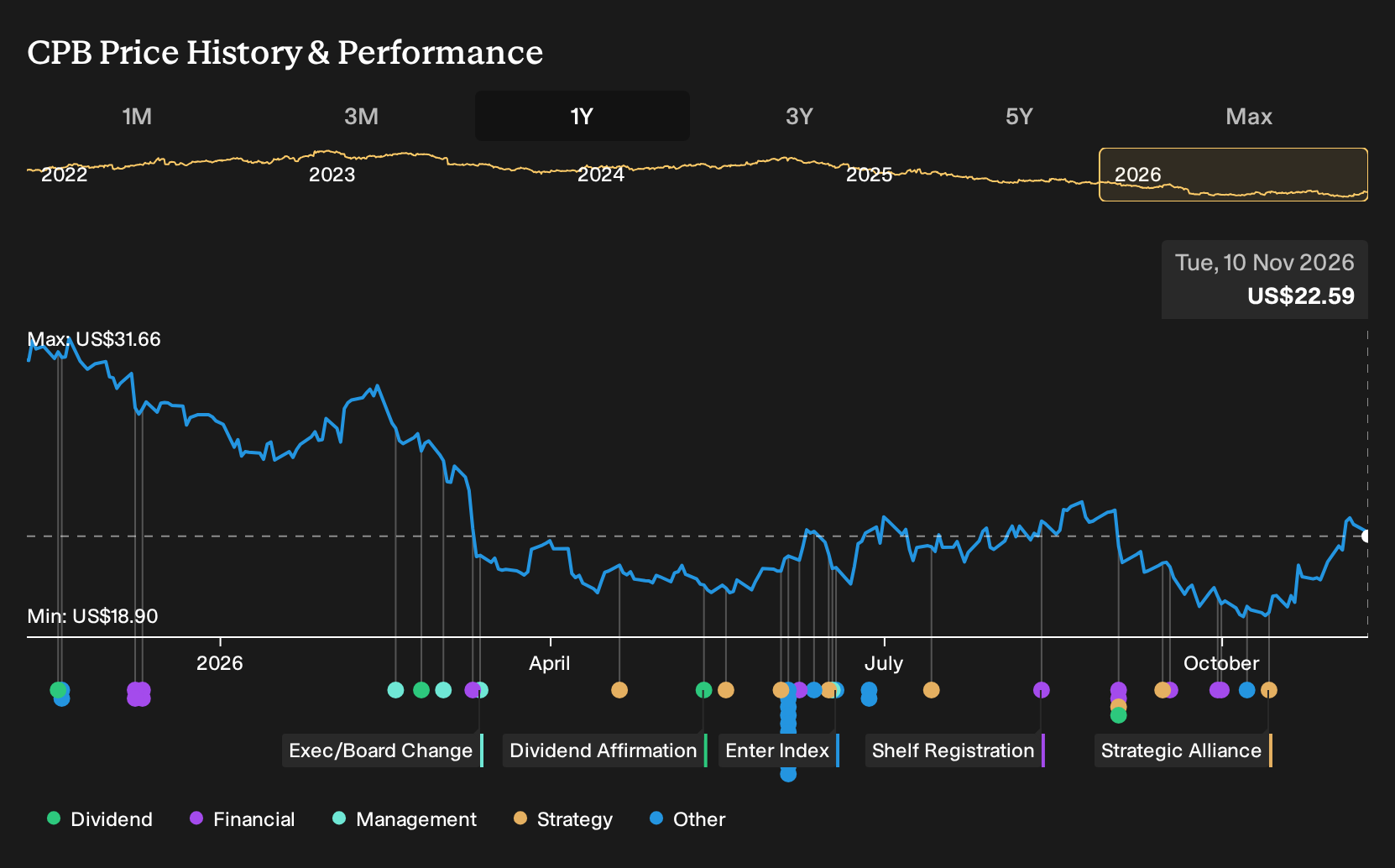
If you bought into the Campbell's story of resilient pantry demand, wellness-focused products, and rising efficiency, the past year will have felt very different to the pitch. Holding Campbell's over the past year would have meant a 22.9% loss, including dividends. If you made that call based on flat revenue assumptions, an 8.5% margin target, and a 14.4x P/E in three years, what exactly did that original thesis miss or underweight?
Campbell's has already moved. See which of 35 high quality undervalued stocks still trade below our estimates.
The Argument Campbell's Investors Were Really Weighing
The shares cost US$30.64 at the start of the period, and anyone looking at Campbell's had to choose between two very different stories about the same pantry brands.
The bullish view saw consumer demand and efficiency creating resilience, with a Fair Value of US$34.58. This was a rough guide to what that thesis implied if flat revenue and an 8.5% margin assumption played out.
The bearish camp focused on weakening processed food demand and tariff pressure, anchoring on a Fair Value of US$28 and expecting revenue to decline 1% a year despite margin improvement.
What The Campbell's Results Put To The Test
Campbell's cutting its quarterly dividend by 36% and reporting a Q4 2026 net loss of US$65 million after US$145 million of profit a year earlier pushed hard against the resilience story. Revenue fell from US$2,321 million to US$2,137 million and net margin moved from 6.2% to a loss of 3.0%. That record more clearly backed the cautious case.
The whole thesis turned on margins holding up while revenue stayed roughly flat. For another stock built on that logic, track reported net margin and payout decisions each quarter in relation to the original 3 year margin target before leaning on the efficiency story.
What Campbell's Share Price Seems To Be Pricing In Today
Campbell's now trades at US$22.59. The bullish analyst narrative on Simply Wall St sees fair value above that level and frames the story around cash generation, deleveraging and semi scratch brands rather than rapid top line momentum.
To treat the 22.9% fall over the past year as opportunity rather than warning, a buyer today would need to believe pricing, cost savings and cash flow from semi scratch and Snacks eventually offset soft volumes and inflation so the balance sheet reset pays off.
"The view now leans more on semi scratch and center store brands as resilient cash generators that support deleveraging and balance sheet repair. Rao's was previously highlighted as a potential step change growth engine within Meals & Beverages. The current stance gives more weight to broader semi scratch products, which already represent over half of Meals & Beverages retail sales, as the key support for revenue and earnings resilience."
Not everyone reads the same price the same way. → See the higher figure this Narrative lands on, and how it gets there
Before The Next Story Makes Headlines
The next headline does not have to be where your research begins. Go straight to the companies and see whether a contrarian opportunity could be taking shape.
- Company 1 - 31% below our estimate - runs higher cost mining assets that rely on upgrading resources into reserves.
- Company 2 - 33% below our estimate - expands AI-focused cloud infrastructure unifying usage-based tools and software subscriptions.
- Company 3 - 38% below our estimate - targets AI-related freight workflows and compliance demands to support capacity utilization.
That is three of the list. See every one of the 24 solid balance sheet companies →
Have feedback on this article? Concerned about the content? Get in touch with us directly. Alternatively, email editorial-team@simplywallst.com