


Regular readers will know that we love our dividends at Simply Wall St, which is why it's exciting to see The Kroger Co. (NYSE:KR) is about to trade ex-dividend in the next four days. Typically, the ex-dividend date is one business day before the record date, which is the date on which a company determines the shareholders eligible to receive a dividend. The ex-dividend date is of consequence because whenever a stock is bought or sold, the trade takes at least one business day to settle. Therefore, if you purchase Kroger's shares on or after the 16th of November, you won't be eligible to receive the dividend, when it is paid on the 1st of December.
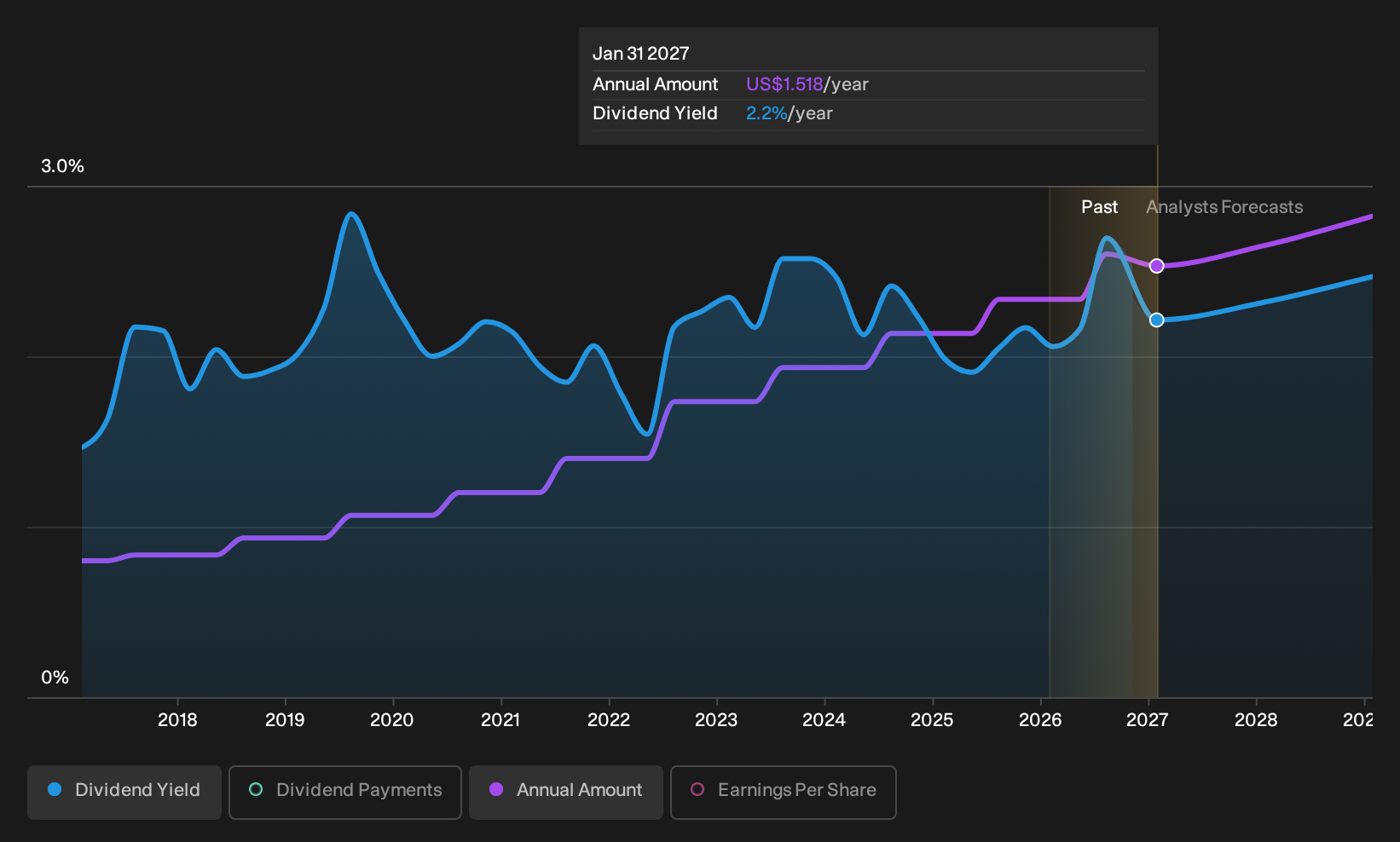
The company's next dividend payment will be US$0.39 per share, on the back of last year when the company paid a total of US$1.56 to shareholders. Looking at the last 12 months of distributions, Kroger has a trailing yield of approximately 2.3% on its current stock price of US$68.60. Dividends are an important source of income to many shareholders, but the health of the business is crucial to maintaining those dividends. That's why we should always check whether the dividend payments appear sustainable, and if the company is growing.
If a company pays out more in dividends than it earned, then the dividend might become unsustainable - hardly an ideal situation. It paid out 84% of its earnings as dividends last year, which is not unreasonable, but limits reinvestment in the business and leaves the dividend vulnerable to a business downturn. We'd be worried about the risk of a drop in earnings. Yet cash flow is typically more important than profit for assessing dividend sustainability, so we should always check if the company generated enough cash to afford its dividend. Thankfully its dividend payments took up just 38% of the free cash flow it generated, which is a comfortable payout ratio.
It's encouraging to see that the dividend is covered by both profit and cash flow. This generally suggests the dividend is sustainable, as long as earnings don't drop precipitously.
Check out our latest analysis for Kroger
Click here to see the company's payout ratio, plus analyst estimates of its future dividends.
Have Earnings And Dividends Been Growing?
Businesses with shrinking earnings are tricky from a dividend perspective. If business enters a downturn and the dividend is cut, the company could see its value fall precipitously. Readers will understand then, why we're concerned to see Kroger's earnings per share have dropped 11% a year over the past five years. Such a sharp decline casts doubt on the future sustainability of the dividend.
Another key way to measure a company's dividend prospects is by measuring its historical rate of dividend growth. Since the start of our data, 10 years ago, Kroger has lifted its dividend by approximately 14% a year on average. That's intriguing, but the combination of growing dividends despite declining earnings can typically only be achieved by paying out a larger percentage of profits. Kroger is already paying out a high percentage of its income, so without earnings growth, we're doubtful of whether this dividend will grow much in the future.
To Sum It Up
Is Kroger worth buying for its dividend? We're not enthused by the declining earnings per share, although at least the company's payout ratio is within a reasonable range, meaning it may not be at imminent risk of a dividend cut. Overall, it's hard to get excited about Kroger from a dividend perspective.
If you're not too concerned about Kroger's ability to pay dividends, you should still be mindful of some of the other risks that this business faces. For example, we've found 4 warning signs for Kroger that we recommend you consider before investing in the business.
A common investing mistake is buying the first interesting stock you see. Here you can find a full list of high-yield dividend stocks.
Have feedback on this article? Concerned about the content? Get in touch with us directly. Alternatively, email editorial-team (at) simplywallst.com.