



As the Q3 earnings season comes to a close, it’s time to take stock of this quarter’s best and worst performers in the beverages, alcohol, and tobacco industry, including Molson Coors (NYSE:TAP) and its peers.
These companies' performance is influenced by brand strength, marketing strategies, and shifts in consumer preferences. Changing consumption patterns are particularly relevant and can be seen in the rise of cannabis, craft beer, and vaping or the steady decline of soda and cigarettes. Companies that spend on innovation to meet consumers where they are with regards to trends can reap huge demand benefits while those who ignore trends can see stagnant volumes. Finally, with the advent of the social media, the cost of starting a brand from scratch is much lower, meaning that new entrants can chip away at the market shares of established players.
The 12 beverages, alcohol, and tobacco stocks we track reported a solid Q3. As a group, revenues beat analysts’ consensus estimates by 2.9% while next quarter’s revenue guidance was 0.5% above.
In light of this news, share prices of the companies have held steady as they are up 4.6% on average since the latest earnings results.
Weakest Q3: Molson Coors (NYSE:TAP)
Sporting an impressive roster of iconic beer brands, Molson Coors (NYSE:TAP) is a global brewing giant with a rich history dating back more than two centuries.
Molson Coors reported revenues of $2.93 billion, down 1.6% year on year. This print fell short of analysts’ expectations by 0.5%. Overall, it was a softer quarter for the company with a miss of analysts’ gross margin estimates and a slight miss of analysts’ EBITDA estimates.
"Since launching Horizon 2030 earlier this year, we've been laying important groundwork for long-term success by building the portfolio, capabilities, routines, and operating discipline needed to perform more consistently across the business. We've taken decisive actions intended to strengthen our share trend performance, accelerate our portfolio transformation, simplify our cost structure, and return cash to shareholders. We believe our strategy is on the right track, but these outcomes are not yet scaled enough to offset the headwinds that we experienced in the third quarter. While the road ahead may not always be linear, our objective is straightforward. Ultimately, the actions we've taken this year are intended to preserve flexibility as we execute our strategy, continue investing in the business, and build a stronger company that is positioned to create long-term value."
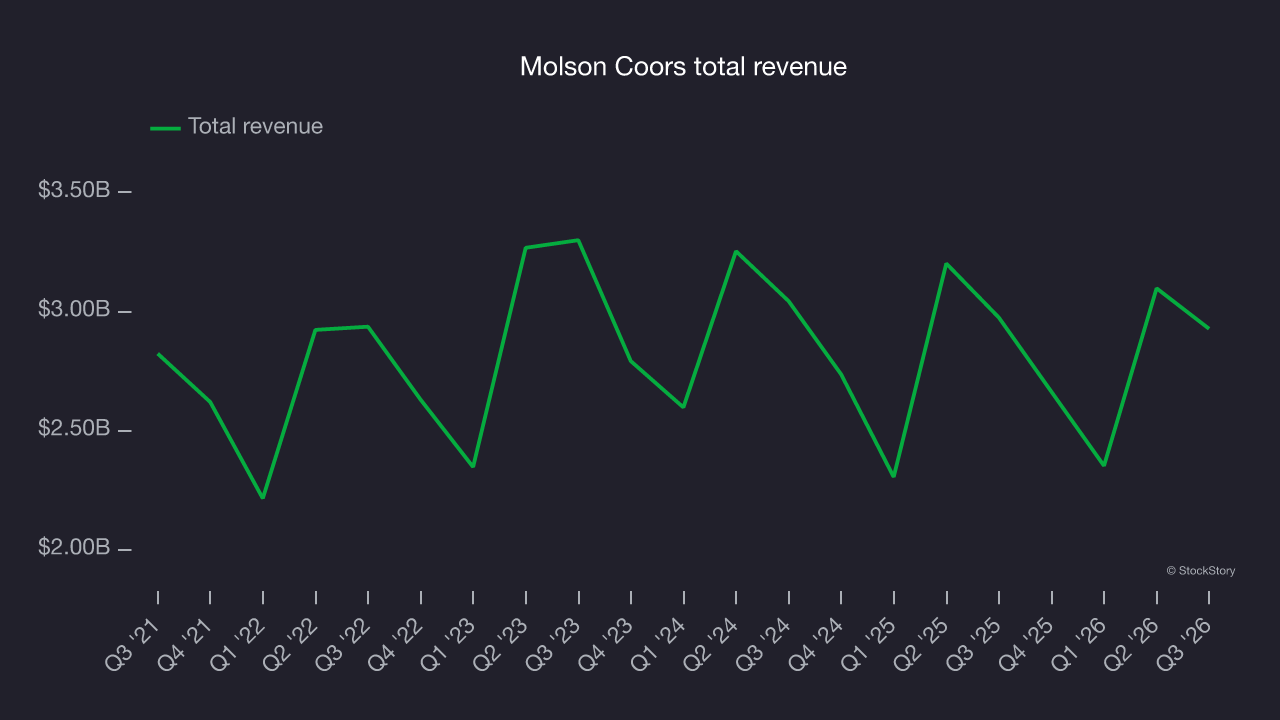
Molson Coors delivered the weakest performance against analyst estimates among its peers. The market seems disappointed with the results as the stock is down 7.8% since reporting and currently trades at $39.78.
Read our full report on Molson Coors here, it’s free.
Best Q3: Zevia (NYSE:ZVIA)
With a primary focus on soda but also a presence in energy drinks and teas, Zevia (NYSE:ZVIA) is a better-for-you beverage company.
Zevia reported revenues of $48.34 million, up 18.4% year on year, outperforming analysts’ expectations by 7.5%. The business had a very strong quarter with a beat of analysts’ EPS estimates and a solid beat of analysts’ EBITDA estimates.
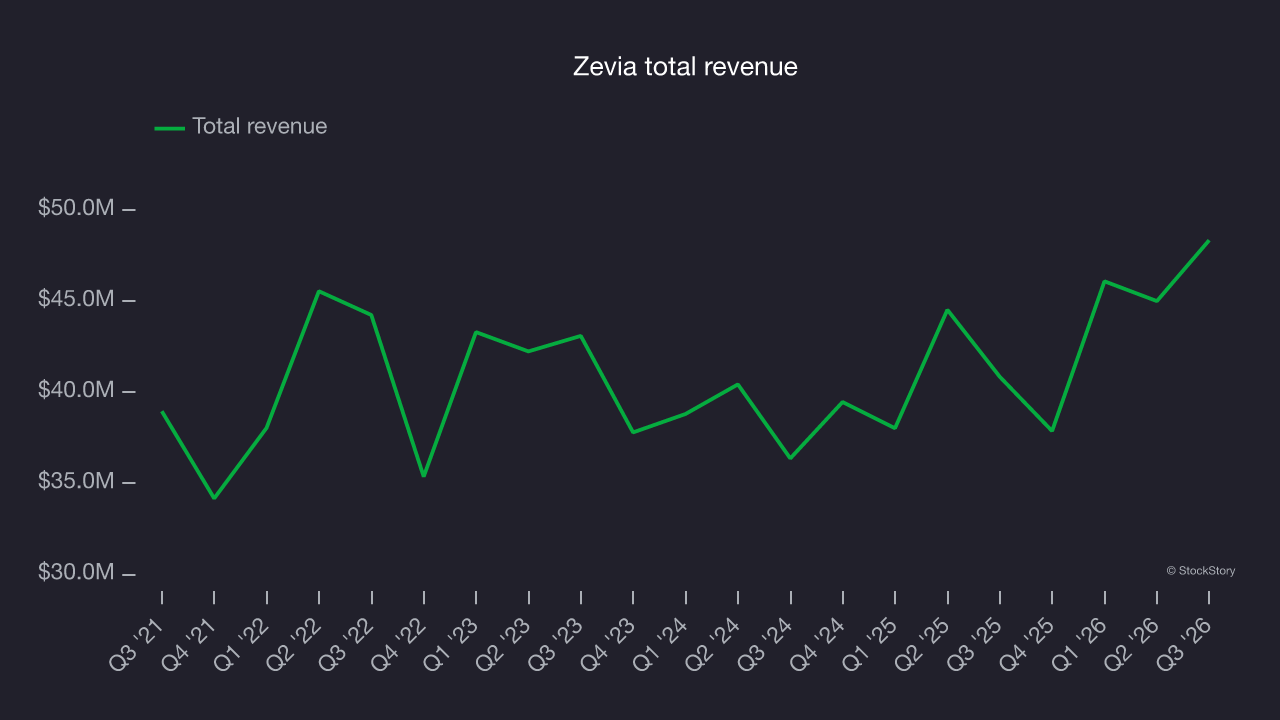
Zevia delivered the biggest analyst estimate beat and highest full-year guidance raise in the group. Although it had a fine quarter compared to its peers, the market seems unhappy with the results as the stock is down 6.3% since reporting. It currently trades at $1.12.
Is now the time to buy Zevia? Access our full analysis of the earnings results here, it’s free.
Keurig Dr Pepper (NASDAQ:KDP)
Born out of a 2018 merger between Keurig Green Mountain and Dr Pepper Snapple, Keurig Dr Pepper (NASDAQ:KDP) is a consumer staples powerhouse boasting a portfolio of beverages including sodas, coffees, and juices.
Keurig Dr Pepper reported revenues of $7.34 billion, up 70.6% year on year, in line with analysts’ expectations. It was a mixed quarter as it posted a beat of analysts’ EPS estimates but a miss of analysts’ gross margin estimates.
Interestingly, the stock is up 1.7% since the results and currently trades at $37.45.
Read our full analysis of Keurig Dr Pepper’s results here.
Monster (NASDAQ:MNST)
Founded in 2002 as a natural soda and juice company, Monster Beverage (NASDAQ:MNST) is a pioneer of the energy drink category, and its Monster Energy brand targets a young, active demographic.
Monster reported revenues of $2.56 billion, up 16.7% year on year. This number beat analysts’ expectations by 3.2%. Aside from that, it was a mixed quarter as it produced a miss of analysts’ gross margin estimates.
The stock is down 5.1% since reporting and currently trades at $45.41.
Read our full, actionable report on Monster here, it’s free.
Vita Coco (NASDAQ:COCO)
Founded in 2004 followed by a 2021 IPO, The Vita Coco Company (NASDAQ:COCO) offers coconut water products that are a natural way to quench thirst.
Vita Coco reported revenues of $243.8 million, up 33.7% year on year. This print surpassed analysts’ expectations by 6.1%. It was a very strong quarter as it also recorded a solid beat of analysts’ EBITDA estimates and a beat of analysts’ EPS estimates.
The stock is up 5.5% since reporting and currently trades at $67.
Read our full, actionable report on Vita Coco here, it’s free.
Market update
Over the past year, investors have been forced to repeatedly answer the same question: what is the market’s biggest risk? The answer has changed several times, and each shift has reshaped market leadership.
Late in 2025 and early 2026, artificial intelligence became the market’s primary uncertainty. Investors questioned whether AI would erode software pricing power and weaken competitive moats as AI made it easier to replicate once-differentiated products.
By the spring, technology took a back seat to geopolitics. The U.S. conflict with Iran briefly became the market’s dominant narrative, raising concerns about oil prices, inflation, and global growth. But as energy markets remained orderly and fears of a prolonged supply disruption faded, investors quickly turned their focus back to fundamentals.
Want to invest in winners with rock-solid fundamentals? Check out our Hidden Gem Stocks and add them to your watchlist. These companies are poised for growth regardless of the political or macroeconomic climate.