



As the Q3 earnings season wraps, let’s dig into this quarter’s best and worst performers in the gig economy industry, including Angi (NASDAQ:ANGI) and its peers.
The iPhone changed the world, ushering in the era of the “always-on” internet and “on-demand” services - anything someone could want is just a few taps away. Likewise, the gig economy sprang up in a similar fashion, with a proliferation of tech-enabled freelance labor marketplaces, which work hand and hand with many on demand services. Individuals can now work on demand too. What began with tech-enabled platforms that aggregated riders and drivers has expanded over the past decade to include food delivery, groceries, and now even a plumber or graphic designer are all just a few taps away.
The 6 gig economy stocks we track reported a satisfactory Q3. As a group, revenues beat analysts’ consensus estimates by 1.3% while next quarter’s revenue guidance was 3.2% above.
In light of this news, share prices of the companies have held steady as they are up 4.7% on average since the latest earnings results.
Angi (NASDAQ:ANGI)
Created by IAC’s mergers of Angie’s List and HomeAdvisor, ANGI (NASDAQ: ANGI) operates the largest online marketplace for home services in the US.
Angi reported revenues of $242 million, down 8.9% year on year. This print was in line with analysts’ expectations, and overall, it was a solid quarter for the company with a solid beat of analysts’ EBITDA estimates.
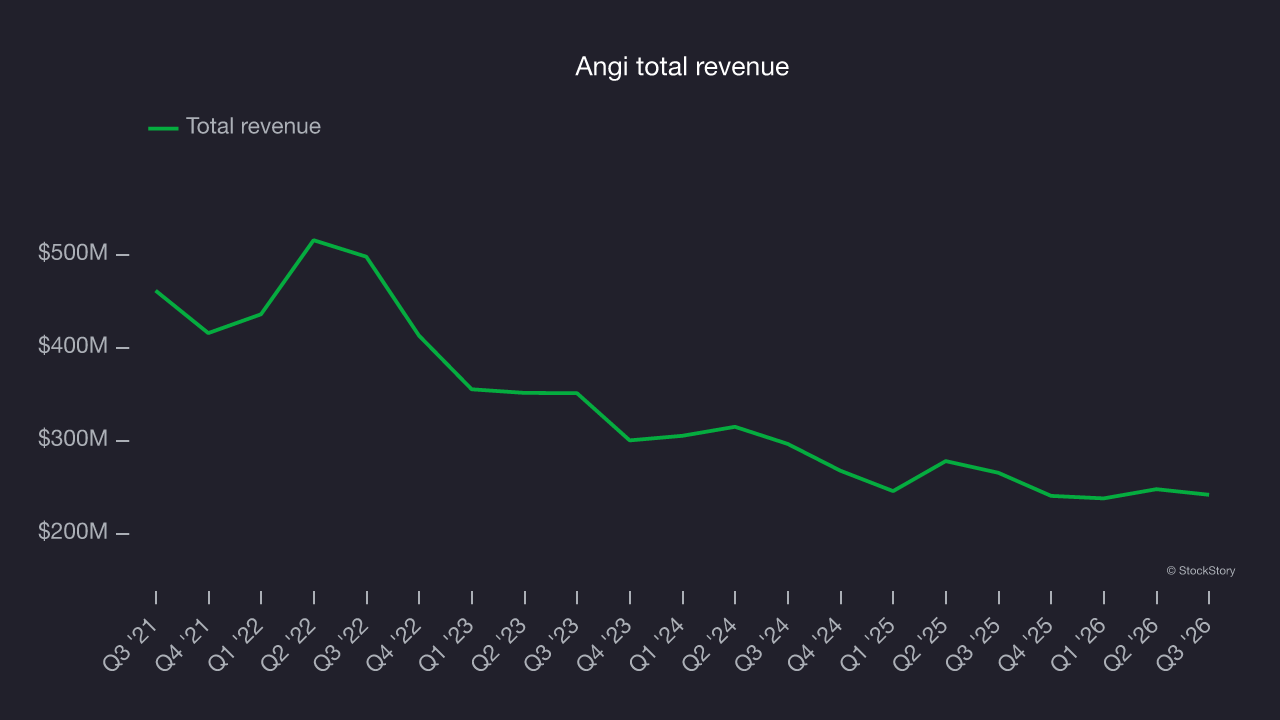
Interestingly, the stock is up 16.9% since reporting and currently trades at $6.60.
Is now the time to buy Angi? Access our full analysis of the earnings results here, it’s free.
Best Q3: Fiverr (NYSE:FVRR)
Based in Tel Aviv, Fiverr (NYSE:FVRR) operates a fixed price global freelance marketplace for digital services.
Fiverr reported revenues of $90.9 million, down 15.8% year on year, outperforming analysts’ expectations by 8.4%. The business had an impressive quarter with EBITDA guidance for next quarter exceeding analysts’ expectations and a solid beat of analysts’ EBITDA estimates.
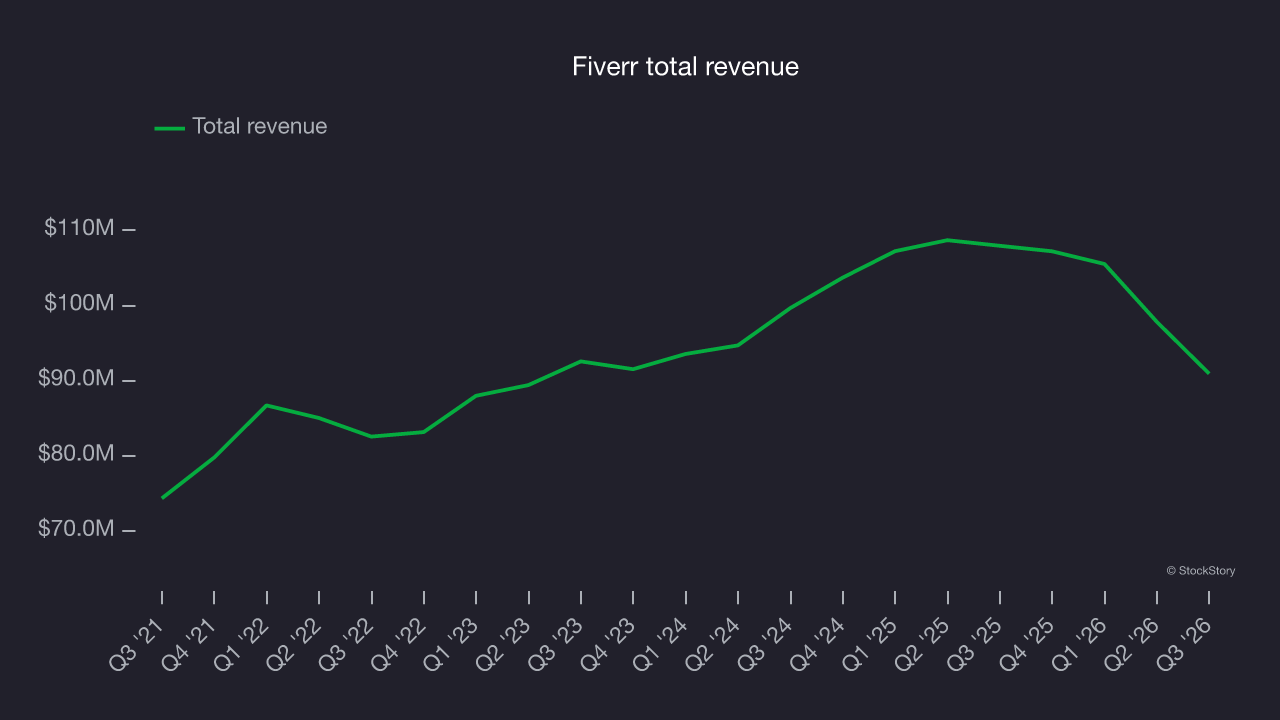
Fiverr achieved the biggest analyst estimate beat, highest guidance raise, and highest full-year guidance raise among its peers. On a dimmer note, the company reported 2.4 million active buyers, down 27.3% year on year. The market seems content with the results as the stock is up 4.4% since reporting. It currently trades at $8.44.
Is now the time to buy Fiverr? Access our full analysis of the earnings results here, it’s free.
Uber (NYSE:UBER)
Notoriously funded with $7.7 billion from the Softbank Vision Fund, Uber (NYSE:UBER) operates a platform of on-demand services such as ride-hailing, food delivery, and freight.
Uber reported revenues of $14.77 billion, up 9.6% year on year, in line with analysts’ expectations. It was a softer quarter as it posted full-year EPS guidance missing analysts’ expectations significantly and EPS guidance for next quarter meeting analysts’ expectations.
Interestingly, the stock is up 5.2% since the results and currently trades at $70.06.
Read our full analysis of Uber’s results here.
Upwork (NASDAQ:UPWK)
Formed through the 2013 merger of Elance and oDesk, Upwork (NASDAQ:UPWK) is an online platform where businesses and independent professionals connect to get work done.
Upwork reported revenues of $185.6 million, down 8% year on year. This print topped analysts’ expectations by 3%. More broadly, it was a satisfactory quarter as it also logged a solid beat of analysts’ EBITDA estimates but EBITDA guidance for next quarter missing analysts’ expectations.
Upwork had the weakest guidance update and weakest full-year guidance update in the group. The stock is up 1.1% since reporting and currently trades at $9.83.
Read our full, actionable report on Upwork here, it’s free.
Lyft (NASDAQ:LYFT)
Founded by Logan Green and John Zimmer as a long-distance intercity carpooling company Zimride, Lyft (NASDAQ: LYFT) operates a ridesharing network in the US and Canada.
Lyft reported revenues of $1.82 billion, up 8.1% year on year. This number missed analysts’ expectations by 5.1%. Overall, it was a mixed quarter for the company.
Lyft had the weakest performance against analyst estimates among its peers. The company reported 31.6 million users, up 10.1% year on year. The stock is down 4.8% since reporting and currently trades at $16.99.
Read our full, actionable report on Lyft here, it’s free.
Market update
Over the past year, investors have been forced to repeatedly answer the same question: what is the market’s biggest risk? The answer has changed several times, and each shift has reshaped market leadership.
Late in 2025 and early 2026, artificial intelligence became the market’s primary uncertainty. Investors questioned whether AI would erode software pricing power and weaken competitive moats as AI made it easier to replicate once-differentiated products.
By the spring, technology took a back seat to geopolitics. The U.S. conflict with Iran briefly became the market’s dominant narrative, raising concerns about oil prices, inflation, and global growth. But as energy markets remained orderly and fears of a prolonged supply disruption faded, investors quickly turned their focus back to fundamentals.
Want to invest in winners with rock-solid fundamentals? Check out our Top 6 Stocks and add them to your watchlist. These companies are poised for growth regardless of the political or macroeconomic climate.