


Washington is arguing over bigger safety nets and higher taxes, and that tug of war over social spending, deficits and interest costs feeds straight into household budgets. When wallets feel tighter, shoppers often shift toward value by stretching every dollar on groceries, toiletries and everyday basics. This article walks through three value oriented consumer staples and discount retail stocks that are exposed to this policy story and explains where the potential opportunities and risks may sit for you.
The stocks in the article below are just a sample set, and the full screen on Simply Wall St surfaced 29 more value oriented consumer staples and discount retail companies with equally interesting stories that are not covered here. To see the wider opportunity set in one place, head straight into the U.S. Value-Oriented Consumer Staples & Discount Retail screener to analyze, filter, and identify which ideas best match your own conviction.
Dollar Tree (DLTR)
Dollar Tree sits right in the middle of this value focused theme, with a chain of discount stores built around low priced everyday items that can appeal when budgets tighten. The analyst consensus Narrative on Simply Wall St frames why this setup has investors paying close attention.
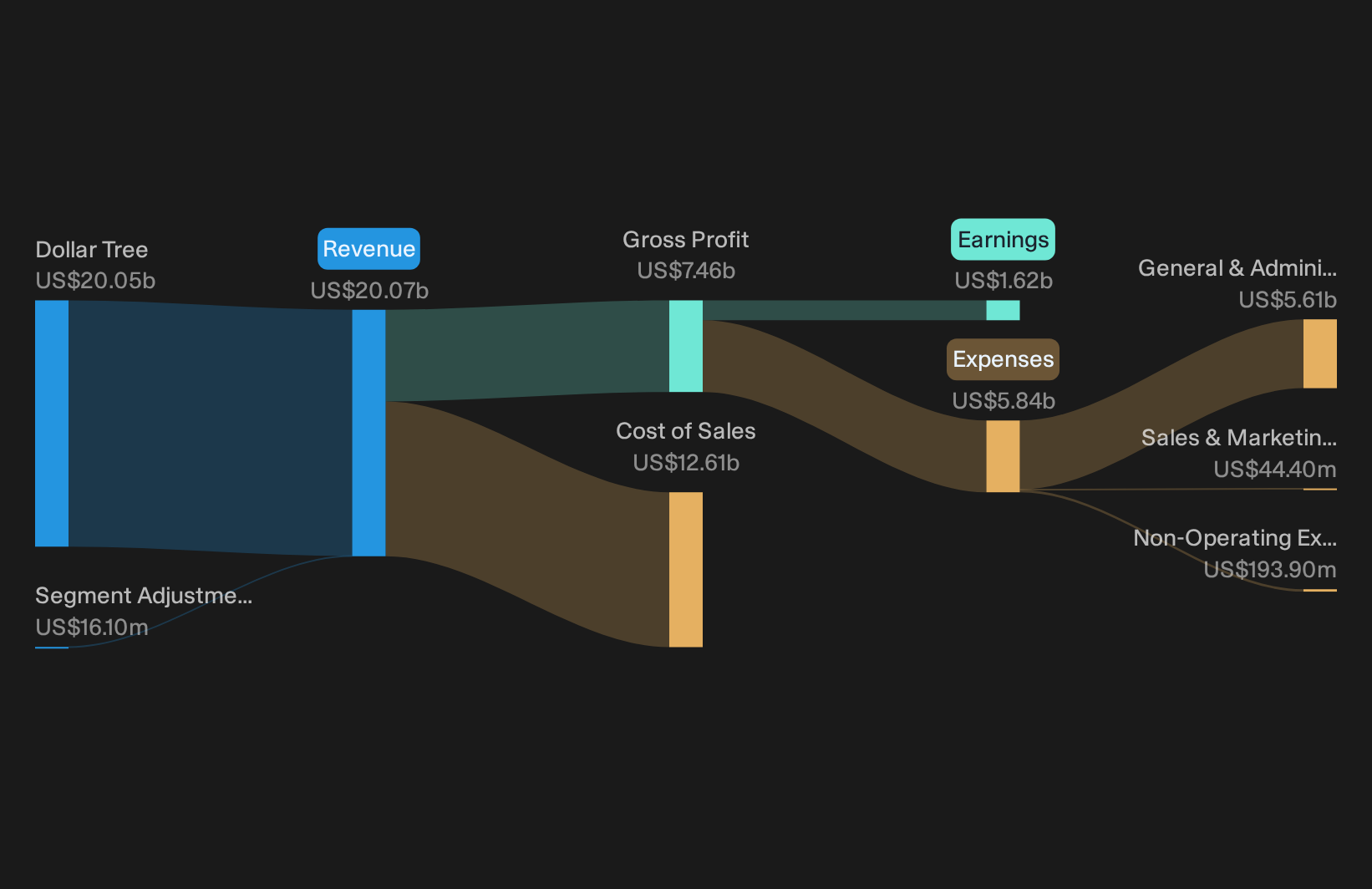
Dollar Tree runs discount stores across the United States and Canada that sell low priced consumables, variety goods and seasonal merchandise to value seeking shoppers. The Dollar Tree segment generated about US$20.1b of revenue, with a small segment adjustment, and the group carries a roughly US$25.7b market cap.
"Dollar Tree is capitalizing on increased consumer prioritization of value and convenience as cost of living pressures persist, with positive traffic in Q2 2026 alongside higher average ticket."
What happens to margins and earnings will hinge on how one less obvious cost pressure interacts with that value first shopping shift.
As that cost pressure plays through, read the full narrative for Dollar Tree to see how Dollar Tree’s pricing power, mix shifts and store economics could be quietly decoupling.
General Mills (GIS)
General Mills brings value focused cereals, meals, snacks and pet food to supermarket aisles and dollar chains. This fits this screener’s emphasis on everyday essentials that can appeal when households trade down, and the analyst consensus Narrative on Simply Wall St frames why that positioning matters now.
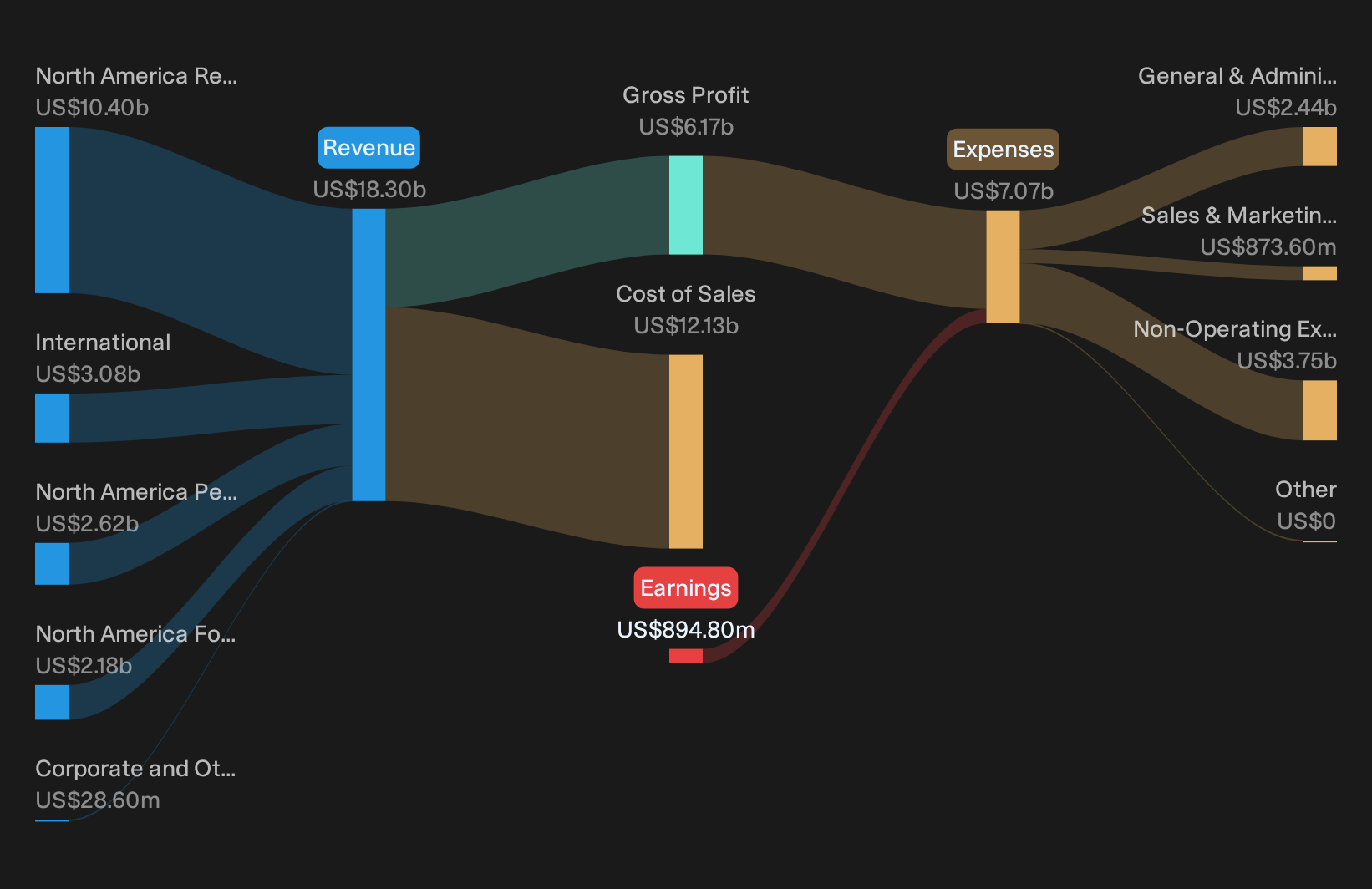
General Mills generates most of its US$18.3b in annual revenue from North America Retail at about US$10.4b, with North America Pet at roughly US$2.6b, International contributing around US$3.1b and North America Foodservice near US$2.2b. The group carries a market value of about US$18.6b.
"General Mills plans to deliver US$750 million of cost savings in fiscal 2027 as part of a US$3 billion program through fiscal 2030. This could support net margins and earnings as Holistic Margin Management and broader efficiencies scale."
What really matters is how one less visible source of pressure interacts with that cost program to shape pricing power and volume resilience.
That hidden pressure could reshape how General Mills trades against peers, so read the full narrative for General Mills to see whether cost savings are masking deeper shifts or accelerating them.
Campbell's (CPB)
Campbell's leans into the value theme with low cost, shelf stable soups, sauces and snacks that often stay on shopping lists when households trim discretionary spending. The analyst consensus Narrative on Simply Wall St focuses on what happens when that steady demand meets a sharper focus on efficiency.
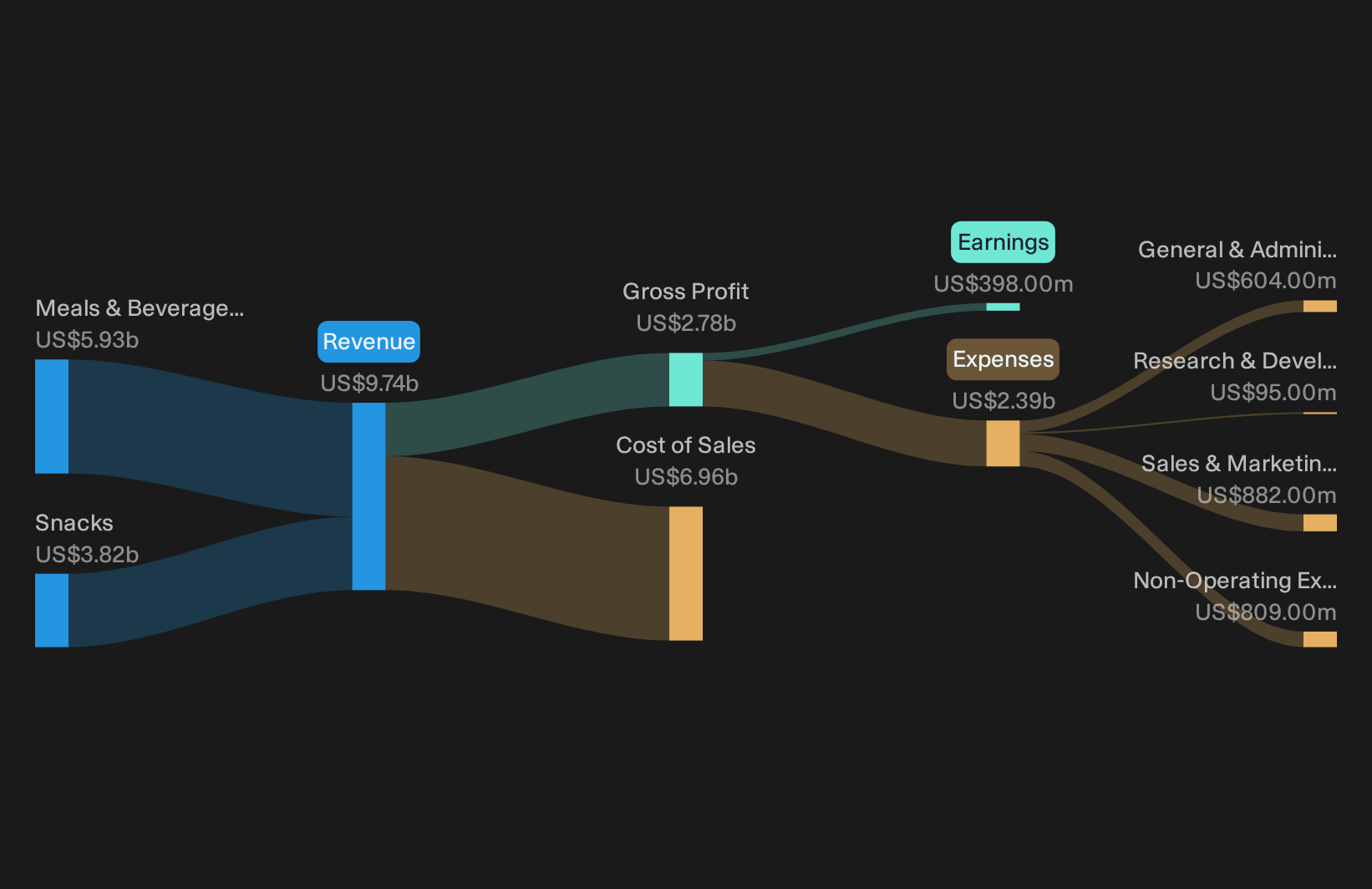
Campbell's produces meals, beverages and snacks, with around US$5.9b from Meals & Beverages and US$3.8b from Snacks, and a roughly US$6.7b market value, which positions it firmly in the value oriented consumer staples segment.
"Ongoing execution of the expanded US$500 million enterprise wide savings program through fiscal 2030, built on prior PEAK savings and now targeting procurement across every P&L line, headcount reductions and further network optimisation after recent plant closures, is intended to lift productivity and operating efficiency. This can support gross margin and EBIT."
What really moves the needle from here is how one pressure point in its snacks and meals mix shapes the payoff from all of that cost work.
That pressure point is exactly what makes the full narrative for Campbell's so useful for judging whether Campbell's cost work is quietly accelerating value or masking brewing risks.
Seeking Fresh Alternatives Before They Fly?
Fresh ideas often move first, and by the time momentum shows on every chart the best entry points can be gone. Scan under the radar and consider acting earlier in the cycle.
- Target income that can keep working for you by reviewing a curated mix of payout heavy businesses through the 5 dividend fortresses before yields become widely followed.
- Track early AI trends and sift through cash generative contenders using the 41 profitable AI stocks that aren't just burning cash while these operators are still treated as side stories.
- Look for resilient balance sheets and disciplined operators via the list of solid balance sheet and fundamentals (24 results) so you are not adjusting your approach after risk appetites change.
Have feedback on this article? Concerned about the content? Get in touch with us directly. Alternatively, email editorial-team@simplywallst.com