


AST SpaceMobile (ASTS) shares are in focus after management announced a new partnership with Tokyo-based Rakuten Group (RKUNY) on Monday. The joint venture dubbed Rakuten AST will help develop a direct-to-device satellite communication network in one of the world’s most advanced wireless markets.
Despite Monday's surge, AST SpaceMobile stock is down about 75% versus its year-to-date high.
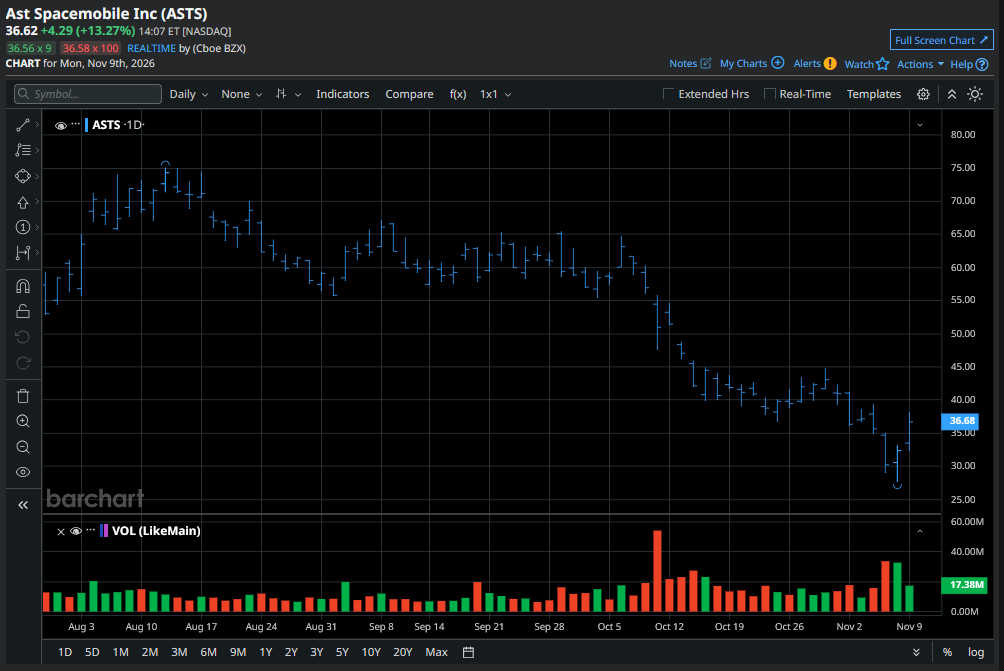
Why Rakuten Deal Matters for AST SpaceMobile Stock
In the press release, AST SpaceMobile confirmed that it will own 49% of the joint entity, which is expected to receive up to ¥148 billion, or about $1 billion, in support through Japan’s J-LEO plan over the next several years.
Investors are treating the deal as significant validation of ASTS’s technology and business model. Beyond the funding opportunity, it establishes a clear path toward commercial deployment, with domestic operations targeted by the end of March 2029.
Despite Monday's surge, ASTS shares have pulled back as of this writing after the company recorded revenue of $42.3 million and a net loss of $0.44 per share for its fiscal Q3, both missing Wall Street consensus estimates.
Cantor Fitzgerald Sees Massive Upside in ASTS Shares
Despite disappointing earnings, Cantor Fitzgerald maintained AST SpaceMobile shares at “Buy,” with a $90 price target indicating potential for a massive rally from current levels.
The investment firm cited growing interest from government customers and strengthening telecom partnerships as key long-term growth drivers, which it believes will unlock further upside in the months ahead.
While analysts acknowledged concerns surrounding cash burn and rising launch costs, they’re fully convinced that accelerating demand will outweigh those risks over time.
That said, Barchart currently holds a “100% SELL” opinion on ASTS, indicating the technical setup heading into the earnings event suggests continued downside ahead.
What’s the Consensus Rating on AST SpaceMobile?
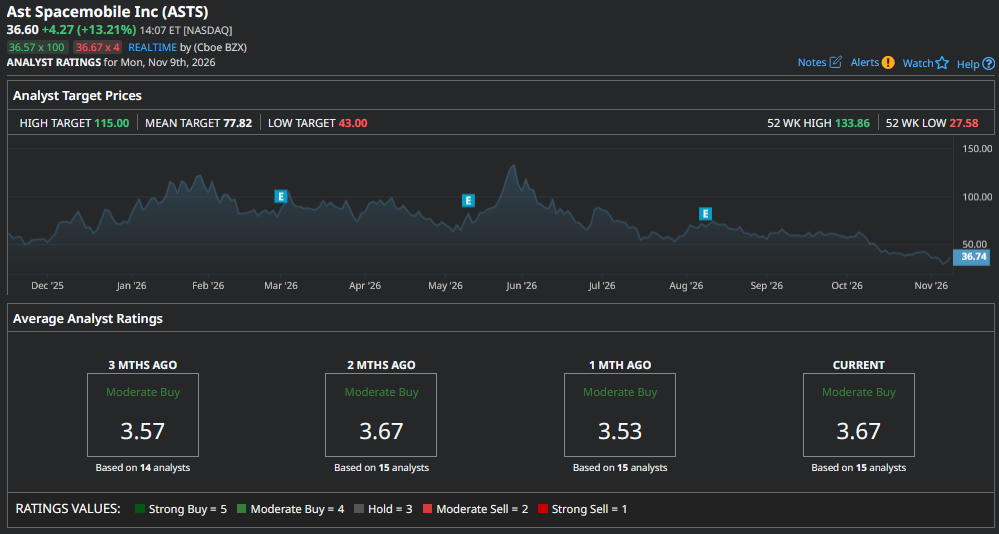
While not nearly as bullish as Cantor Fitzgerald, other Wall Street firms also favor owning ASTS stock, even though it’s currently trading at a rather stretched 166x sales.
The consensus rating on AST SpaceMobile sits at “Moderate Buy,” with the mean price objective of about $78 suggesting the company’s share price could more than double in 2027.
On the date of publication, Wajeeh Khan did not directly have a position in any of the securities mentioned in this article. All information and data in this article is solely for informational purposes. For more information please view the Barchart Disclosure Policy here.