


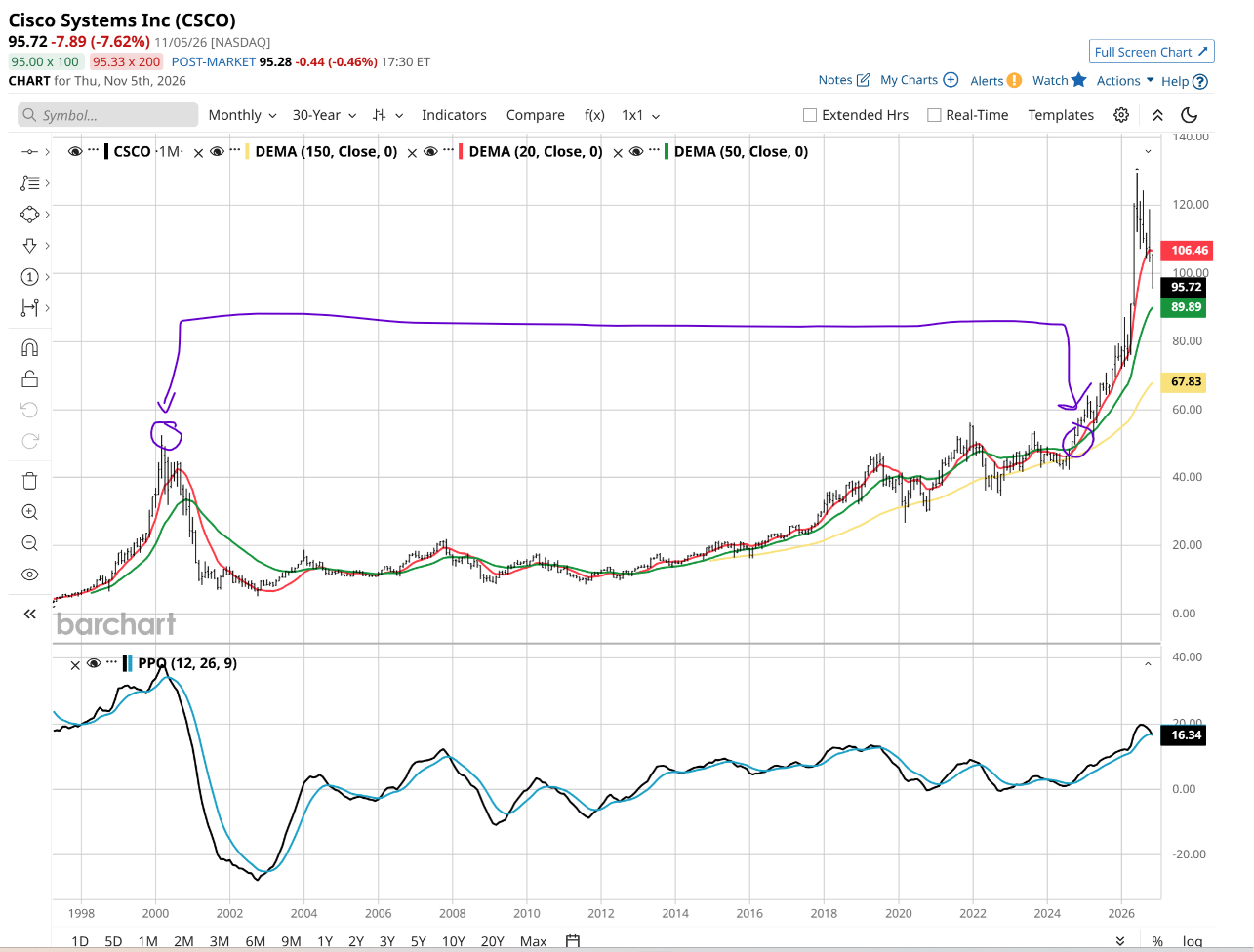
I recall writing for Barchart at least once that the phrase “all-time highs” was one of the biggest traps for investors.
In one classic case, Cisco (CSCO) peaked in 2000, along with most of the tech sector. So when it made an “all-time high” again… 24 years later… the irony of the news was likely lost on many investors. As they say, I guess you had to be there.
We are not far removed from the hysteria over all-time highs in the Invesco QQQ ETF (QQQ), the artificial intelligence bubble, and the SpaceX (SPCX) IPO. Talk about fever and FOMO.
Then, on Thursday, Nov. 5, we had this.
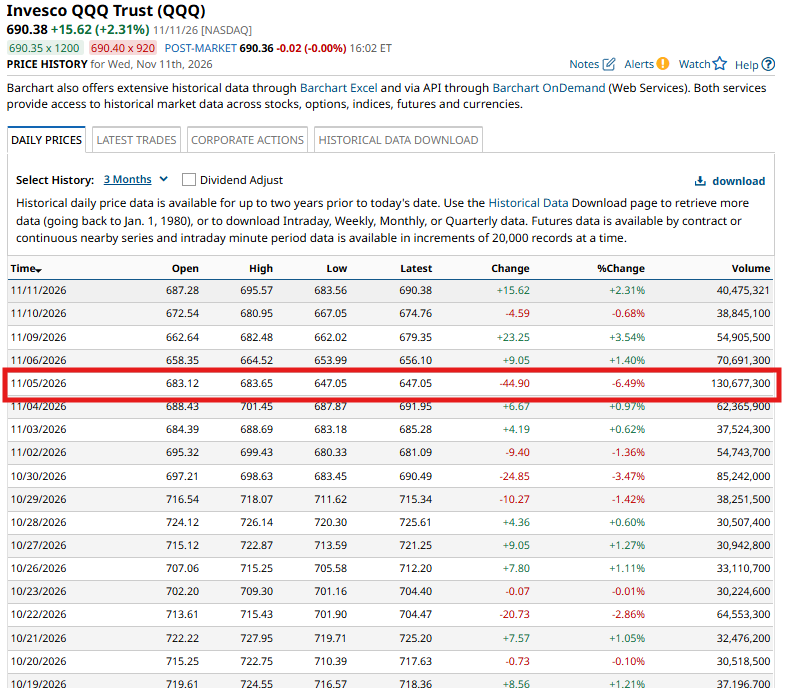
Sort of like a new star being placed on the Hollywood Walk Of Fame. Except instead of a footprint and maybe handprints, it should be a face-plant.
The most challenging thing about investing in a year like 2026, amid IPO hopes and AI dreams, is that the narrative is so steeped in bullishness and the headlines create so much excitement that gambling tendencies take over. If I asked 10 investors who had not yet experienced a true, sustained bear market what they owned, they’d likely rattle off the “usual suspects.”
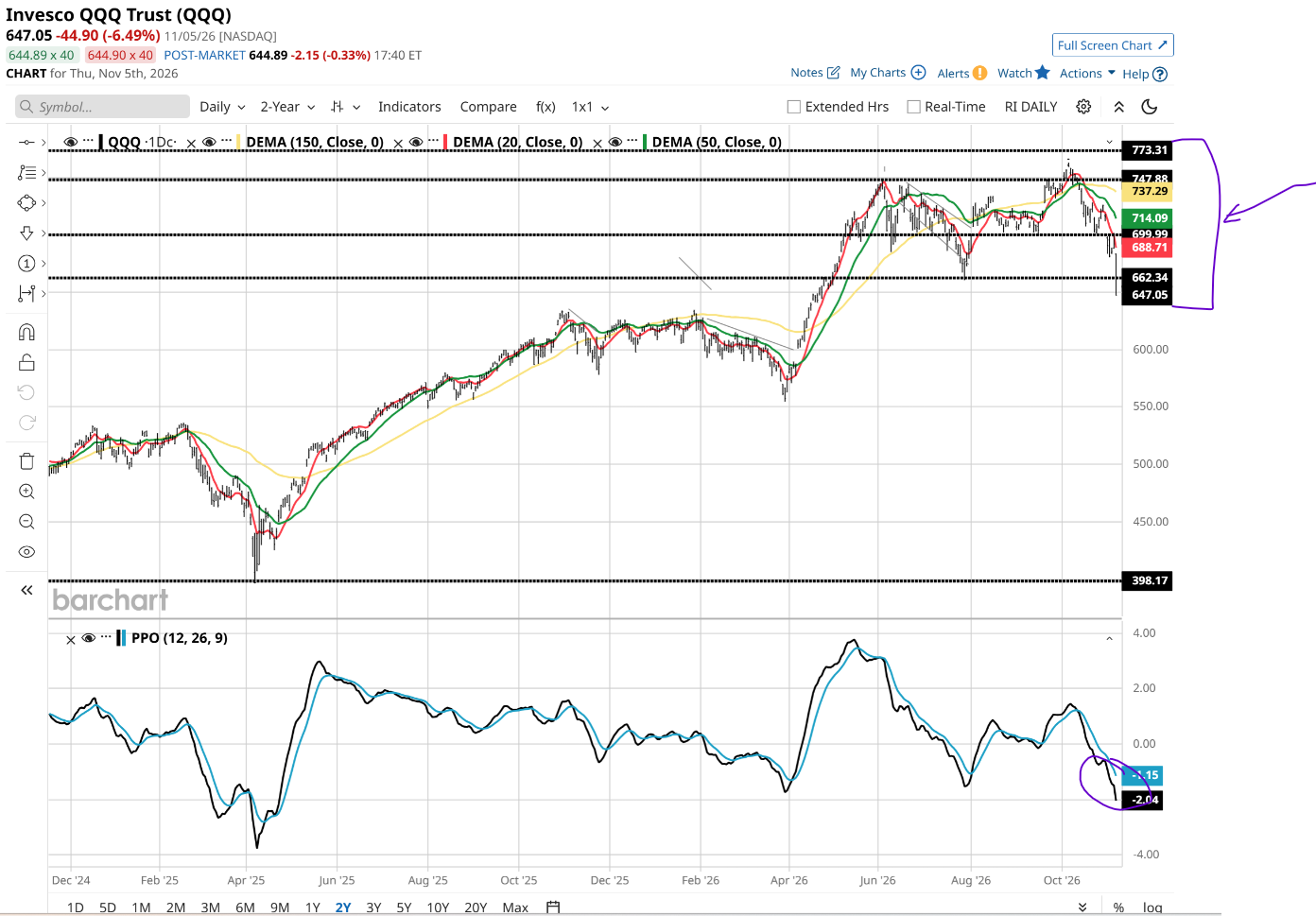
Lots of tech, likely with a large allocation to the Qs.
Perhaps the worst-case scenario from here is a giant bounce in QQQ, SOXX, and SPY. Because if what we saw last week was just another false bottom, the real danger will follow.
For those of us who have been through several bear markets in stocks, this is merely a flesh wound. And it only gets tougher if you are an options trader, since spiking volatility takes a lot of your best plays off the table.
I bring all of this to the fore, not to discourage anyone. Just the opposite. This is the time to understand that markets go down too. Not for a day or week or month. Sometimes for a year or a decade. Or two.
So, you might as well get familiar with how to play defense. That starts with having a longer memory than you might otherwise have right now. The all-time highs, the AI ROI projections five years out, and all of that noise. They are not relevant when the “face-ripper” is a decline, not a rally.
This is when we have to remember that the stock market is more about liquidity and the net availability of it. Hedge funds and DIY retail investors get margin calls, liquidate, and a self-reinforcing cycle occurs.
That might be happening now, and it might not. I’m not a fortune teller. But I do know that defensive investing is great to learn. It is what I teach primarily to my audience. In large part because for a generation, few in my industry have focused on it. They haven’t had to. Until now.
But you can’t run a 10k road race if you haven’t run more than one-fourth a mile at any point in the past 10 years. At least, you shouldn’t try to. So some “reps” are needed. I’ve written a ton about this, but here I’ll just summarize.
The 3 Best Ways to Play Investment Defense
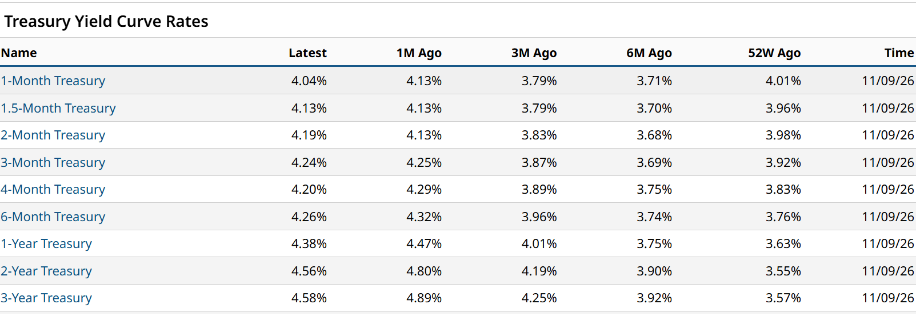
1. Cash is not trash. Look at yields now, out to three years maturity. And compare them to 52 weeks ago. They are similar or higher. There’s still a free lunch. And it pays in a year what many stocks and ETFs now gyrate around in a day.
2. Inverse ETFs. I write about these for Barchart frequently. This one is the granddaddy of them, now more than 20 years young. The ProShares Short S&P 500 ETF (SH) delivers the daily value of SPY, in reverse. Here is the Key Statistics page for it, so you can get some screening ideas. Perhaps starting with Leverage: Short in the screener.
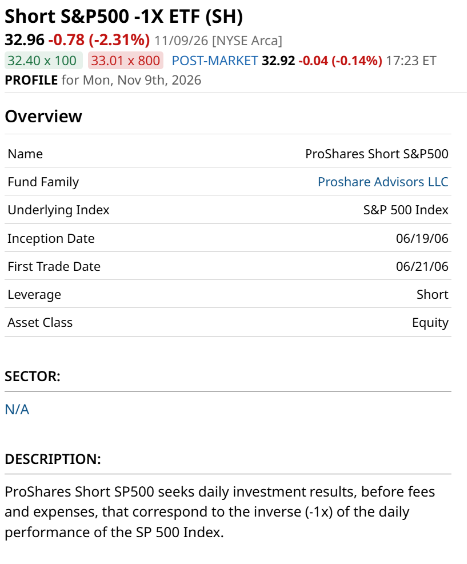
3. Smaller position sizes. Simply put, the next time you think about putting $100 to work (or multiples thereof), start with $50. Or even $25 or $10 out of that $100. This is not exactly dollar cost averaging, but it provides a similar benefit. I firmly believe that experiencing markets and learning to manage risk is best done by putting actual money at risk. But not a single dollar more than needed to pursue the return goal on the trade.
And, as a bonus, realize that defense can become your best offense. The more you learn to use these tools, the more comfortable you become with them, how they trade, etc., the more equipped you will be to “crush” a down market. Frankly, after 40 years of doing this, I’m about as market agnostic as anyone you’ll find.
My goal is not to make money in a long stock bull market. It is to make money. And not lose big along the way. Ever.
Rob Isbitts is a semi-retired CIO, former fiduciary investment advisor, Barchart columnist, and straight-talker. Download his new free e-book on hedged bond investing for retirement at ETFYourself.com. His research and model portfolios are at ROAR.PiTrade.com.
On the date of publication, Rob Isbitts did not directly have a position in any of the securities mentioned in this article. All information and data in this article is solely for informational purposes. For more information please view the Barchart Disclosure Policy here.