



Battery manufacturer EnerSys (NYSE:ENS) fell short of the market’s revenue expectations in calendar Q3 2026 [fiscal Q2 2027], with revenue flat year on year at $949.9 million. Next quarter’s revenue guidance of $955 million underwhelmed, coming in 1.1% below analysts’ consensus estimates. Its non-GAAP profit of $3.22 per share was 1.3% above analysts’ consensus estimates.
For more on EnerSys, read our free full research report.
EnerSys Q3 CY2026 highlights:
- Revenue $949.9 million vs S&P analysts’ consensus estimates of $966.7 million (flat year on year, 1.7% miss)
- Adjusted EPS $3.22 vs S&P analysts’ consensus estimates of $3.18 (1.3% beat)
- Adjusted EBITDA $170.4 million vs analysts’ consensus estimates of $171.9 million (17.9% margin, 0.9% miss)
- Revenue guidance $955 million at the midpoint for Q4 CY2026, below analysts’ consensus estimates of $965.3 million
- Adjusted EPS guidance $3.10 at the midpoint for Q4 CY2026, roughly in line with what analysts were expecting
- Operating margin 12.2%, up from 9.7% in the same quarter last year
- Free cash flow -$12.26 million, down from $197.1 million in the same quarter last year
- Sales volumes rose 1% year on year (3% in the same quarter last year)
- Market capitalization $5.46 billion
“In the second quarter of fiscal year 2027, we delivered gross margin expansion, adjusted operating margin expansion and adjusted EPS growth while continuing to advance our strategic priorities,” said Shawn O’Connell, President and Chief Executive Officer of EnerSys. “Precision Power Solutions delivered more than 20% year-over-year sales growth, supported by strong demand for soldier power and munitions, while Network and Infrastructure Solutions delivered 3% growth against an unusually high second quarter prior year comparison, driven by double-digit growth in data centers. These strong results helped balance the continued pressure in material handling within our Industrial Mobility Solutions and demonstrate the resilience of our diversified portfolio and the operating discipline we are building through our EnerGize strategy.
Revenue growth
A company’s long-term revenue performance can indicate its overall quality. Any business can deliver a good quarter or two, but the best consistently grow over the long term. EnerSys’s revenue grew at a tepid 3.6% annualized rate over the last five years, an underwhelming result compared with the rest of the industrials sector, but there are still things to like about the company.
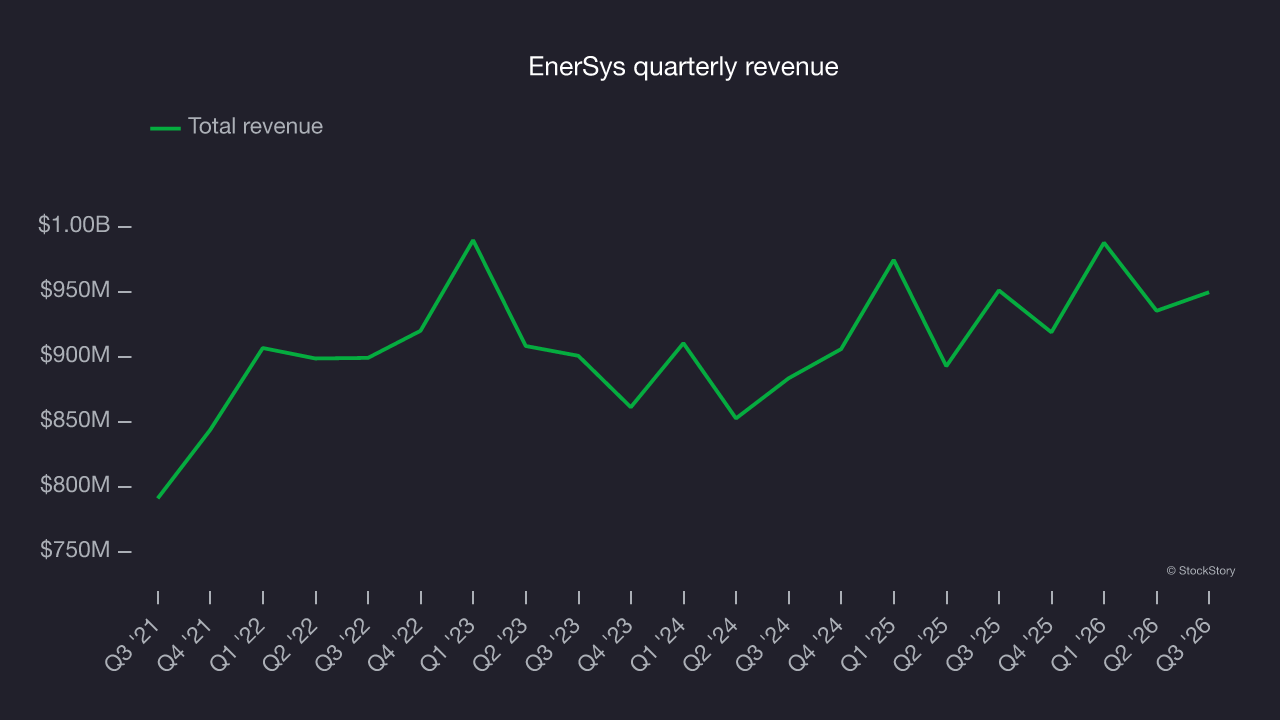
Long-term growth matters most, but within industrials, a half-decade historical view may miss cycles, industry trends or a company capitalizing on catalysts such as a new contract win or a successful product line. EnerSys’s annualized revenue growth of 4% over the last two years aligns with its five-year trend, suggesting its demand was consistently weak. 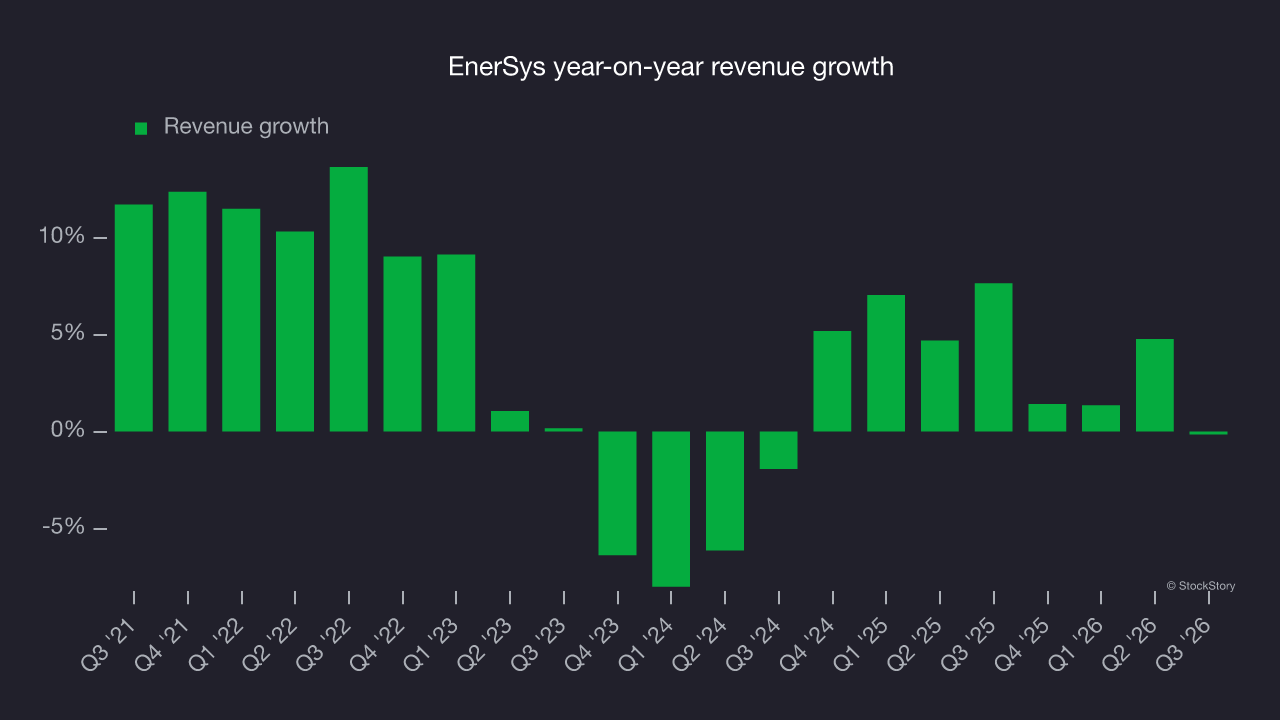
The number of units sold offers a closer look at the company’s revenue dynamics. Over the last two years, EnerSys’s units sold were flat. Revenue growth outpaced unit growth, indicating that price increases contributed to growth. 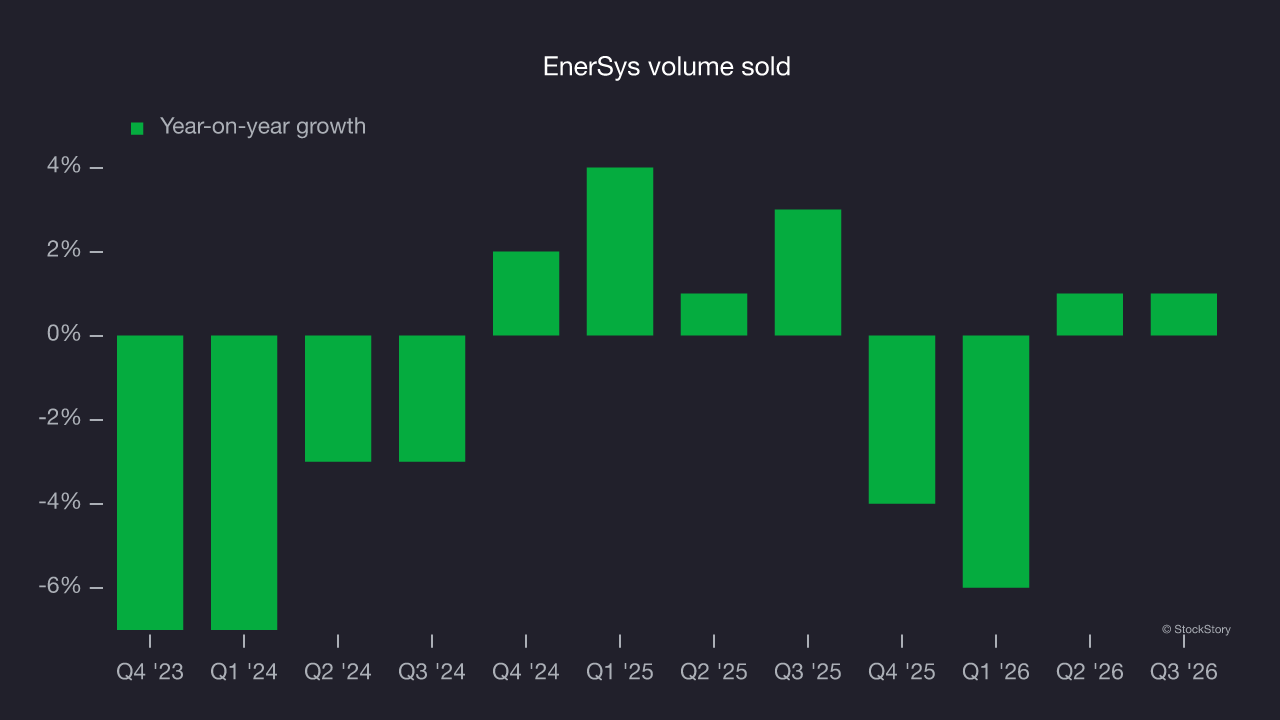
This quarter, EnerSys’s revenue of $949.9 million was flat year on year, falling short of Wall Street’s consensus estimates. Management is guiding for a 3.9% year-on-year increase in revenue next quarter.
Looking further ahead, sell-side analysts expect revenue to grow 5.2% over the next 12 months, according to S&P, similar to its two-year rate. This projection is above average for the sector and suggests its newer products and services will fuel better top-line performance.
Operating margin
Over the last five years, EnerSys’s operating margin rose by 7.9 percentage points. This improvement shows its costs declined relative to revenue. Its trailing 12-month operating margin was 13.6%.
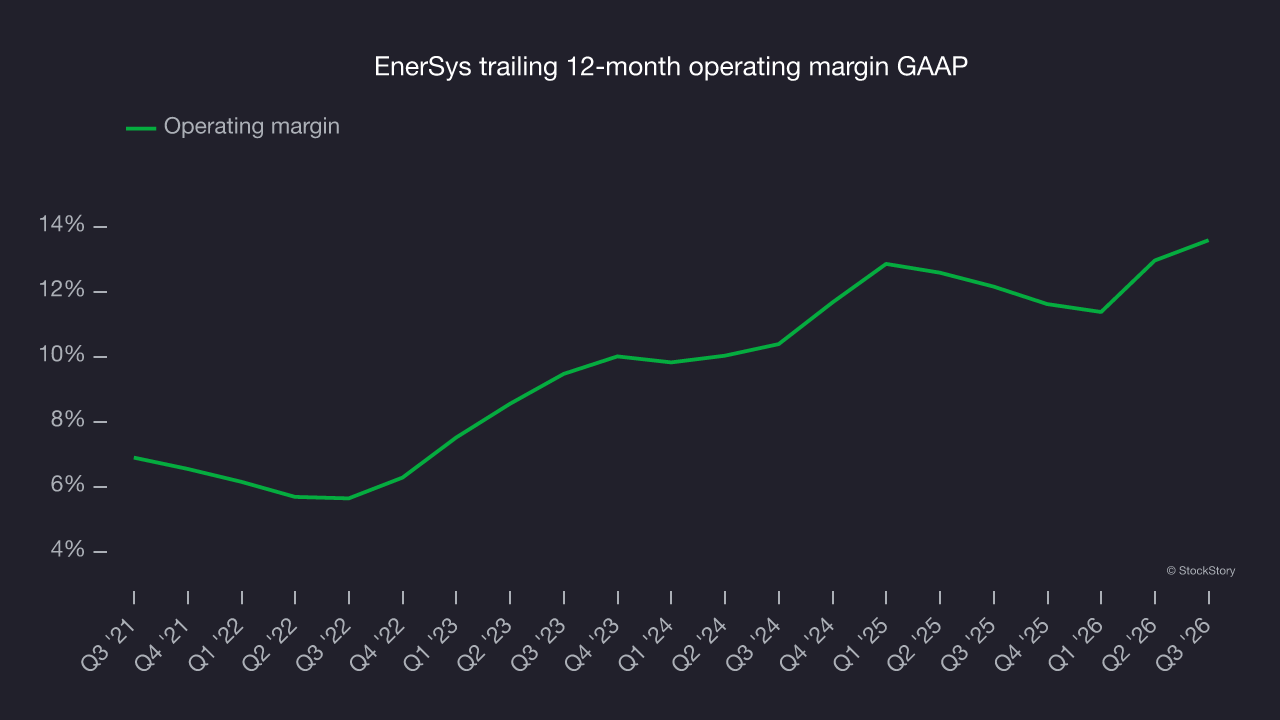
In Q3, EnerSys generated an operating profit margin of 12.2%, up 2.5 percentage points year on year. The increase was a positive sign. Operating margin rose more than gross margin, indicating greater efficiency with expenses such as marketing, R&D and administrative overhead.
Earnings per share
Revenue trends explain a company’s historical growth, but the long-term change in earnings per share, or EPS, points to the profitability of that growth. For example, a company could inflate its revenue through excessive spending on advertising and promotions.
EnerSys’s EPS grew at a 21.6% compounded annual growth rate over the last five years, higher than its 3.6% annualized revenue growth. This indicates the company became more profitable on a per-share basis as it expanded.
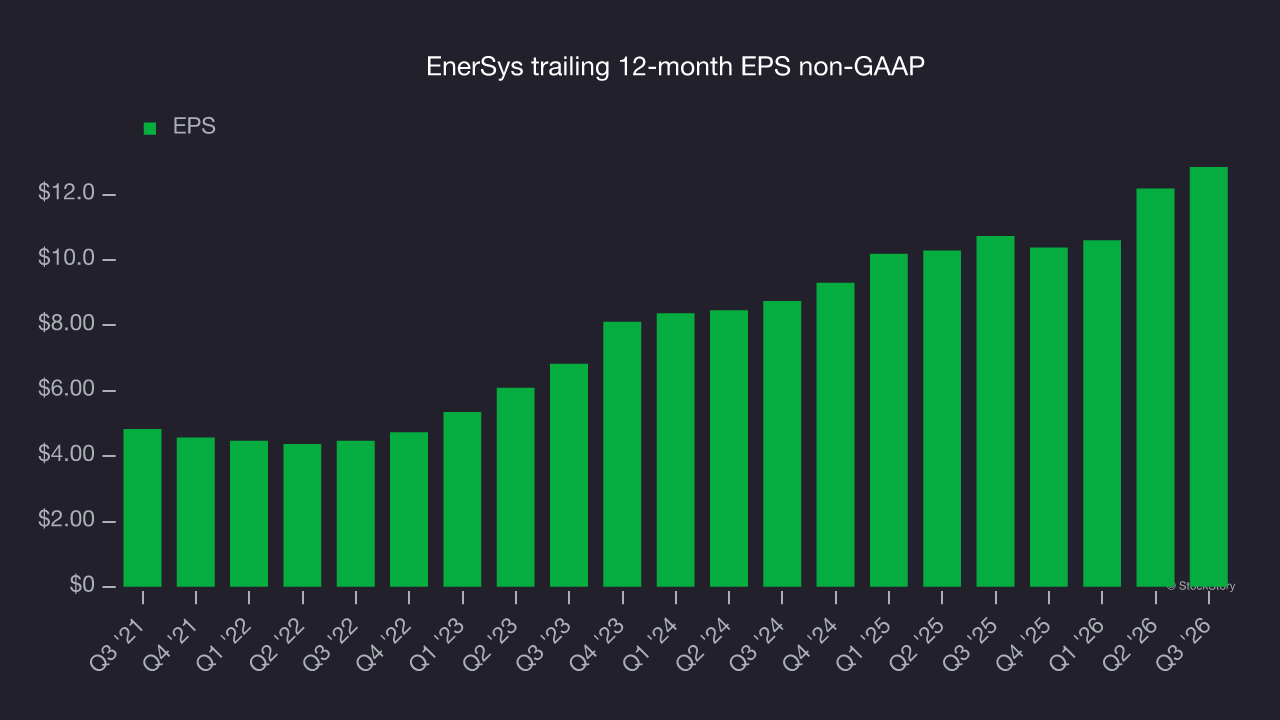
A closer look at EnerSys’s quality of earnings can help explain its performance. As mentioned earlier, EnerSys’s operating margin expanded by 7.9 percentage points over the last five years. On top of that, its share count shrank by 14.6%. These are positive signs for shareholders because improving profitability and share buybacks boost EPS growth relative to revenue growth. 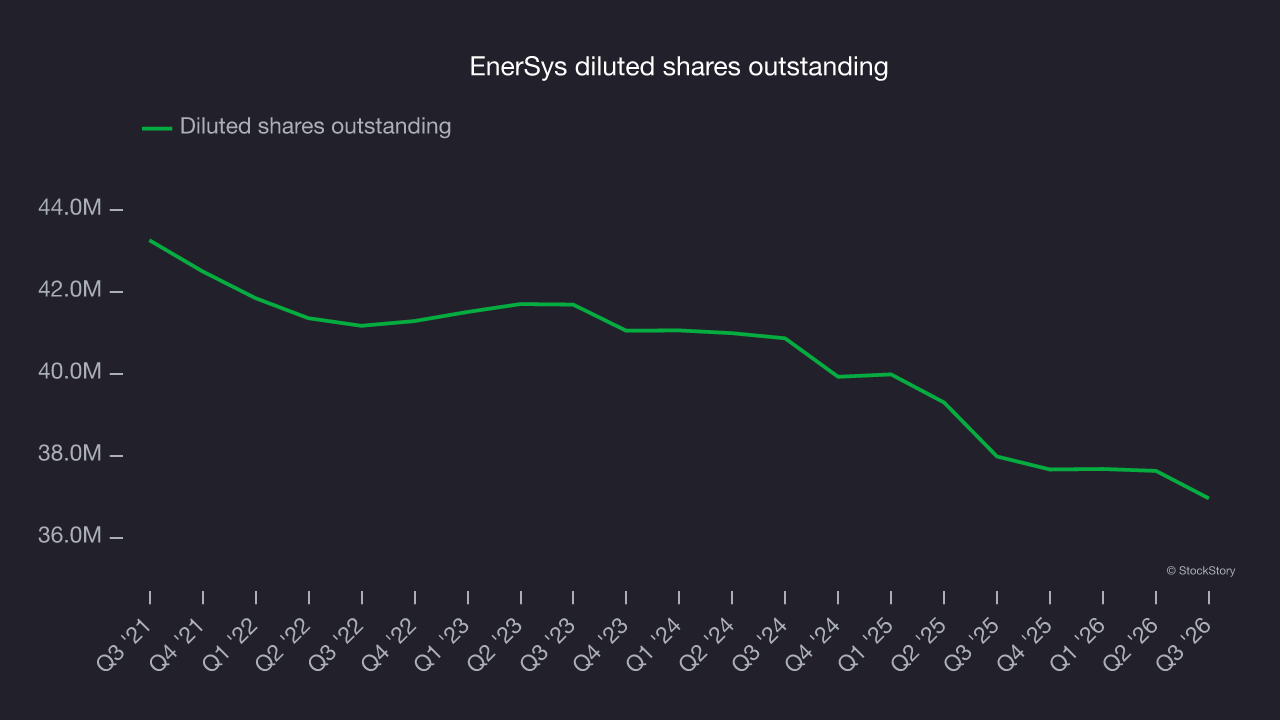
As with revenue, we analyze EPS over a more recent period because it can provide insight into an emerging theme or development for the business.
For EnerSys, its two-year annual EPS growth of 21.2% is similar to its five-year trend, implying strong and stable earnings power.
In Q3, EnerSys reported adjusted EPS of $3.22, up from $2.56 in the same quarter last year. This result beat analysts’ consensus estimates by 1.3%. Over the next 12 months, Wall Street expects EnerSys’s full-year EPS to grow 4.1% from $12.84 to $13.37, according to S&P.
Key takeaways from EnerSys’s Q3 results
EnerSys delivered a weaker quarter with few positives: revenue missed expectations, and next-quarter revenue guidance came in slightly below Wall Street’s consensus. Shares fell 4.1% to $144.75 immediately after the report.
EnerSys may have had a difficult quarter, but could that create an investment opportunity at the current price? The latest quarter matters, but not as much as longer-term business quality and valuation when deciding whether to invest in this stock. For more on EnerSys, read our full research report here (it’s free).