


Energy price shocks now play a bigger role in inflation, according to recent Federal Reserve research, and that puts management decisions under a harsher spotlight. Canadian founder-led businesses often have leaders with substantial skin in the game, which can create sharper focus on costs, pricing power and capital allocation when conditions change. This article highlights three founder-driven Canadian stocks from our screener that exemplify this owner-operator mindset.
The three stocks highlighted here offer a compelling starting point if you want exposure to founder led businesses where leadership is heavily invested in long term results. However, if you want the standouts, these 2 top founder-led companies are the most outstanding.
Aritzia (TSX:ATZ)
Overview: Aritzia is a founder-led Vancouver retailer that designs and sells its own womenswear brands through boutiques and online channels in Canada and the United States, with founder Brian Hill’s family still shaping product, brand and expansion decisions.
Operations: Aritzia generates about CA$4.3b in apparel revenue, with roughly CA$1.6b from Canada and CA$2.8b from the United States.
Market Cap: CA$17.8b
Aritzia fits the Founder-Led Companies theme because the founder’s family still calls the shots on product design, brand direction and boutique rollout. The analyst consensus Narrative on Simply Wall St views that owner-operator mindset as central to the current expansion phase.
"Aritzia's ongoing U.S. boutique rollout, with new locations reportedly paying back in under one year and management indicating room to expand from roughly 76 to 82 to at least 180 to 200 boutiques, points to a continued store-led uplift to net revenue."
What really tests this founder-led plan is whether one subtle pressure on future profitability bends quietly or snaps margins wider open.
If that pressure point intrigues you, the full narrative for Aritzia explains how founder control, new boutiques and margin risks could be accelerating, or quietly masking, Aritzia’s next phase.

Lightspeed Commerce (TSX:LSPD)
Overview: Lightspeed Commerce runs a founder-led cloud platform that helps retailers, restaurants and other merchants manage omni-channel sales, payments and financing.
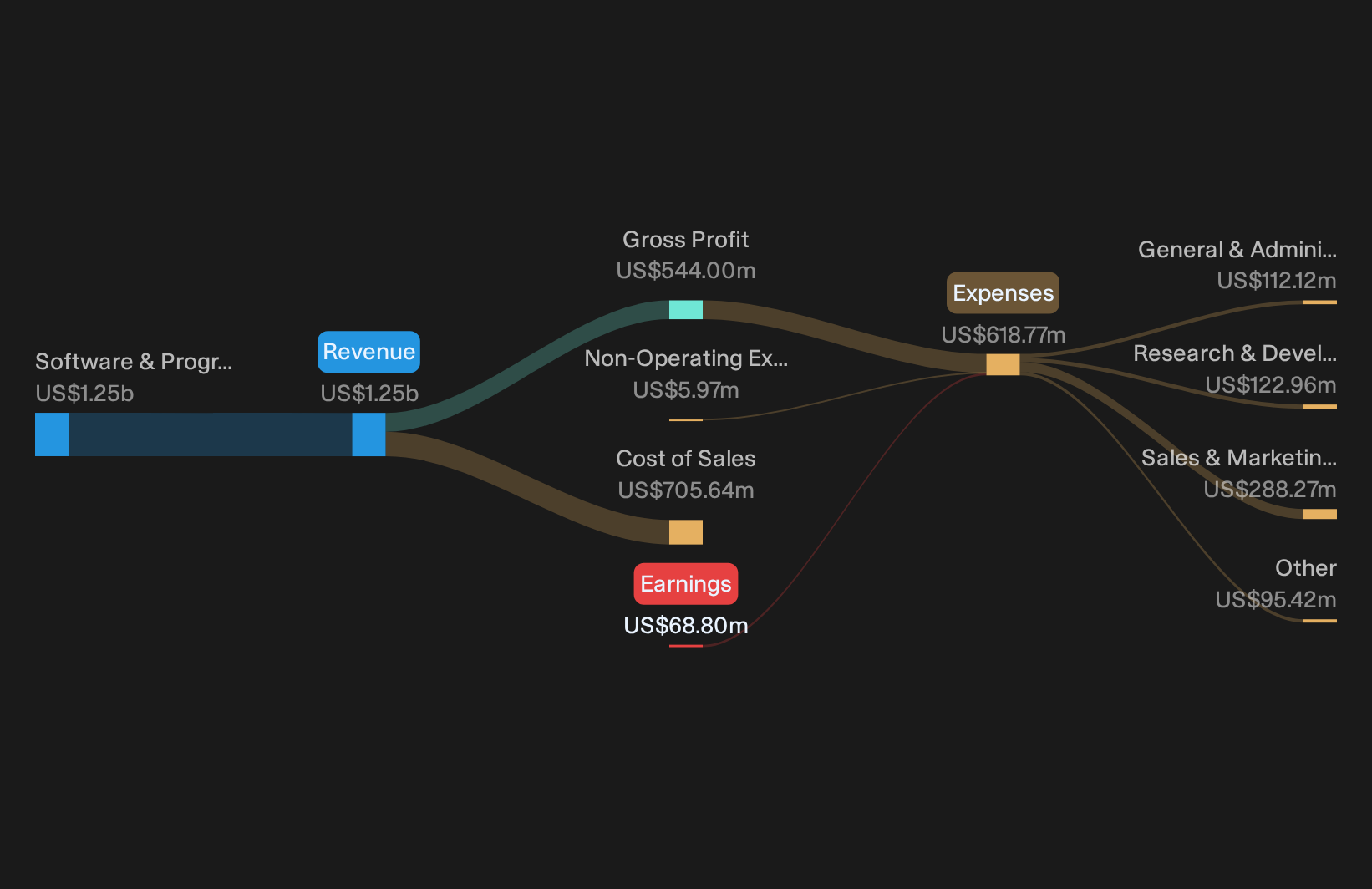
Operations: Lightspeed Commerce generates about US$1.25b in revenue from software and programming subscriptions that underpin its commerce platform.
Market Cap: CA$1.9b
Lightspeed Commerce fits this founder-led screen because the core Retail, Restaurant and Payments stack is shaped directly by founder-driven product calls. The analyst consensus Narrative on Simply Wall St focuses on how that leadership is leaning hardest into the software plus payments plus capital flywheel.
"Ongoing lift in payments penetration, which reached 44% of GTV overall and 49% in the growth engines in Q1 fiscal 2027 with efficiency markets at 32%, provides scope for more high-margin transaction revenue as a greater share of customer volumes moves onto Lightspeed Payments."
What really matters next is how one still unresolved pressure around funding that ecosystem ultimately feeds through to margins and free cash flow.
That funding question is exactly what the full narrative for Lightspeed Commerce unpacks, showing how Lightspeed Commerce could turn an accelerating ecosystem into stronger unit economics and less fragile cash generation.
Xanadu Quantum Technologies (TSX:XNDU)
Overview: Xanadu Quantum Technologies builds founder-led photonic quantum computers and the PennyLane and Catalyst software tools that give developers cloud access to that hardware.
Operations: Xanadu Quantum Technologies currently records about $7.2 million from computer services, mainly from the United States, with smaller contributions from Canada and other regions.
Market Cap: CA$1.2 billion
For a founder-led screener, Xanadu Quantum Technologies is presented as a pure deep-tech bet. The same leadership that designed the x-series hardware and PennyLane stack is now trying to turn those tools into a commercial platform, which the analyst consensus Narrative on Simply Wall St states depends on scaling manufacturing capacity.
"The Inception advanced photonics manufacturing facility, backed by a CAD 195 million federal commitment within a CAD 893 million project, together with higher wafer tape out corridors at foundry partners, creates a path to industrial scale production that can support larger system shipments and expand future revenue capacity."
What ultimately matters for investors is how any future shift in the balance between founder-led R&D spending and actual paying demand shapes margins.
That margin question is where things get interesting, and the full narrative for Xanadu Quantum Technologies shows how Xanadu Quantum Technologies could turn heavy R&D into accelerating commercial traction with carefully managed risk.

Seeking Alternatives Before The Crowd?
Fresh ideas move first. By the time every headline catches a breakout, the best entry points can be gone. Scan these curated lists while it still matters and consider your options early.
- Spot potential breakout miners early by reviewing the 33 elite gold producer stocks that currently pair sizeable production profiles with balance sheets built to weather weaker metal prices.
- Track momentum in electrification before it feels crowded by following the 16 top copper producer stocks that focus on scale, asset life and funding strength.
- Explore structural demand for secure data, payments and logistics by scanning the 53 AI infrastructure stocks that emphasize the picks-and-shovels side of the AI build out.
Have feedback on this article? Concerned about the content? Get in touch with us directly. Alternatively, email editorial-team@simplywallst.com