


Why the latest earnings matter for Wayfair
Wayfair (W) just swung to a quarterly profit, reporting US$62 million in net income on US$3.42b in Q3 sales, compared with a loss on lower revenue a year earlier.
Over the first nine months of 2026, the retailer posted US$9.87b in sales and reported a net loss of US$44 million, narrower than the loss recorded in the prior year period.
For investors watching the bigger picture, Wayfair’s 1-month share price return of 7.81% and 90-day gain of 13.15% suggest improving momentum around the business, even though the year-to-date share price return of 7.39% and 1-year total shareholder return of 2.43% remain modest. That pattern sits alongside a very large 3-year total shareholder return of about 14x and a 5-year total shareholder return that declined 56.54%. Taken together, these figures highlight how sentiment has swung over time as the company pushed into physical stores, featured heavily in holiday promotions, and moved back into quarterly profitability.
Scan other retailers showing similar momentum and shifting profitability profiles with our curated list of 32 high quality undervalued stocks that combine earnings traction with balance sheet strength.
Wayfair has just moved back into the black, and the share price has already reacted. The real tension for you now is simple: pay up after this rebound or wait and risk watching it run without you as valuation comes into focus next.
Most Popular Narrative: 7% Undervalued
Wayfair’s last close at $114.43 sits below the analyst consensus Narrative fair value of $123.66. This frames the recent earnings swing against a discounted cash flow view built from detailed revenue and earnings forecasts in the analyst consensus Narrative on Simply Wall St.
Wayfair's proprietary logistics network, including more than 20 million square feet of CastleGate and Wayfair Delivery Network facilities across over 75 locations, continues to support faster delivery, lower damage rates and value added services like Delivery Plus. Together these factors can underpin higher conversion, steadier revenue and support net margins as volume grows.
See why 15 investors see Wayfair as 7% undervalued.
Result: Fair Value of $123.66 (UNDERVALUED)
Still, the Wayfair story can change quickly if the weak home furnishings category persists or if housing turnover stays muted and keeps big ticket orders under pressure.
Find out about the key risks to this Wayfair narrative.
Another View: What Wayfair’s P/S Ratio Signals
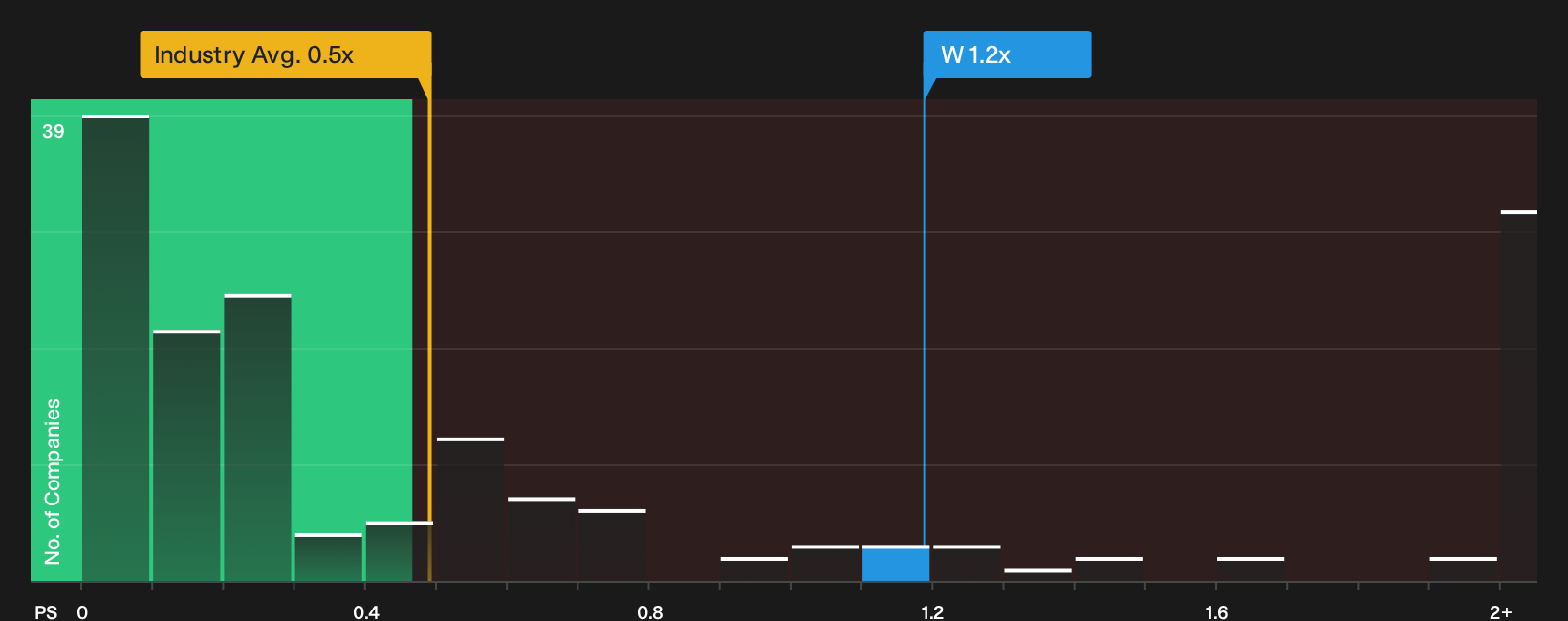
The DCF work suggests Wayfair is undervalued, yet the revenue multiple paints a different picture. At about 1.2x P/S, the stock trades above the US Specialty Retail average of 0.5x and above its own fair ratio of 0.8x, while sitting below the 1.8x peer average. That mix points to real valuation risk if sentiment shifts. The question is which signal you trust most.
For a deeper look at how the current price stacks up against that revenue multiple and the fair ratio, See what the numbers say about this price — find out in our valuation breakdown.
Next Steps
Sentiment on Wayfair is split, and that is exactly why the next move matters. Act while the data is fresh and weigh both sides for yourself with 4 key rewards and 2 important warning signs
Looking for more investment ideas beyond Wayfair?
Wayfair may be front of mind after these results, but your next strong move probably comes from widening the lens and lining up fresh watchlist candidates now.
- Target faster potential upside and higher risk with a focused group of 12 elite penny stocks with strong financials that already pass basic financial strength checks.
- Zero in on quality at a discount by scanning a 32 high quality undervalued stocks that blend solid cash generation with more resilient balance sheets.
- Prioritise capital protection and consistency by reviewing 30 resilient stocks with low risk scores that score well on volatility and fundamental risk metrics.
Have feedback on this article? Concerned about the content? Get in touch with us directly. Alternatively, email editorial-team@simplywallst.com