


The Zhitong Finance App noticed that it was not easy to “break up” with Nvidia (NVDA.US). After the stock fell 25%, Wall Street's two biggest banks removed it from the top list, but no one has been able to say a “sell” — at least not yet.
Morgan Stanley's version is the most polite: it's not your problem, it's our stop-loss policy. The bank will remove any preferred stock that has dropped more than 25% from when it was selected, and Nvidia has dropped a little more since receiving this title on October 2. Just the day before, Bank of America removed Nvidia, Micron (MU.US), and Fanlin Group (LRCX.US) from its “US No. 1” best portfolio list. The two banks' ratings for Nvidia are still “buy.”
Other people's wording wasn't that gentle. Baird downgraded Nvidia's rating to “neutral” on Wednesday and drastically lowered the target price from $500 to $200, citing a rise in the possibility of a CEO change.
Aletheia Capital downgraded Nvidia's rating to “hold” on Monday. Mizuho, Citibank, and Wells Fargo cut their respective target prices within a few days after reports about CEO Hwang In-hoon's relationship came to light.
However, no one has packed Nvidia's stuff in a case yet. According to tracking data, out of 82 analysts who rated the stock, 77 gave a “buy.”
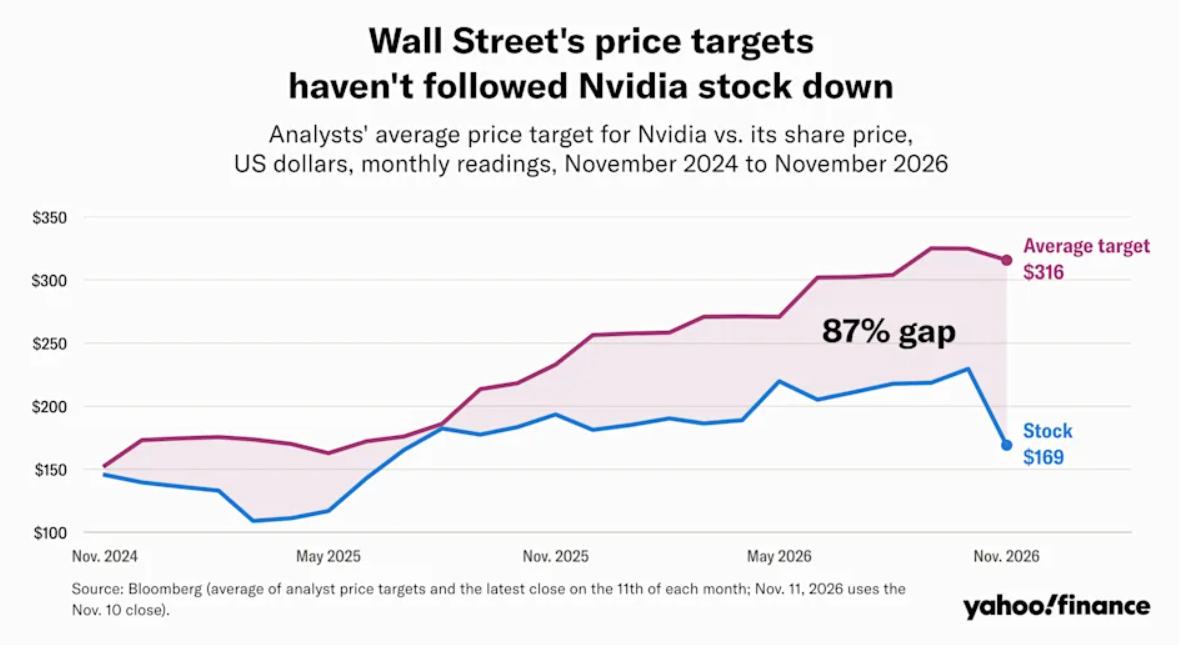
The average target price was about 87% higher than the stock's closing price on Tuesday. This is the biggest gap between these two indicators in monthly readings in two years due to falling stock prices and the target price mostly unchanged.
 Wall Street's reluctance to downplay Nvidia is largely based on history.
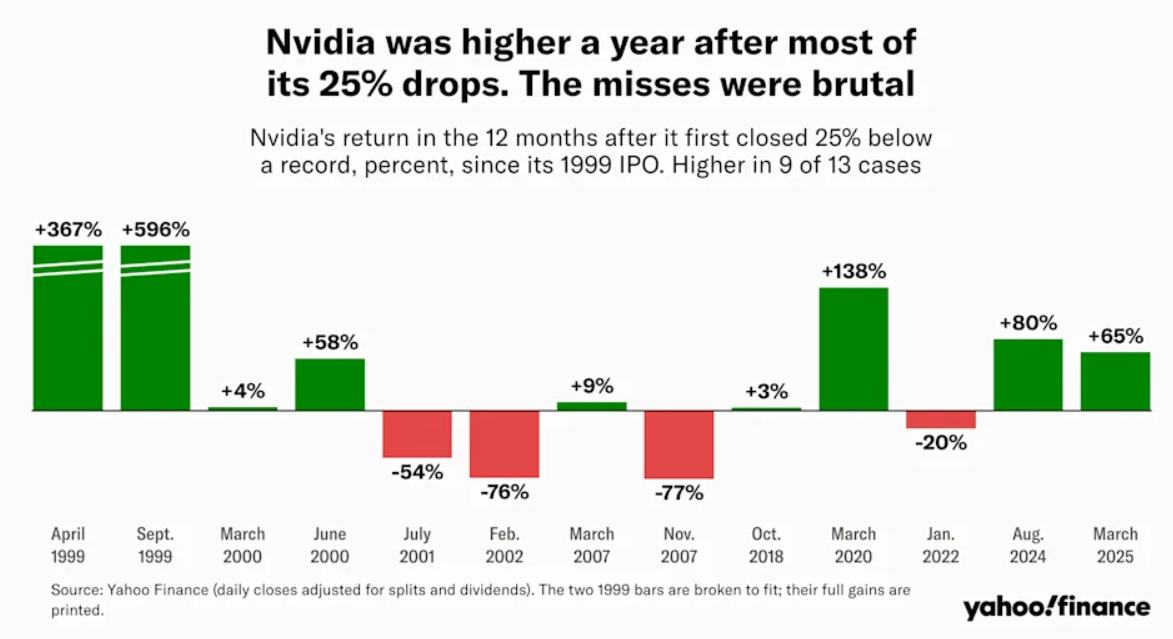
Since its launch in 1999, Nvidia's closing price has been 25% lower than its all-time high 13 times. In 9 of these cases, the stock price was higher after a year.
However, there were a few exceptions that were extremely harsh. After falling in 2001, 2002, and 2007, the stock fell by more than half of its market value over the next 12 months. However, this sample size is very small, and half of it comes from the rise and fall of the internet bubble — at the time, Nvidia's size was only a fraction of today's $4 trillion giant.
Even Bank of America's own strategists haven't given up on the larger AI narrative. “Staying ahead in technology is critical for America. And that's where I think there's a 'put option' in the tech narrative,” Savita Subramanian, head of US equities and quantitative strategy at Bank of America, said on Tuesday — even though she herself wasn't talking about the list adjustments themselves.
The analysts' recent judgement was accurate. Each average target price set from November 2024 to November 2025 was achieved within one year.
Moreover, Nvidia's pricing is no longer “perfect”. Its stock price is about 11 times the expected profit for the next fiscal year, while according to FactSet data, the S&P 500 index is about 18 times.
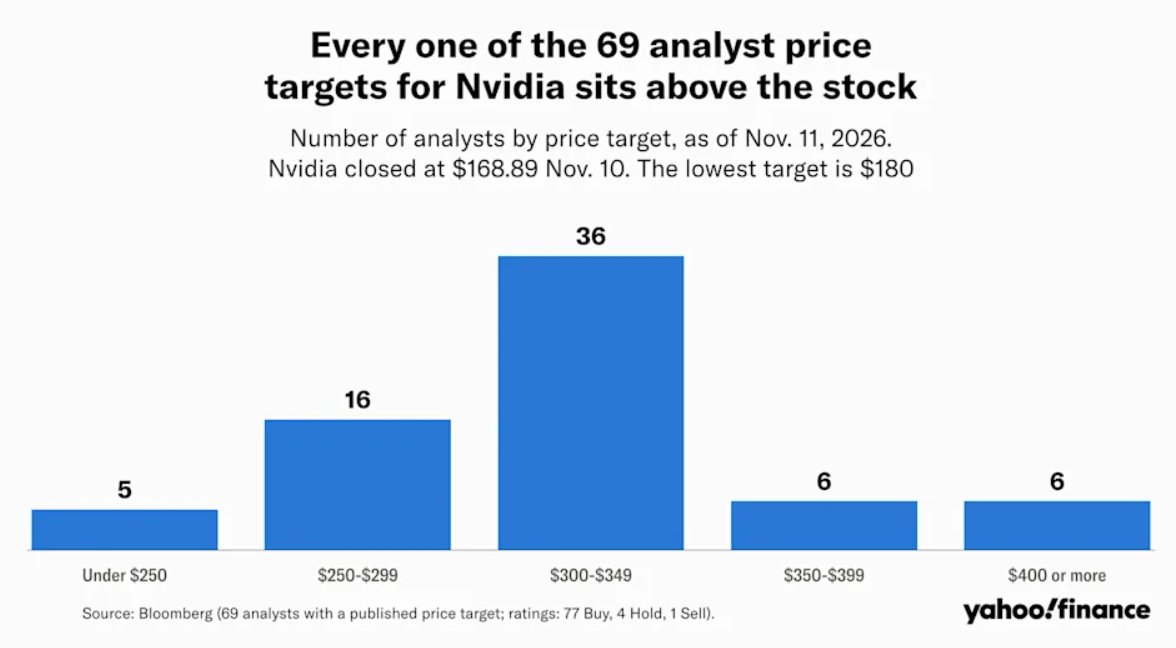
Each of the 69 price targets was above Tuesday's closing price, even the only “sell” rating — $180 given by Seaport.
The bigger question is: Who will run this company
As of Wednesday morning, Polymarket traders believe it is more than a quarter likely that Nvidia will announce Hwang In-hoon's departure by the end of March next year.
Venture capitalist Vinod Khosla acknowledged the board's first move. “Starting with an independent investigation is exactly the right thing to do,” he said on the program on Tuesday.
Dan Niles of Niles Investment Management told the media on Monday that he has known Hwang In-hoon for 30 years. As for his personal character, he wasn't worried: “Would you want an alcoholic and lustful person to lead you in World War II? The answer is definitely yes. That man was Winston Churchill.”