


- Chevron has agreed to sell a 25% interest in its offshore Namibia PEL 82 licence to QatarEnergy, with Chevron retaining a 55% stake and operatorship while sharing exploration costs.
- The entry of QatarEnergy brings another large state backed balance sheet into Chevron's Namibia portfolio, which reshapes how exploration risk and future development spending could be shared across partners.
- The focus now shifts to how Chevron's long term investment narrative aligns with bringing QatarEnergy into PEL 82 as a cost sharing partner.
Chevron Investment Narrative Recap
To own Chevron, you need to believe that the integrated model, low cost barrels in places like the Permian and Venezuela, and long dated power projects can help keep cash generation resilient even as the analyst consensus narrative on Simply Wall St assumes modest declines in revenue and earnings over the next few years. The short term swing factor remains commodity prices, with the biggest risk that hydrocarbon demand erodes faster than Chevron’s portfolio tilt toward lower carbon and power projects.
The Namibia farm out helps spread exploration exposure but does not materially shift that central story. Recent third quarter numbers, with US$67.8b of revenue and US$9.9b of net income, show the cash engine that needs to keep funding Hess integration, Venezuelan growth and higher exploration budgets while still covering dividends and buybacks.
The recent dividend affirmation of US$1.78 per share per quarter is the clearest operational signal that matters most alongside the Namibia news. Chevron is still framing itself as a cash return vehicle backed by a large upstream and downstream footprint. This ties directly into the narrative that future value rests on sustained free cash flow rather than rapid expansion.
For you as a shareholder, the combination of a consistent dividend, record recent earnings and big ticket projects like PEL 82, Vaca Muerta, Venezuela and Project Kilby concentrates attention on execution risk. The key question is whether Chevron can keep running capital efficient programs, hold margins near current levels and absorb energy transition shifts without the earnings path drifting too far below what analysts currently factor in.
Chevron's current analyst narrative points to revenues of US$218.7b and earnings of US$25.4b by 2029, based on a forecast 1.1% yearly decline in revenue and an earnings reduction of US$1.6b from the US$27.0b recorded today.
Uncover how Chevron's fair value signals a 14% potential upside to its current price that could narrow quickly if sentiment shifts back toward Chevron.
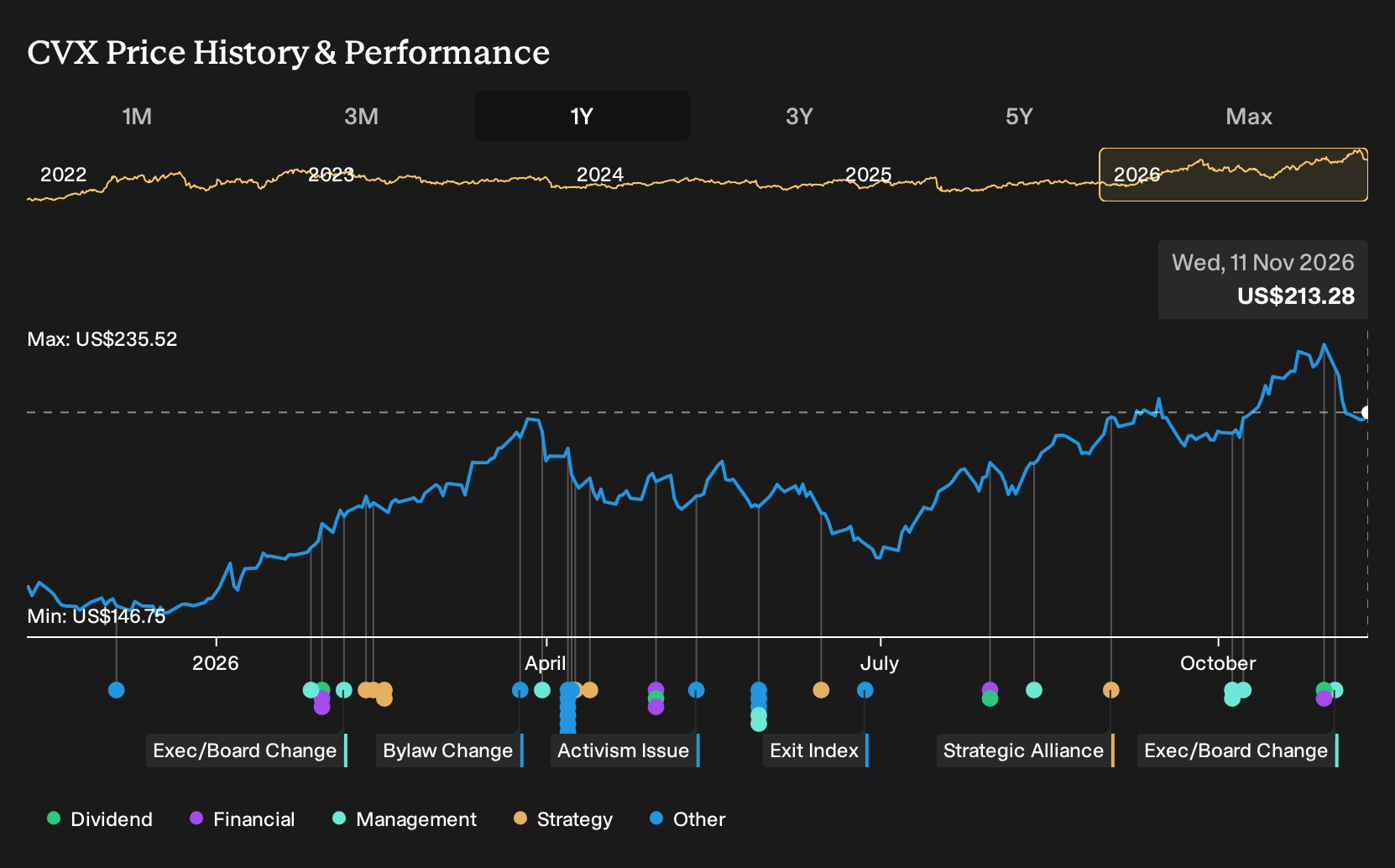
Exploring Other Perspectives
The Simply Wall St Community only has two fair value models here, yet they stretch from about US$243 to more than US$372, which already shows how far opinions on Chevron can spread. Set that against record recent earnings, a freshly affirmed dividend and new governance leadership taking effect in 2027, and you are looking at multiple moving parts that different investors may weigh very differently. Explore those contrasting viewpoints before deciding how this stock fits your own expectations for risk and income.
Explore another Chevron fair value estimate, including one that suggests it could be worth just $243.46.
Form Your Own Verdict
Don't just follow the ticker; dig into the data and build a conviction that's truly your own.
- A great starting point for your Chevron research is our analysis highlighting 3 key rewards and 1 important warning sign that could impact your investment decision.
- See our latest analysis for Chevron. The report includes a comprehensive fundamental analysis summarized in a single visual, the Snowflake, making it easy to evaluate Chevron's overall financial health at a glance.
Looking for more investment ideas beyond Chevron?
If you want to put Chevron into a wider context, compare it with other companies that match the kind of risk, income, or balance sheet profile you prefer. The Simply Wall St Screener can help you quickly surface candidates that fit different parts of your checklist.
- For investors who focus on value and quality together, check out a curated 32 high quality undervalued stocks that combine strong fundamentals with prices that some may see as appealing.
- If resilience and financial strength matter most to you, scan a list of solid balance sheet and fundamentals (23 results) to see which businesses might better match your comfort with downside risk.
- Income focused investors can review a set of 6 dividend fortresses that pair higher yields with detailed fundamental data so you can judge how reliable those payouts look.
Have feedback on this article? Concerned about the content? Get in touch with us directly. Alternatively, email editorial-team@simplywallst.com