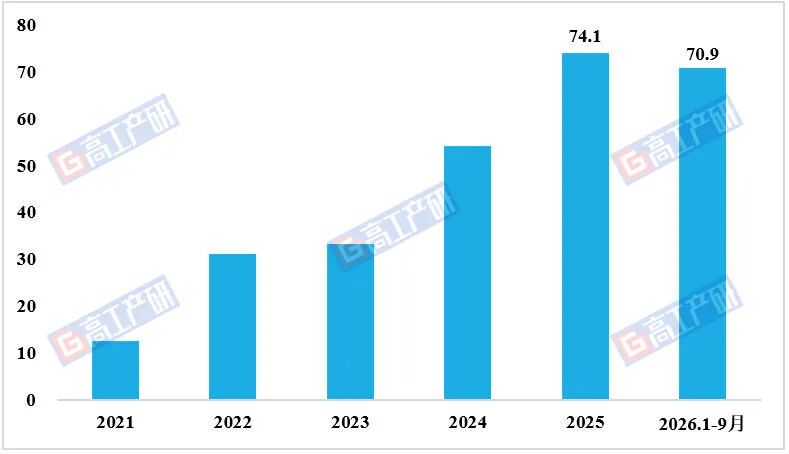
The Zhitong Finance App learned that according to the GGII (GGII) Jiaotong Insurance Calibration Data, overall sales of new energy commercial vehicles have continued to rise in recent years, with urban light trucks and buses as the main increase; subsequently, with the implementation of old vehicle trade-in policies and the accelerated replacement of heavy trucks in closed scenarios such as ports and mining areas, combined with the continuous volume of overseas export orders, the market growth momentum continues to increase. The cumulative sales volume from January to September 2026 was 709,000 units, and the volume is close to the full year of 2025. The focus of growth is gradually shifting from light urban vehicles to heavy duty, long-life models.
Sales volume of new energy commercial vehicles in China from January to September 2021 to 2026 (unit: 10,000 units)
The competitive landscape
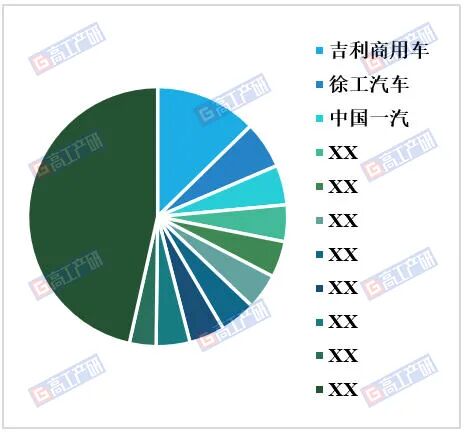
According to GGII data, from January to September 2026, new energy commercial vehicles showed a strong competitive pattern. Among them, Geely (00175) commercial vehicles ranked first, and companies such as XCMG, FAW, SAIC-GM-Wuling, and Dongfeng Motor (00489) followed, and the echelon gap was relatively flat.
Since the sales volume of special vehicles such as light trucks and heavy trucks is significantly higher than that of buses, the overall pattern of new energy commercial vehicles is dominated by the competitive trend of freight and work models. Different car companies rely on differentiated scene layouts such as urban distribution, mining areas, engineering, and ports, and the track dispersion is high.
Sales share of new energy commercial vehicle companies in China from January to September 2026 (%)
Charged capacity
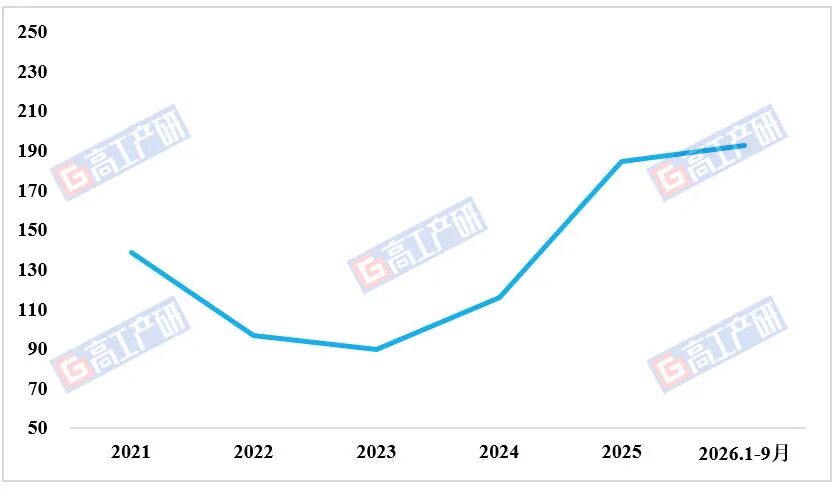
Judging from the average amount of electricity charged in a new energy commercial vehicle, the overall trend showed a decline and then continued to rise. Mainly, the proportion of light urban vehicles with low charge capacity increased, lowering the overall average. The amount of electricity charged by bicycles began to pick up in 2024, and further increased to 192.3 kWh from January to September 2026.
Currently, the penetration rate of long-life models such as heavy trucks and large-tonnage special vehicles has increased, and orders for power exchange and long battery life versions in superimposed closed scenarios have increased, increasing the overall power supply capacity of bicycles and driving an increase in the value of a single battery unit.
Average charge capacity of batteries for new energy commercial vehicles in China from January to September 2021 to 2026 (unit: kWh/unit)
Installed capacity
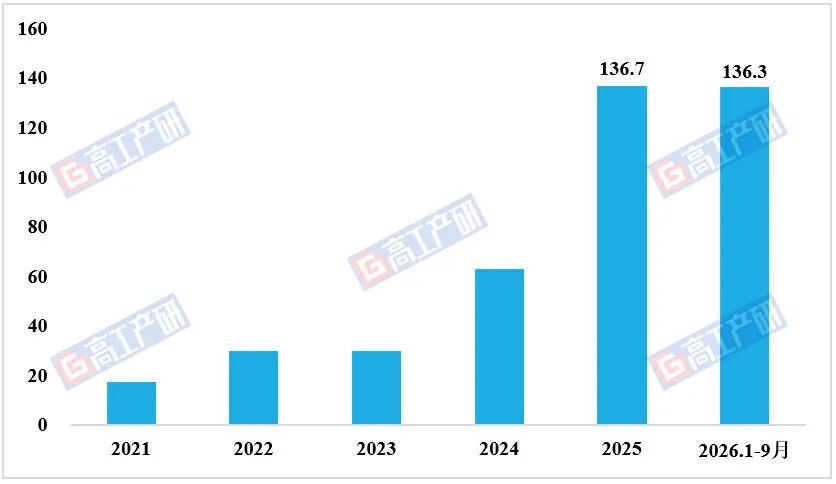
The overall installed battery capacity for new energy commercial vehicles is showing a rapid growth trend. According to GGII data, the installed capacity is relatively limited in 2021-2023. Starting in 2024, the installed capacity increased dramatically, continuing to rise to 136.7 GWh in 2025, and 136.3 GWh from January to September 2026, which is close to the whole of last year. The volume of heavy special vehicles has driven the increase in the charging capacity of bicycles, and has become the core driving force for the rapid growth in the installed scale of batteries for new energy commercial vehicles.
The installed capacity of batteries for new energy commercial vehicles in China from January to September 2021 to 2026 (unit: GWh)
Battery pattern
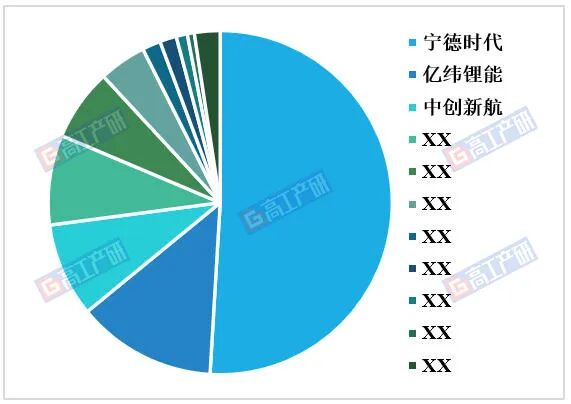
Judging from the competitive pattern of new energy commercial vehicle battery companies, the Ningde Era (03750) leads with a share of over 50%, with Everweft Lithium Energy (300014.SZ), China Airlines (03931), BYD (01211), and Guoxuan Hi-Tech (002074.SZ) forming the second tier. Battery companies rely on misplaced competition in different application scenarios such as buses, light trucks, and heavy trucks, and battery brands developed by OEMs can also have stable supporting space.
Percentage of installed capacity of new energy commercial vehicle battery companies in China from January to September 2026 (%)