


- Blackstone has set up plans for a new fund of at least US$3b to buy discounted stakes in other managers’ core real estate vehicles, focused on data centers, rental housing and industrial assets.
- The move targets rising demand for liquidity in real estate funds, giving Blackstone a fee opportunity in secondaries without owning the underlying platforms outright.
- We will look at how Blackstone's push into discounted real estate secondaries could reshape the longer term fee driven investment narrative.
Scan how Blackstone's real estate secondaries push compares with other asset-heavy players by checking a curated list of list of solid balance sheet and fundamentals (23 results).
Blackstone Investment Narrative Recap
To own Blackstone, you need to be comfortable with a fee focused asset manager whose fortunes are closely tied to fundraising, deal activity and the health of its private markets portfolios. The analyst consensus Narrative on Simply Wall St highlights earnings that are forecast to grow faster than the broader US market, but also flags real estate stress, leadership transitions and high debt as key operational risks.
The planned US$3b real estate secondaries fund fits into that picture as an incremental tool, not a game changer on its own. It may support fee income and diversify real estate exposure, yet does not directly resolve concerns around existing property loans, dividend cover or the near term impact of any weaker investor appetite for risk assets.
Recent commentary in the analyst consensus Narrative on Simply Wall St points to several near term potential drivers for Blackstone, including net accrued performance revenue of US$7.5b and ongoing inflows into perpetual vehicles such as BXMA. The secondaries fund plan plugs into this by seeking to add more fee bearing capital in core real estate without expanding Blackstone's operating platform footprint.
On the flip side, the same narrative underscores vulnerabilities that this announcement does not remove. Real estate loan issues, a dividend that is not well covered by earnings or free cash flow, and leadership changes in private equity and global real estate remain live issues for execution and sentiment. Investors weighing the stock need to judge whether expanding into discounted secondaries offsets or compounds those existing pressures.
What The Current Blackstone Forecasts Assume
Blackstone's current analyst narrative ties the new real estate secondaries fund into a much larger earnings story, which already bakes in sizeable shifts in revenue, profitability and valuation by the end of the decade. The same set of assumptions that underpins the consensus price target also frames how much room the group has to lean into discounted property stakes without stretching its fee model too far.
Analysts are working with a projected revenue growth rate of 12.6% a year over the next three years, alongside an expansion in profit margins from 22.7% today to 51.1% within that window. Earnings are expected to rise from US$3.5b today to US$11.3b by 2029, which is roughly a 3.2x increase in profit on current levels. Those figures would leave Blackstone on a P/E of 13.4x in 2029 compared with 25.0x now, which implies that earnings growth rather than a higher multiple does the heavy lifting in the analyst models.
On the top line, the valuation work assumes that by 2029 Blackstone generates US$22.1b of revenue and US$11.3b of earnings. That framing matters for the secondaries strategy because any additional fee income from buying discounted stakes in core property funds sits alongside a forecast jump in profitability that is already ambitious, not on top of a low bar.
Blackstone's narrative projects US$22.1b revenue and US$11.3b earnings by 2029. This requires 12.6% yearly revenue growth and roughly a 3.2x increase in earnings from US$3.5b today.
The same analyst set also expects the share count to rise by 2.2% a year over the next three years. That planned issuance means any upside from the secondaries push, or from other fee initiatives, needs to be weighed on a per share basis rather than only at the headline earnings level.
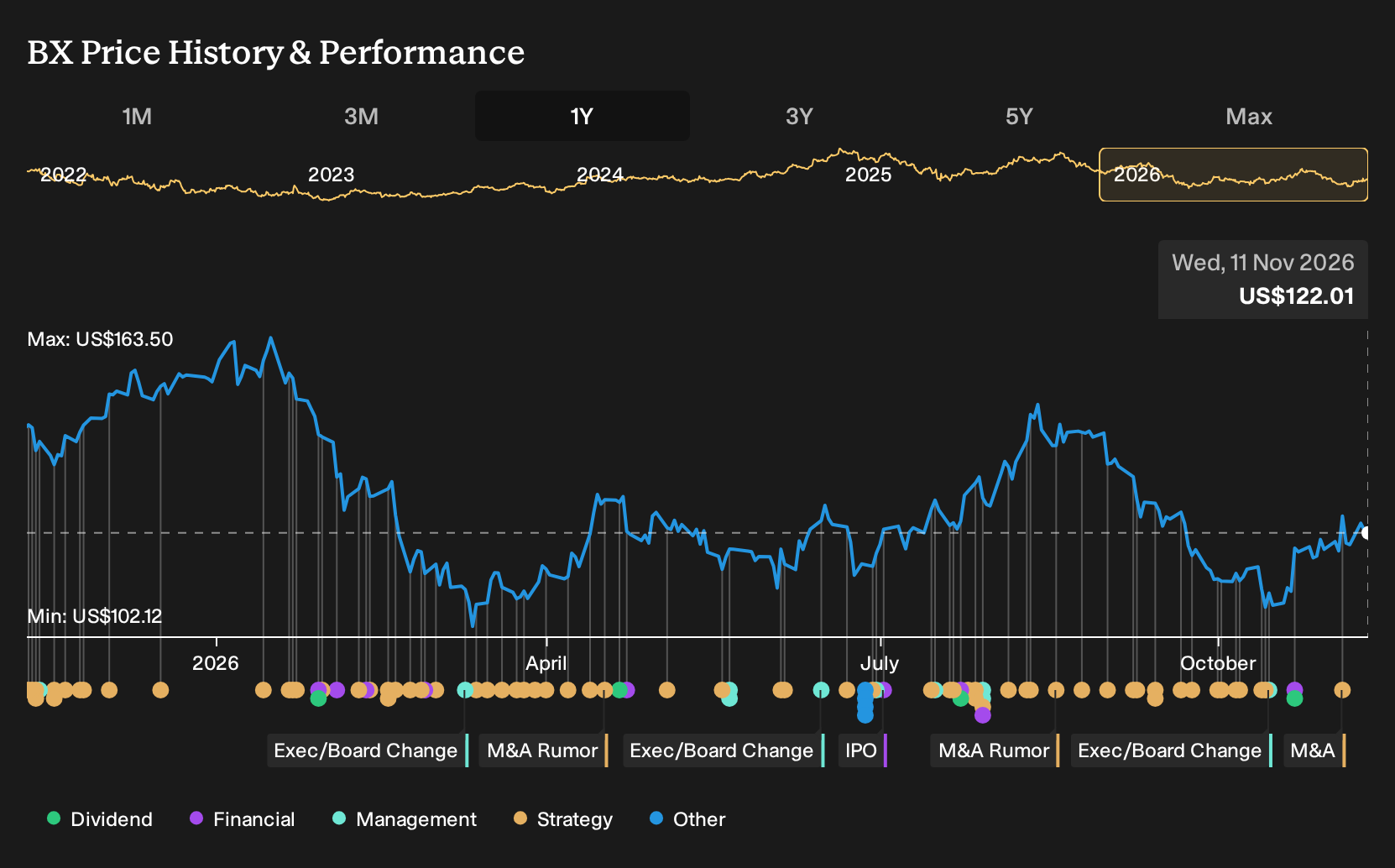
Price targets cluster around US$140.55, with a range from US$116.00 to US$184.00, against a current share price of US$109.98 that sits 21.7% below the consensus goal. For anyone assessing Blackstone, the key question is whether the mix of higher forecast margins, rising fee bearing assets and new ideas like the discounted real estate secondaries fund feels realistic enough to justify those numbers by 2029.
Uncover why Blackstone's fair value indicates a 15% potential upside to its current price, which may represent a discount that will not last much longer.
Exploring Other Perspectives
One bearish angle around Blackstone focuses on liquidity stress in products like BCRED. The most cautious analysts were already pencilling in slower revenue growth of about 10.1% a year and earnings of roughly US$11.7b by 2029 before this real estate secondaries plan. That more pessimistic script may change. Compare both narratives for yourself.
Explore 4 other Blackstone fair value estimates, including one that suggests it could be worth just $116.00.
Decide For Yourself
Disagree with existing narratives? Extraordinary investment returns rarely come from following the herd, so go with your instincts.
- A great starting point for your Blackstone research is our analysis highlighting 3 key rewards and 3 important warning signs that could impact your investment decision.
- See our latest analysis for Blackstone. The report includes a comprehensive fundamental analysis summarized in a single visual called the Snowflake, making it easy to evaluate Blackstone's overall financial health at a glance.
Looking for more investment ideas beyond Blackstone?
If the Blackstone story has sharpened your thinking, the next step is to widen your watchlist. Use the Simply Wall St Screener to cross check these narratives against other businesses and build a line up that fits your own risk and income preferences.
- If stability matters most to you, start with a 30 resilient stocks with low risk scores that already clear a tough resilience screen on fundamentals.
- If income is a priority, scan for potential yield opportunities among 6 dividend fortresses that may suit a more cash focused approach.
- If you prefer to hunt for earlier stage ideas, filter for 12 elite penny stocks with strong financials that still pair smaller size with underlying financial strength.
Have feedback on this article? Concerned about the content? Get in touch with us directly. Alternatively, email editorial-team@simplywallst.com