


Key Points
Chewy relies on a resilient subscription model that provides highly predictable revenue from pet owners.
Etsy operates a high-margin, asset-light marketplace focused on unique, creative products from millions of sellers.
Which e-commerce specialist is the better addition to your long-term portfolio?
As e-commerce shifts from broad retail to specialized niches, many investors are deciding between Chewy (NYSE:CHWY) and Etsy (NYSE:ETSY) to determine which model offers better resilience through 2027.
While both companies operate within the digital marketplace, they serve vastly different needs. Chewy focuses on recurring household essentials for pet owners, while Etsy thrives on unique, discretionary items crafted by entrepreneurs, making this a choice between stability and high-margin creativity.
The case for Chewy
Chewy is a leading online destination for pet owners, offering everything from food and supplies to medications and professional services. Its primary strength lies in its Autoship subscription program, which drives significant customer loyalty and provides high visibility into future sales. In its latest annual report filed for the fiscal year ended Feb. 1, 2026, the company detailed its expansion into Canada and its massive catalog of over 190,000 products.
During fiscal 2025, revenue reached nearly $12.6 billion, representing growth of approximately 6.2% compared to the previous year. The company reported net income of roughly $222.8 million, which resulted in a net margin of about 1.8%. This positive performance reflects a continued focus on cost management while growing the top line.
As of Chewy's February 2026 balance sheet, the debt-to-equity ratio -- a measure of how much debt is used relative to shareholder money -- is approximately 1. The current ratio, which compares short-term assets to short-term liabilities, is close to 0. Free cash flow for the year was nearly $562.4 million, calculated as cash from operations minus capital expenditures. Note that stock-based compensation accounted for roughly 43.1% of operating cash flow, inflating reported cash generation, since SBC is a non-cash expense added back in the cash flow statement.
The case for Etsy
Etsy operates a global marketplace for unique and creative goods, connecting millions of buyers with independent sellers who offer handmade or vintage items. Its revenue comes primarily from transaction fees, payment processing, and optional services provided to its 5.6 million active sellers. This asset-light model allows the company to facilitate billions in sales without holding inventory or managing its own warehouses.
In fiscal 2025, revenue reached nearly $2.9 billion, reflecting approximately 2.7% growth over the prior year. The company reported net income of roughly $163 million, resulting in a net margin of nearly 5.7%. While growth has slowed, the business continues to generate steady earnings from its large base of active buyers.
As of Etsy's December 2025 balance sheet, the debt-to-equity ratio is approximately -2.8, meaning total liabilities exceed shareholder equity. The current ratio, indicating the ability to cover short-term bills with liquid assets, is close to 1.4. Free cash flow for the year was nearly $638.8 million. Note that stock-based compensation represented roughly 35.3% of operating cash flow.
Risk profile comparison
Chewy faces intense competition from massive e-commerce platforms and physical retailers, including Amazon (NASDAQ:AMZN), which can often compete on price and delivery speed. The company is also heavily dependent on third-party shipping and fulfillment infrastructure to get products to pet parents quickly. Any disruption in these logistics networks or rising shipping costs could hurt its ability to maintain service levels or profitability.
Etsy is particularly vulnerable to shifts in discretionary consumer spending, as many of the unique items sold on its platform are not essential goods. The company also faces pressure from other retail stocks and marketplaces like eBay (NASDAQ:EBAY) that compete for the attention of creative entrepreneurs. Furthermore, maintaining trust and safety standards across millions of independent sellers remains a constant challenge and a potential regulatory risk.
Valuation comparison
Chewy offers a much lower P/S ratio, but Etsy looks more attractive when looking at forward P/E based on future earnings estimates.
| Metric | Chewy | Etsy |
|---|---|---|
| Forward P/E | 29.5 | 20.6 |
| P/S ratio | 0.7 | 2.6 |
Valuation metrics include sourcing from Financial Modeling Prep (FMP) and may differ from other data providers.
Which stock would I buy for 2027?
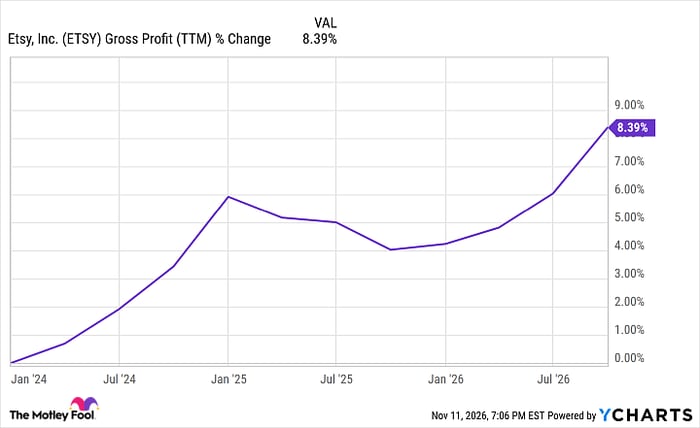
This is a tough call. Chewy is reporting slightly better revenue growth, but Etsy has a somewhat stronger net margin. However, given Etsy's asset-light model -- it's basically just a middleman -- a net margin in the single digits is underwhelming. In fact, it's barely grown at all over the past three years:
ETSY Gross Profit (TTM) data by YCharts
Obviously, as a business matures, it often becomes harder to post huge growth because the comps are simply more difficult. So that is something I will concede.
I think the bigger issue for both of these stocks is their performance. Consider this chart:
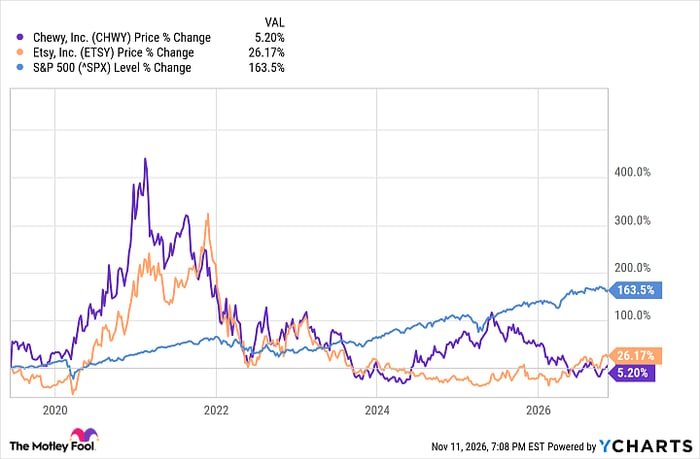
Since Chewy went public in June 2019, both the pet supply specialist and Etsy have been basically dead money. Neither stock has kept pace with inflation. Sure, you're not sitting on a loss technically, but that's small comfort when you could have stuck your money in an S&P 500 ETF and been up over 163% by now -- even without reinvesting dividends.
Past performance is no indication of future results, but I don't find either stock attractive. I'd sit this one out.
Erin Kennedy has no position in any of the stocks mentioned. The Motley Fool has positions in and recommends Amazon, Chewy, Etsy, and eBay. The Motley Fool recommends the following options: long January 2029 $70 calls on Etsy and short January 2029 $80 calls on Etsy. The Motley Fool has a disclosure policy.