


Nebius (NBIS) delivered a commanding third-quarter beat, with revenue soaring roughly sixfold to about $981 million versus consensus near $907 million, yet the stock has still plunged more than 10% premarket to drop below $140 – a disconnect that says a lot about the neocloud trade.
The GAAP loss narrowed to 13 cents per share, a fraction of the roughly 70-cent loss analysts had expected, while adjusted EBITDA reached $466 million, comfortably ahead of the $352 million Wall Street had modeled.
The selloff came right after Nebius surged 15% on Wednesday in a sympathy rally with peer CoreWeave (CRWV), meaning the market had already priced in strength before the company reported. That left little room for anything short of a flawless outlook, and the guidance fell short of that bar.
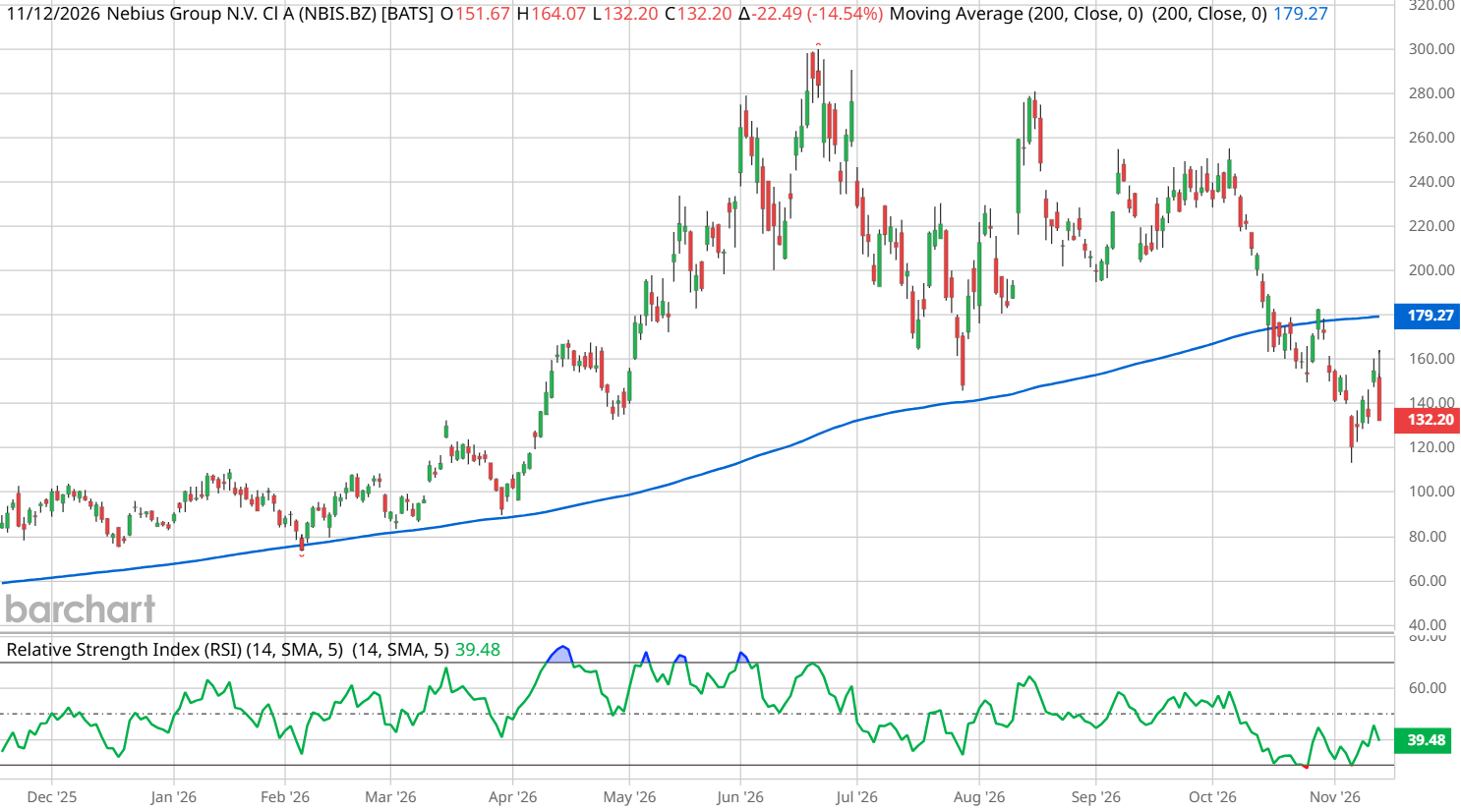
The Beat Wasn't the Story
Investors reacted to guidance and spending rather than the headline numbers, as management now expects 2026 revenue to land at the low end of its $3 billion to $3.4 billion range.
At the same time, Nebius lifted its 2026 capital expenditure forecast to about $27 billion, above the earlier $20 billion to $25 billion plan. It’s a combination of softer revenue and heavier spending that the market was not prepared to reward.
A $45 Billion Question for NBIS
For 2027, Nebius guided revenue of $12 billion to $13 billion, only modestly above consensus, alongside staggering capex of $40 billion to $45 billion, meaning planned spending would run roughly three to nearly four times projected sales. That's far higher than Wall Street's expected 2027 capex of around $24 billion.
Management expects prepayments and contract-backed financing to cover 75% to 85% of that outlay, which by simple math still leaves a funding gap of roughly $6 billion to more than $11 billion.
That gap arrives at an awkward moment, with the Federal Reserve moving toward rate hikes that could raise the cost of the financing needed to fill it.
Did CoreWeave Set the Bar Too High?
The contrast with CoreWeave is instructive, as its beat-and-raise quarter on Tuesday, backed by a $132.5 billion backlog, rising pricing, and a pledge to avoid expensive unsecured debt, sparked a 25% surge that dragged Nebius along for the ride.
That sympathy rally lifted expectations for Nebius, so a softer near-term revenue trajectory was enough to trigger a sharp reversal.
However, the comparison should not be overstated, since CoreWeave itself is giving back more than 10% ahead of the bell, suggesting the pressure reflected sector-wide nerves rather than a verdict on Nebius alone.
The Risks Are Piling Up
The broader backdrop remains volatile, with reports of a possible leadership shake-up at Nvidia (NVDA), a key backer of both Nebius and CoreWeave, adding a fresh layer of uncertainty.
Financing anxiety across AI infrastructure and local political resistance to data centers compound those concerns, creating headwinds that extend well beyond any single earnings report.
Demand Isn't the Debate
For investors, the key takeaway is that AI compute demand is not in question, as Nebius's sixfold revenue growth makes abundantly clear.
Instead, capital intensity, funding costs, and execution timing are the real debates, and each became sharper with this report's upward capex revision.
With 2027 spending poised to reach as much as $45 billion, execution timing matters enormously, because revenue must ramp fast enough to justify the outlay.
Investors will be watching how Nebius closes the gap between contract-backed financing and its total spending, particularly if borrowing costs rise as the Fed tightens.
Until that funding picture becomes clearer, neocloud stocks will likely keep trading as leveraged, highly volatile bets on the AI buildout.
Nebius has proved it can grow, and now it has to prove it can pay for that growth.
This article was created with the support of automated content tools from our partners at Sigma.AI. Together, our financial data and AI solutions help us to deliver more informed market headline analysis to readers faster than ever.
On the date of publication, Sarah Holzmann did not directly have a position in any of the securities mentioned in this article. All information and data in this article is solely for informational purposes. For more information please view the Barchart Disclosure Policy here.