


The average retail investor knows how good the stock market can be. They DO NOT know how bad it can get.
The Invesco QQQ ETF (QQQ) fell 70% from its peak during the dot-com era. It then fell more than 50% from its peak during the Global Financial Crisis. I’m going to guess that no more than 20% of the people reading this are aware of that.
Not because you didn’t experience it. You didn’t have to. Instead, it’s because investors are not taught what markets are capable of on the downside.
Human nature is to buy stocks, see them go up, and buy more whenever they drop. That has worked for the better part of 18 years. We’ve had a few quick drops in the stock market, but each time the recovery was a letter “V,” not a letter “U.”
For the Qs, It’s All About the U
Those longer, U-shaped recoveries are what alter retirements. We might not see one for a long time. Or, we might be in the beginning stages of one.
The question is, do you care? I think most investors absolutely should care. But do they? I suspect not. They are too used to things working out in their favor.
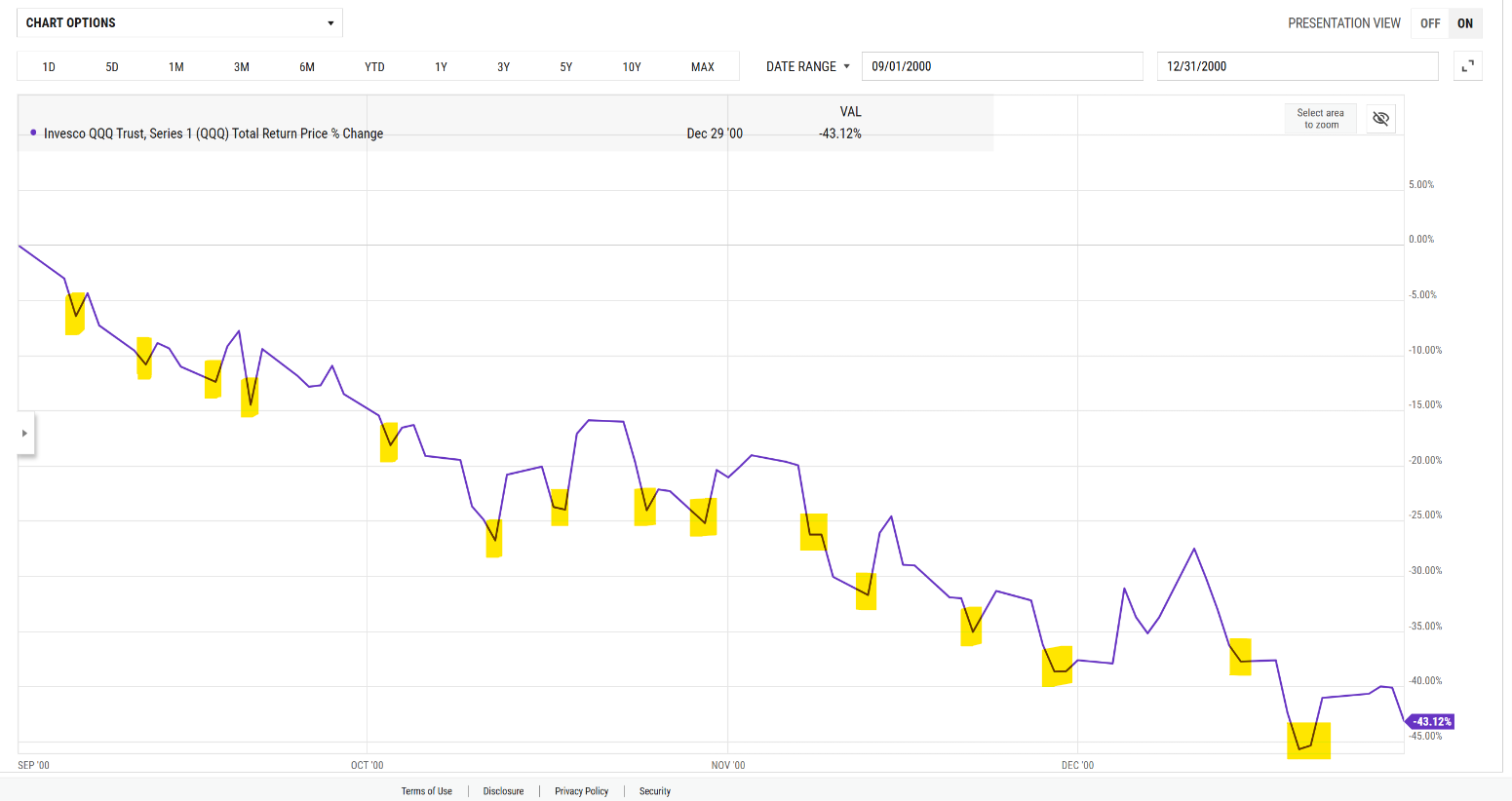
That’s why I think this chart above is important to familiarize yourself with. To simply stare at it and say “that won’t happen again” is like saying bond rates will never go to 5% again. Or, when Bitcoin (BTCUSD) crossed above $100,000, concluding it could never drop back down to five digits.
The chart above shows the last four months of 2000. Here’s 2026 by comparison, including Monday’s surge.
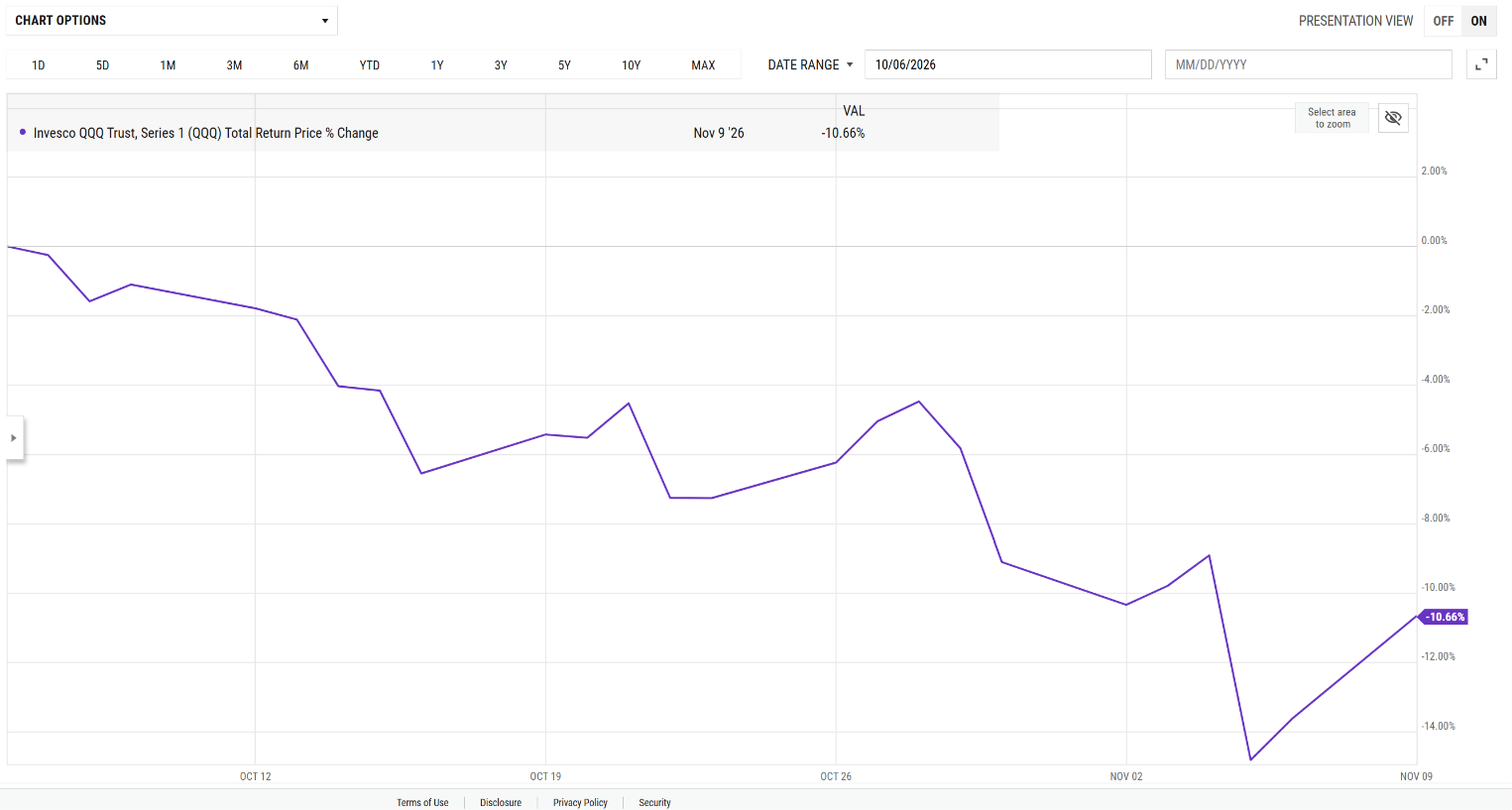
During the last four months of 2000, you could have bought the dip 15 times. And each time, QQQ, headed lower. Think about that for a moment.
I am not predicting the future here. I’m just defining in plain language what we technicians call a “downtrend.” The problem I see these days is that investors are very quick to call “the bottom.” Investing is really about what happens not at the extremes, but over time.
Keep in mind what QQQ is, what’s on its resume, and what we just experienced via the AI trade. Bubble or no? Wrong question! Prepare for anything? That’s my preference.
I continue to emphasize active use of inverse ETFs like the ProShares Short QQQ (PSQ), ProShares UltraShort QQQ ETF (QID), and the ProShares UltraPro Short QQQ (SQQQ), which are single, double, and triple the reverse direction of QQQ. I use a lot of put options on QQQ as well, but when option volatility spikes, those get expensive quickly.
Still, the range of tools we have at our disposal to defend and profit in down markets is unprecedented. Unlike a 50% drop in QQQ.
Rob Isbitts is a semi-retired CIO, former fiduciary investment advisor, Barchart columnist, and straight-talker. Download his new free e-book on hedged bond investing for retirement at ETFYourself.com. His research and model portfolios are at ROAR.PiTrade.com.
On the date of publication, Rob Isbitts did not directly have a position in any of the securities mentioned in this article. All information and data in this article is solely for informational purposes. For more information please view the Barchart Disclosure Policy here.