


As reports of a stormy affair involving Nvidia (NVDA) CEO Jensen Huang have poured in, artificial intelligence (AI) bulls have watched helplessly as NVDA stock has gotten hammered. What's more, an espionage angle has emerged with the story; Jensen Huang had the affair with Alice Huang, a former executive of Singapore-based Megaspeed and an alleged Chinese intelligence spy. That has made matters worse for the black leather jacket-wearing pivot of the AI industry.
Unsurprisingly, shares of the company have reacted negatively to the news. Down 9% over the past five days, Nvidia has taken a hit of about $300 billion to its market capitalization. Now, reports of another affair — this time with an executive of Nvidia itself — have made the situation all the more murky.
The situation has reached its nadir for the time being, with Jensen Huang no longer at the helm of the chip giant after resigning as CEO today. As speculated by many, CFO Colette Kress is taking charge as interim CEO. Kress has been with Nvidia for 13 years, during which its revenues have soared from around $4 billion in fiscal 2014 to $215.9 billion in fiscal 2026. While Huang has been the face of the company, Kress has helped lead Nvidia's rise as a financial powerhouse and AI bellweather. Nvidia boasts a huge cash balance, while its gross margin expanded from 54.9% in fiscal 2014 to 71.1% in fiscal 2026.
Mizuho Is Looking to Capitalize
Amid the turmoil, Nvidia has found a backer in Mizuho analyst Jordan Klein. Describing NVDA stock as “silly cheap,” Klein recently weighed in on the debate in an interview with CNBC, saying that such multiples are “usually reserved for companies that have structural impairments, or a business that is in secular decline, and we know that's not the case here.” Sharing his view on Jensen Huang, Klein added, “He's not only a visionary and a leader for the company, but for the entire technology industry and the AI industry as a whole.”
Some of the key valuation metrics for Nvidia are now trading below 20 times. This is for a company that has projected a 70% growth rate for fiscal 2028, even as it has also become supply-constrained due to the memory shortage. Currently, the forward price-to-earnings (P/E) ratio is 18.1 times, compared to the sector median of 19.8 times. Meanwhile, analysts expect forward revenue and earnings growth of 68% and 69%, respectively, well ahead of sector averages.
Further, Nvidia remains the second-most valuable company in the world, with a market cap of $4.18 trillion. As of this writing, shares are down 12% on a year-to-date (YTD) basis.
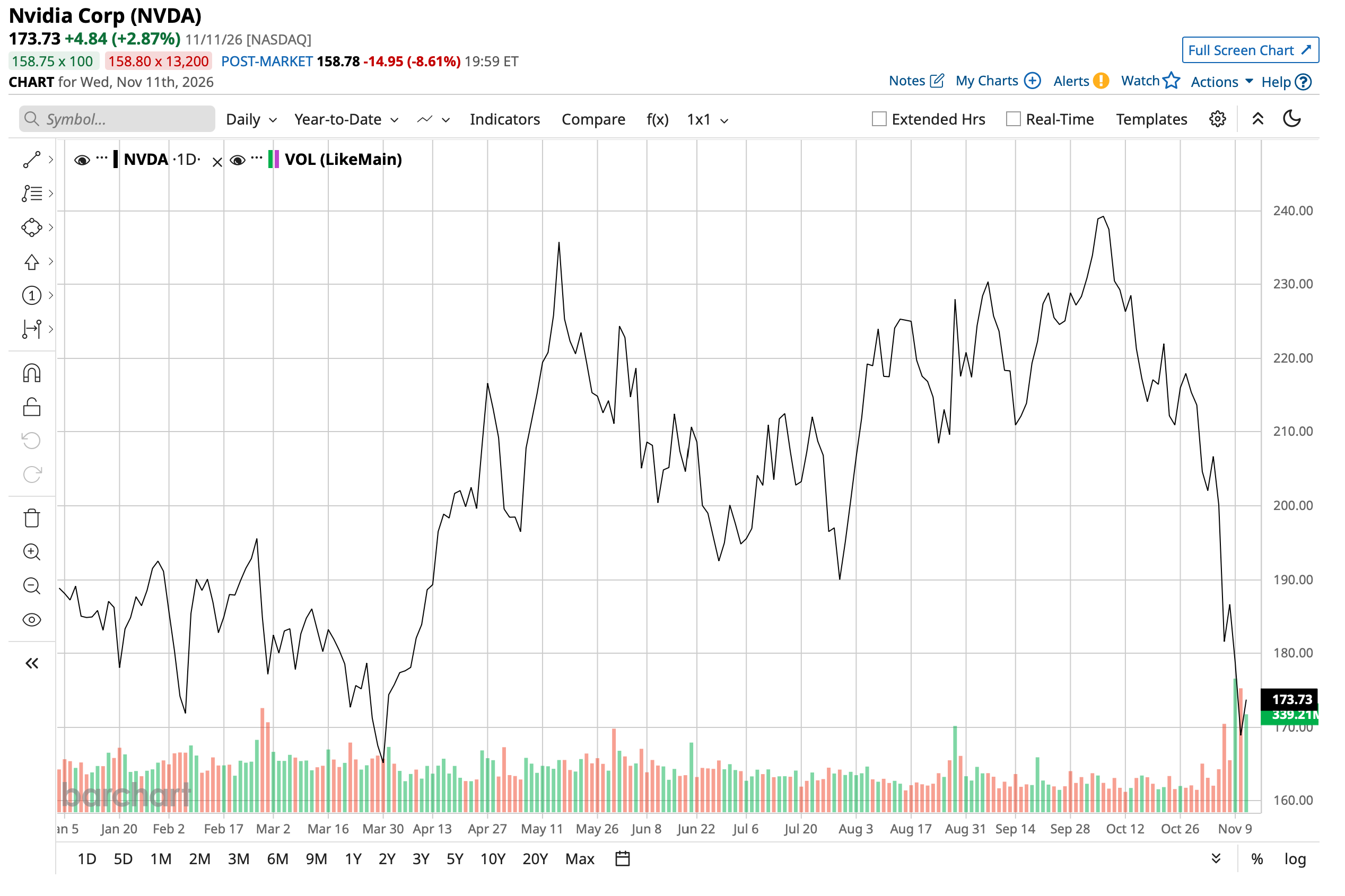
What may have contributed to Klein and others remaining confident about Nvidia stock is the company's place in the AI industry. Nvidia chips continue to see surging demand, while its CUDA moat remains unmatched as developers worldwide build AI models on the software. In fact, developers and enterprises have spent years building applications around Nvidia's software ecosystem. Switching to a competing GPU platform can require substantial rewriting, testing, and optimization.
Nvidia has been offering a full-stack AI ecosystem for years. Its ability to supply GPUs (Blackwell), CPUs (Grace), networking (InfiniBand and Spectrum-X), interconnects (NVLink), systems (DGX and GB-series), and software (CUDA) gives the firm an advantage in delivering complete data-center infrastructure.
This is not to dismiss the recent national security concerns and hit to Nvidia's corporate governance. A prolonged leadership crisis can impact investor confidence and employee retention severely, and Nvidia's preeminent position in the AI world can only protect it for so long. Thus, the board should be looking to resolve the issue in a fair manner as soon as possible. Appointing Kress as interim CEO is the first step.
Nvidia's Super Financials
A key source of strength for Nvidia is its solid financial position. In its latest results for the second quarter of fiscal 2027, Nvidia reported revenue of $96.2 billion, marking a 106% increase year-over-year (YOY) and exceeding consensus estimates. Data-center revenue grew 117% YOY to $89 billion. For Q3 fiscal 2027, the company projected total revenue of $108 billion, plus or minus 2%.
EPS rose 120% YOY to $2.22, surpassing the consensus estimate of $2.09 and extending Nvidia’s streak of consecutive earnings beats. Gross margin improved to 75% from 72.4% in the prior-year period. While the company’s expected gross margin of 74% for Q3 attracted some criticism from observers looking for potential weaknesses in the investment thesis, shares rose following Q2 results, ending a four-quarter run in which NVDA stock declined immediately after its earnings releases.
One key highlight from the Q2 earnings call was Amazon's (AMZN) plan to deploy 2 million Nvidia GPUs for AWS through Q2 fiscal 2029. This development helped address concerns that major hyperscalers like Amazon will develop their own chips or application-specific integrated circuits (ASICs), reducing their reliance on Nvidia’s products.
Net cash from operating activities in Q2 increased to $24.1 billion from $15.4 billion in the year-ago period. This figure included $7.8 billion in gains from equity investments in companies such as OpenAI, SpaceX (SPCX), CoreWeave (CRWV), and Nebius (NBIS). At the same time, accounts receivable rose substantially during the quarter, a change that has contributed to ongoing discussions about potential circular financing risks. Nvidia closed the quarter with $22.4 billion in cash, well above its short-term debt balance of $1 billion.
Notably, Nvidia is set to report its Q3 results on Nov. 17, after the market closes. Needless to say, the report will be analyzed threadbare — not just for the numbers, which are expected to be good, but for what Kress will have to say on the earnings call, and how the company plans to tackle this crisis. Investors will also want clarity regarding any investigations by the U.S. government.
What Do Analyst Think of NVDA Stock?
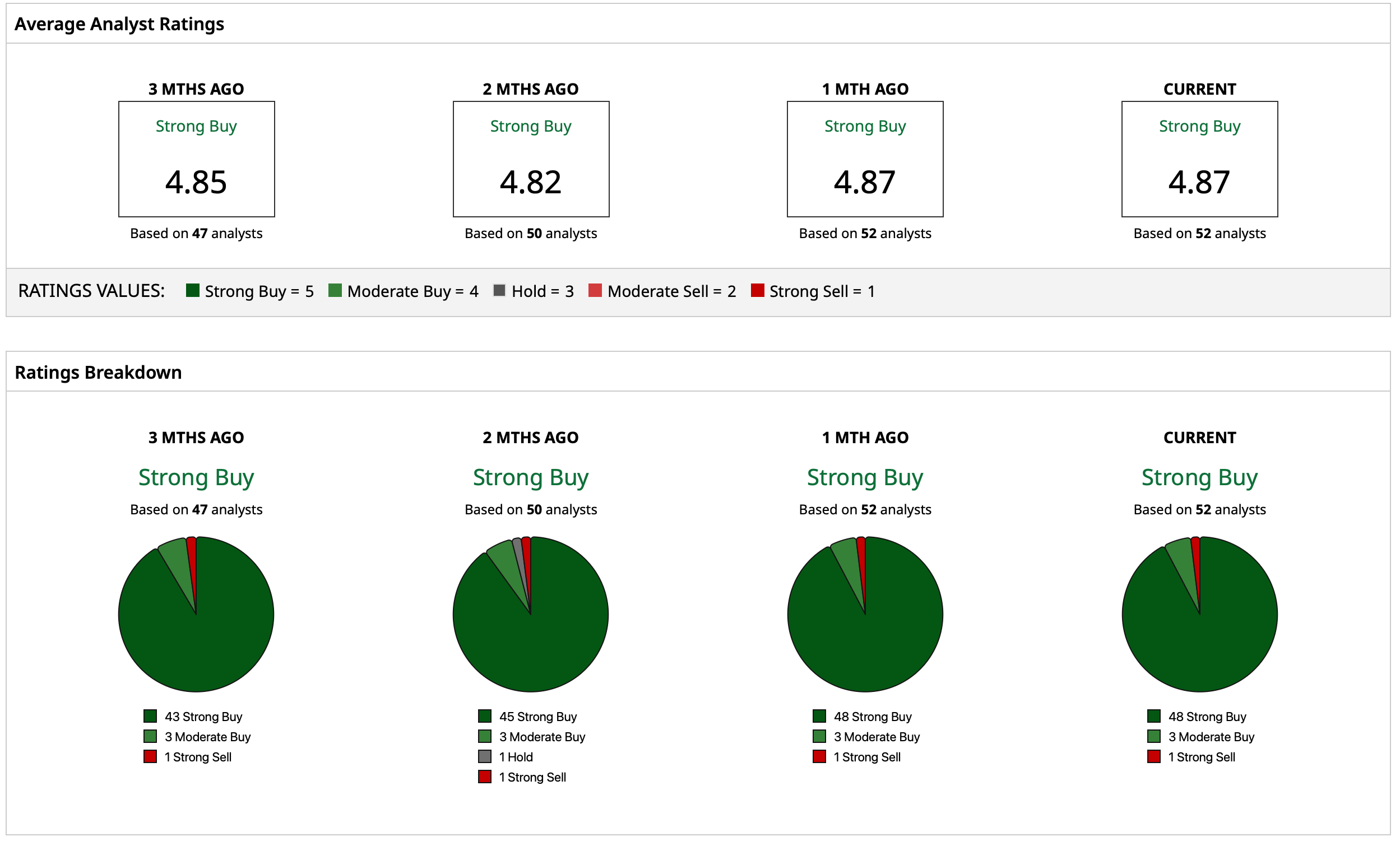
Considering all this, analysts continue to assign a consensus “Strong Buy” rating for NVDA stock. Out of 52 analysts covering Nvidia, 47 have a “Strong Buy” rating, three have a “Moderate Buy” rating, one has a “Hold,” and one analyst has a “Strong Sell” rating. The mean target price of $324.45 indicates potential upside of 98% from current levels.
On the date of publication, Pathikrit Bose had a position in: NVDA . All information and data in this article is solely for informational purposes. For more information please view the Barchart Disclosure Policy here.