


- Persimmon released its Q3 2026 sales and trading statement on 12 November 2026, updating the market on recent housing demand, build activity and forward order coverage across its UK operations.
- The fresh trading detail gives investors a new read on how Persimmon is balancing volume ambitions with build cost pressure, land investment and ongoing building safety remediation commitments.
- This article examines how Persimmon's investment narrative is influenced by the Q3 2026 trading statement, including the latest insight on demand.
Compare Persimmon's latest trading update with a hand picked set of housing related stocks by screening for list of solid balance sheet and fundamentals (9 results) that may handle similar market pressures differently.
Persimmon Investment Narrative Recap
To own Persimmon, you need to believe that volume-led growth from an expanding outlet base can translate into healthier earnings despite embedded build cost inflation and rising regulatory charges. The Q3 2026 trading update sits right on that fault line. It tests how resilient current reservation trends and pricing are against those cost pressures.
The analyst consensus narrative on Simply Wall St frames the key near-term catalyst as Persimmon’s ability to turn its land bank and factories into higher operating margins while keeping cash generation steady. The biggest near-term risk remains affordability and mortgage access. If buyer demand softens further, the Q3 trends may not be a material positive.
One element that matters more after this trading statement is the ongoing fire safety remediation programme, which still carries a provision above £200 million and targets close to £100 million of spend this year. Progress here influences how much future cash can be redirected to land investment or potential shareholder returns once current obligations ease.
For catalysts, that remediation cash drain sits alongside Persimmon’s push into factories, timber frame and AI enabled processes aimed at lowering per-plot build costs. Q3 commentary on build productivity, site performance and any change in guidance around remediation timing gives a clearer read on whether those self-help measures and the remediation timeline still support the medium-term volume and margin story set out in the analyst consensus narrative on Simply Wall St.
What the Analyst Framework Implies for Persimmon
Persimmon's narrative projects £4.6 billion in revenue and £420.6 million in earnings by 2029. This lines up with analysts assuming 5.2% yearly revenue growth and an earnings increase of about £115 million from the current £305.5 million level.
The Simply Wall St assumptions sketch out a housing group that grows steadily rather than dramatically. Forecast revenue growth of 5.2% a year over three years, paired with profit margins moving from 7.7% today to 9.1% by 2029, points to a story driven more by incremental efficiencies and outlet growth than by sharp swings in pricing or volumes.
On the earnings side, the consensus mark of £420.6 million by 2029 versus £305.5 million today implies a meaningful uplift in profit, even before considering the wide spread between the most bullish and most cautious analyst estimates. For you as an investor, that jump in earnings only holds together if Persimmon converts its land bank, factories and build system changes into higher profitability without needing to carry far more financial risk on the balance sheet.
Valuation assumptions matter just as much as the operating numbers. To reach the analyst price targets, Persimmon would need to be on about £4.6 billion of revenue and £420.6 million of earnings in 2029 while trading at a P/E of 13.7x. That multiple is in line with where the stock is described as sitting today and slightly above the quoted 13.1x for the wider GB Consumer Durables industry. The framework therefore effectively treats Persimmon as a business that deserves to trade a little richer than the sector if it hits those margin and earnings goals.
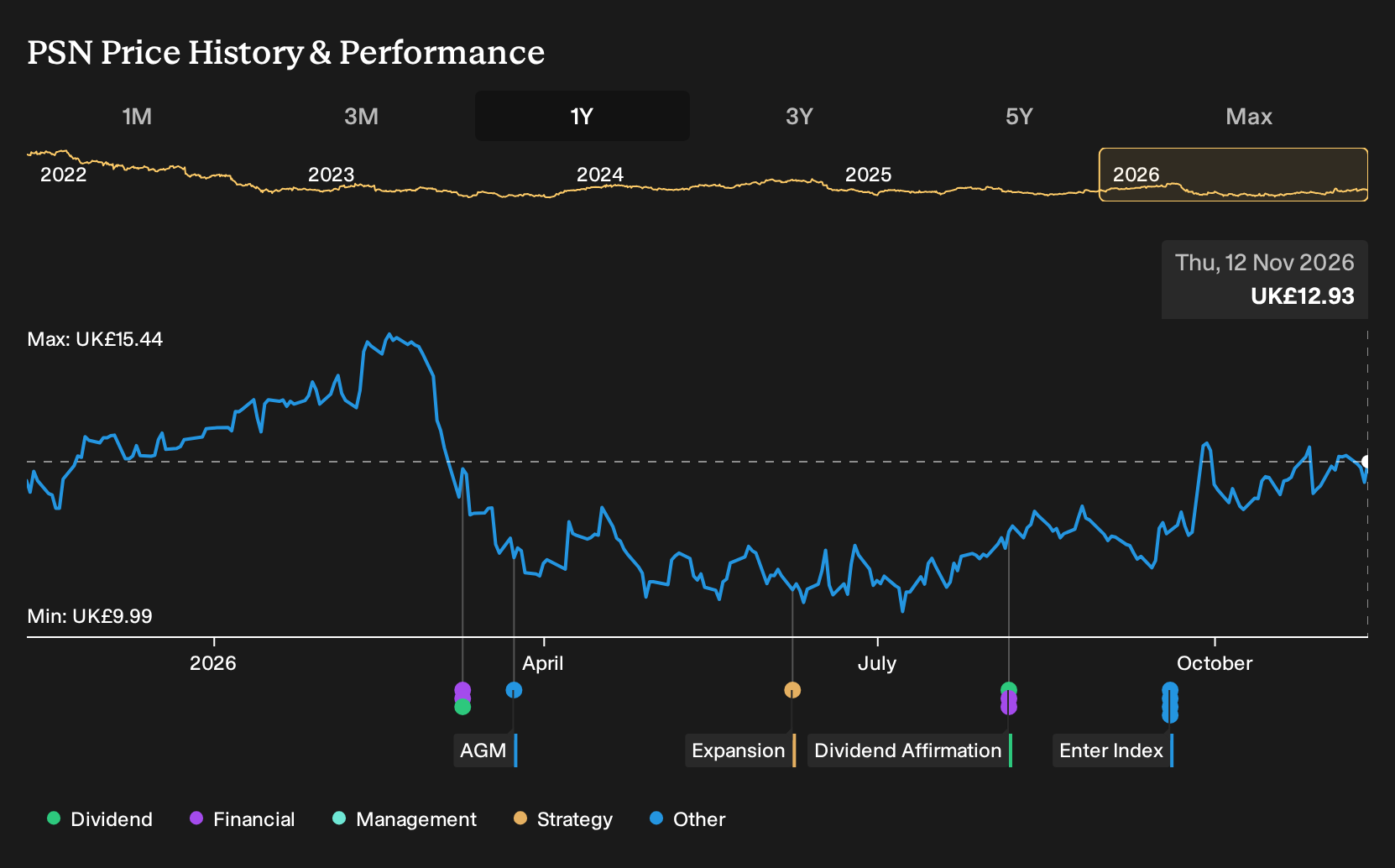
The link between these forecasts and the current share price is tight rather than stretched. With the stock at £13.03 and the consensus target at £13.87, the implied upside is 6.1%. For you, that small gap signals that analysts see Persimmon as roughly fairly priced based on these revenue, earnings and P/E assumptions. This reduces the margin of error if the housing cycle, build costs or remediation bill roll out differently from the current script.
Uncover why Persimmon's fair value indicates a 7% potential upside to its current price that could narrow quickly.
Exploring Other Perspectives
One bullish twist on Persimmon focuses on the eventual wind down of fire safety remediation. The most optimistic analysts were already pencilling in about £4.9b of revenue and £470.2 million of earnings by 2029, well above consensus. Those forecasts were set before this Q3 2026 call, so you should expect opinions to shift as fresh information lands.
Explore 3 other Persimmon fair value estimates, including one that suggests as much as 29% upside from the current price.
Form Your Own Verdict
Disagree with existing narratives? Extraordinary investment returns rarely come from following the herd, so go with your instincts.
- A great starting point for your Persimmon research is our analysis highlighting 3 key rewards and 1 important warning sign that could impact your investment decision.
- See our latest analysis for Persimmon. The report includes a comprehensive fundamental analysis summarized in a single visual, the Snowflake, making it easy to evaluate Persimmon's overall financial health at a glance.
Looking For More Investment Ideas Beyond Persimmon?
Once you have a view on Persimmon, it can help to compare that thesis with other listed builders, suppliers and income plays that face similar housing and financing conditions. The Simply Wall St Screener lets you scan the market quickly and focus on groups that match the kind of balance sheet strength, value potential or income profile you care about most.
- If you want potential mispriced opportunities with solid fundamentals, start with a curated set of 5 high quality undiscovered gems that may not yet be on most investors' radar.
- For income focused ideas, consider companies screened for consistent payouts through a focused list of 5 dividend fortresses that emphasise higher yields.
- When capital protection matters most, narrow your search to businesses screened for resilience using a targeted group of 5 resilient stocks with low risk scores that score well on financial strength criteria.
Have feedback on this article? Concerned about the content? Get in touch with us directly. Alternatively, email editorial-team@simplywallst.com