


Hotter inflation data and louder Fed warnings have pushed interest rate expectations higher, which puts rate-sensitive stocks under pressure and suddenly makes the search for defensives feel urgent. Cash on the sidelines risks missing chances when markets reshuffle. This article explains how that higher-for-longer story affects regulated U.S. utilities and reviews three specific stocks that screens suggest could matter for your portfolio decisions right now.
The three utilities discussed below are just a first cut from this theme, and the full screen surfaced 15 more regulated electric and gas companies with similarly robust stories that are not covered here. To see the complete U.S. Regulated Electric & Gas Utilities as Higher for Longer Rate Defensives list, analyze their metrics, and identify which ones best fit your own risk profile, head straight to the U.S. Regulated Electric & Gas Utilities as Higher-for-Longer Rate Defensives screener.
Entergy (ETR)
Entergy slots cleanly into this higher-for-longer utilities theme because it earns regulated returns on electricity service to millions of U.S. customers, and the analyst consensus Narrative on Simply Wall St frames why future demand could be just as important as today’s yield and stability.
Entergy is a large regulated U.S. electric utility that produces, transmits, and sells power across Arkansas, Louisiana, Mississippi, and Texas, generating about US$14.0b in mainly utility revenue and carrying a market value of roughly US$53.5b.
"Substantial long term electricity demand growth from industrial development, population migration to the Gulf South, and large scale data center expansions in Entergy’s service territory now includes approximately 7 to 12 GW of hyperscale data center potential, 3 to 5 GW of traditional industrial demand, and signed agreements with AWS and Meta that together support the updated outlook for roughly 8.5% to 9% annual retail sales growth, which could lift regulated revenue and earnings over time."
What happens to that demand-led opportunity if a single pressure point quietly reshapes how much Entergy can earn on each new project?
If that pressure point has your attention, the full narrative for Entergy explains how Entergy’s demand wave, regulation and capital needs could still reshape long term returns.

Atmos Energy (ATO)
Atmos Energy fits the higher for longer utilities theme as a pure regulated gas distributor whose earnings are anchored by rate-approved returns. The analyst consensus Narrative on Simply Wall St underlines how that structure ties into customer growth and capital spending plans.
Atmos Energy runs a large regulated natural gas network and related pipeline and storage services, generating about US$4.6b from Distribution and about US$1.2b from Pipeline and Storage, with a small eliminations line. The company carries a market value near US$29.7b.
"Strong customer and industrial load growth, including nearly 51,000 new customers over 12 months and 12 new industrial customers expected to use about 950,000 Mcf per year once fully operational, supports ongoing volume expansion that can lift Atmos Energy revenue and earnings power."
What happens to that earnings path if one unseen pressure on how new projects are funded and recovered quietly shifts the margin equation?
That quiet funding squeeze is exactly what the full narrative for Atmos Energy unpacks, showing where Atmos Energy’s capital cycle could be accelerating or masking risk.

Consolidated Edison (ED)
Consolidated Edison is a New York based regulated utility that delivers electricity, gas, and steam to dense urban customers. It is a classic higher for longer rate defensive with essential, state regulated cash flows. Most of its roughly US$18.1b revenue comes from CECONY electric at about US$12.5b, CECONY gas at about US$3.5b, and CECONY steam at about US$0.9b, with a market value near US$44.2b.
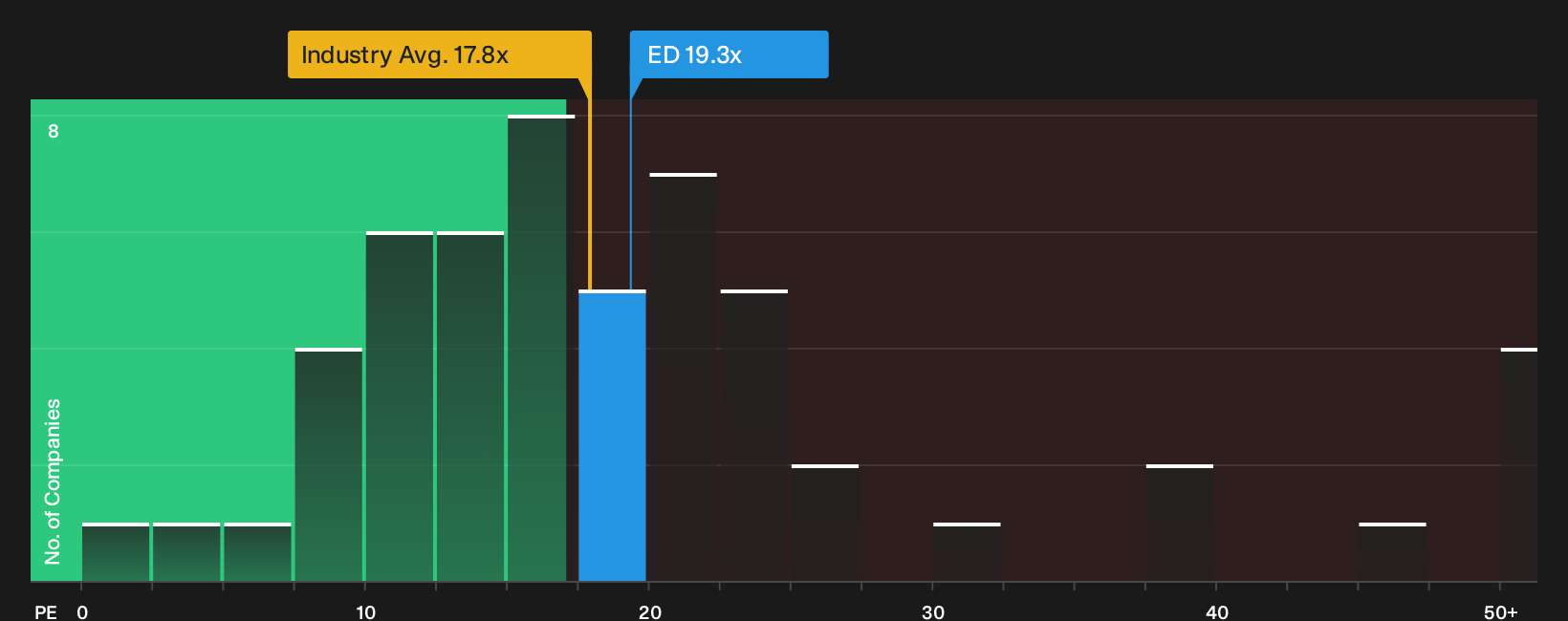
Consolidated Edison aligns closely with what this screener highlights: a large regulated utility with essential residential and commercial service in one of the most densely populated regions in the U.S., backed by a P/E of 19.3x and visible dividends. Earnings quality appears high and forward growth is moderate. One unresolved pressure on how that income stream is funded could matter significantly for future payout comfort if higher rates persist.
That funding pressure is exactly what the 3 key rewards and 2 important warning signs (1 is major!) reveals, allowing you to see where Consolidated Edison income resilience could decouple from investor expectations.
Seeking Fresh Alternatives Before They Fly?
Markets move fast and the next breakout themes rarely stay under the radar for long. Scan fresh momentum, catch quality ideas before the crowd, and consider acting while interest is still building.
- Spot income workhorses built on steady cash flows and payout resilience with a curated group of 6 dividend fortresses that could anchor the defensive side of your portfolio.
- Track early movers supplying the next wave of AI infrastructure, as 53 AI infrastructure stocks reveal where capacity growth and digital demand may start converging.
- Position ahead of electrification upgrades by reviewing 43 power grid technology and infrastructure stocks that connect directly to grid modernisation, reliability spending, and future-ready network investment.
Have feedback on this article? Concerned about the content? Get in touch with us directly. Alternatively, email editorial-team@simplywallst.com